Elon Musk’s Boring Company has raised $3 billion, and the deal says a lot about how investors still view Musk’s harder infrastructure bets.
The company announced a Series D funding round led by the United Arab Emirates and affiliated investment entities, valuing the tunnelling startup at $23 billion. The company’s announcement says the money will help accelerate underground infrastructure projects, including more than 150 kilometres of tunnel in the UAE.
Other investors include Human Capital, Vy Capital, Valor Equity Partners, Sequoia Capital, A16Z, Temasek, Shamal Holding and Baron Capital. That list matters because The Boring Company is not a simple software bet. It is capital-heavy, politically exposed and dependent on contracts, permits and long construction timelines.
The UAE angle is the centre of the story. Dubai has already been linked to Boring Company tunnel projects, and the new funding appears tied to a wider plan to build underground transport infrastructure across the country. If that programme moves forward, the company gets something more valuable than money: a large deployment market.
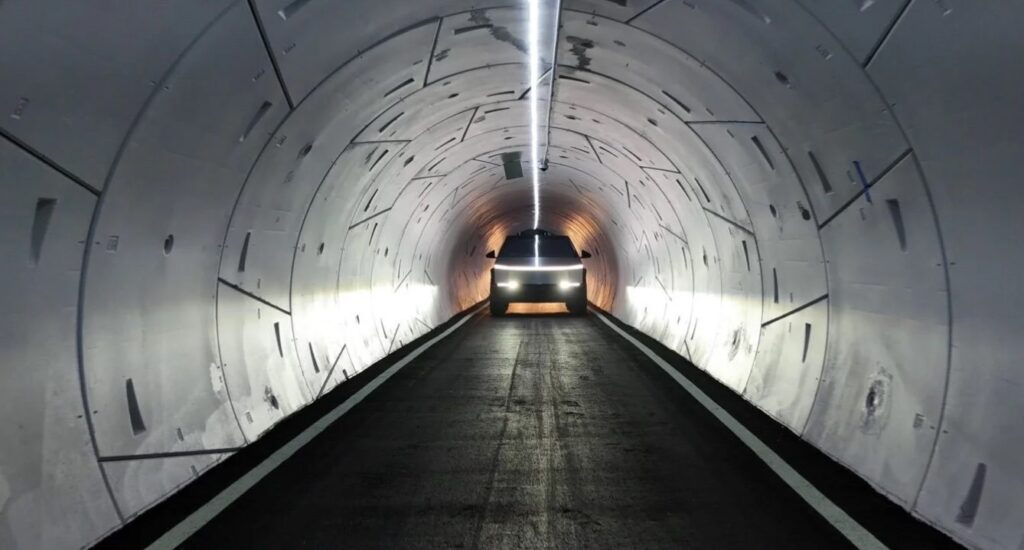
The Boring Company has spent years trying to make tunnel construction cheaper and faster through its Prufrock tunnel-boring platform. It also operates the Vegas Loop and has been pushing projects in cities such as Nashville and Dubai. The company says recent work includes faster machine design, hard-rock tunnelling and zero-people-in-tunnel continuous mining.
The promise is attractive. Cities are congested, land above ground is expensive and traditional transport infrastructure can take years to approve and build. A cheaper tunnelling model would appeal to governments looking for new mobility options without tearing up entire urban corridors.
The risk is that tunnelling remains brutally hard. It involves geology, safety, utilities, public approvals, emergency systems, costs and maintenance. The Boring Company has generated attention for years, but critics still ask whether it can scale beyond controlled projects and selective corridors.
That is why the investor demand is notable. Musk-linked companies continue to pull capital even when the business model is technically difficult. SpaceX, xAI, Tesla, Neuralink and now The Boring Company all sit inside a wider investor belief that Musk can turn extreme engineering projects into dominant platforms.
For Africa and emerging markets, there is also a transport-infrastructure angle. Congested megacities such as Lagos, Nairobi and Cairo need new thinking around urban mobility, but expensive imported systems rarely fit local budgets. If tunnelling costs genuinely fall, the model could one day become relevant beyond wealthy cities.
For now, this is a funding story with a clear test ahead. The Boring Company has raised serious money and attached itself to a serious UAE infrastructure promise. The next question is whether it can turn that capital into tunnels fast enough to justify a $23 billion valuation.
Related Reading
More contextual TechBooky stories selected from tags, categories and article context.
Paul Femi Balo is the founder and publisher of TechBooky. He covers artificial intelligence, African technology, digital infrastructure, enterprise technology and the global digital economy.
We use cookies to ensure that we give you the best experience on our website. If you continue to use this site we will assume that you are happy with it.