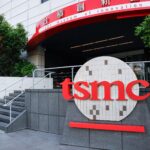
TSMC has reaffirmed its focus on making logic chips for customers after a report said Nvidia had asked the Taiwanese manufacturer to explore advanced 3D DRAM. The response matters because demand for AI memory is rising sharply, but it does not amount to an announced TSMC memory product or a confirmed new manufacturing programme.
The Information reported on 6 November, citing people familiar with the matter, that Nvidia had approached TSMC about the possibility of producing 3D DRAM and that the foundry was weighing plans. In a statement to Tom’s Hardware on 7 November, a TSMC spokesperson said the company focuses on its core business of dedicated IC foundry services and aims to remain a trusted technology and capacity provider for the logic-chip industry. TSMC did not announce a 3D DRAM project, production timetable or customer contract.
Advanced AI systems need far more than powerful processors. They must also move enormous amounts of data between compute and memory. High-bandwidth memory, or HBM, is now central to AI accelerators, and a shortage or a slow manufacturing ramp can constrain how quickly chipmakers deliver complete systems. That makes new memory approaches commercially interesting even when they remain years away from practical deployment.
3D DRAM should not be confused with the HBM stacks already used alongside many AI chips. The proposal concerns denser memory structures built vertically within the device. Turning that idea into a competitive product would demand advances in fabrication, yields, packaging and cost. A request to investigate the technology is therefore a very different thing from a commitment to mass-produce it.
TSMC already has a major role in the AI supply chain through its leading-edge logic manufacturing and advanced packaging. Memory specialists such as SK hynix, Samsung and Micron remain the established suppliers of HBM. For TSMC, entering DRAM production directly would be a meaningful shift from the foundry model on which its relationships with many chip designers depend.
The statement is a clear description of TSMC’s current strategic priority. It is not a detailed account of every exploratory conversation the company may have held. The underlying report remains attributed to unnamed sources, and neither company has confirmed a production deal. Readers should treat the Nvidia request as reported, rather than as an established product roadmap.
The distinction is especially important as chipmakers pursue ways around AI infrastructure bottlenecks. TechBooky has previously covered how delivery constraints can complicate Nvidia chip orders. Memory capacity, packaging throughput and power availability all influence how quickly a processor turns into a deployed AI server.
For now, the news is TSMC’s pushback against the impression that it is preparing to become a DRAM maker. Any future change would need a company announcement or other independently verifiable evidence. Until then, the reported 3D DRAM discussions offer a window into the industry’s search for more memory, not proof that the supply problem has been solved.
Related Reading
More contextual TechBooky stories selected from tags, categories and article context.
We use cookies to ensure that we give you the best experience on our website. If you continue to use this site we will assume that you are happy with it.