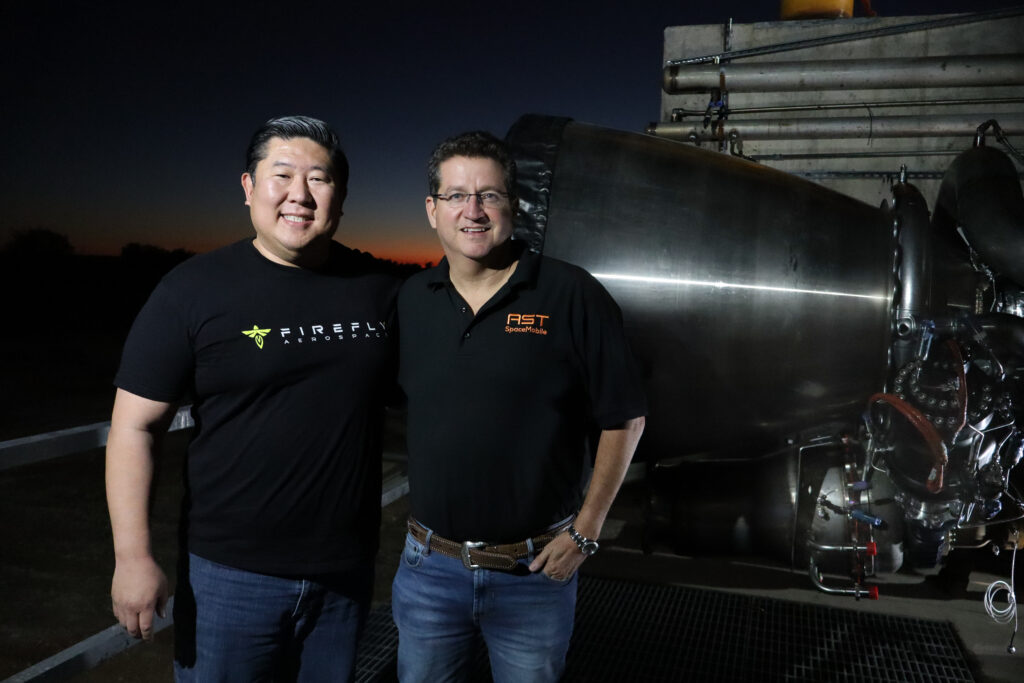
AST SpaceMobile is moving towards building its own launch vehicle under an engine and technology agreement with Firefly Aerospace valued at more than $1.3 billion. The companies said on 6 November that Firefly will supply engines for AST’s first three rockets and license related intellectual property. It is a striking attempt by a satellite broadband company to take more control of how its spacecraft reach orbit.
The Firefly announcement specifies 36 engines, comprising 27 Miranda engines and nine Vira engines. The arrangement also includes engineering support over three years. Firefly says the consideration is worth more than $1.3 billion in cash and AST SpaceMobile shares. That figure describes the broader agreement, not a bill for the engines alone.
AST’s core business is developing satellites designed to connect ordinary mobile phones from space. Expanding such a network requires repeated launches, and a launch timetable can become a bottleneck when a satellite operator depends entirely on outside rocket providers. A vehicle built to its own requirements could eventually give AST greater control over capacity and scheduling.
The deal does not mean AST already has an operational rocket or a guaranteed launch slot. Engine supply, licensed designs, vehicle integration, testing and regulatory clearance are separate milestones. Neither company has provided a verified date in this announcement for the first flight of AST’s proposed vehicle. Investors and mobile partners will therefore be watching execution as closely as the headline value.
For Firefly, the agreement offers a large commercial customer for its propulsion work as well as an equity component tied to AST’s prospects. For AST, it is a capital-intensive step beyond designing satellites and selling connectivity. The companies will have to show that the added control is worth the cost and engineering risk compared with buying launch services in the market.
Direct-to-phone satellite service has particular appeal where conventional mobile coverage remains patchy. TechBooky has previously reported on the growing role of satellite connectivity in underserved African markets. AST’s rocket plan is not itself a service launch for those customers, but a reminder that the economics of space-based mobile coverage depend on reliably placing many large satellites in orbit.
The new agreement is therefore best read as a plan to secure future launch capability, not as proof that an in-house launcher is ready. If AST can deliver, it may reduce one source of dependency in a crowded satellite market. If development runs late or costs climb, the ambitious deal could become an additional burden on a company already funding an expensive network rollout.
Related Reading
More contextual TechBooky stories selected from tags, categories and article context.
We use cookies to ensure that we give you the best experience on our website. If you continue to use this site we will assume that you are happy with it.