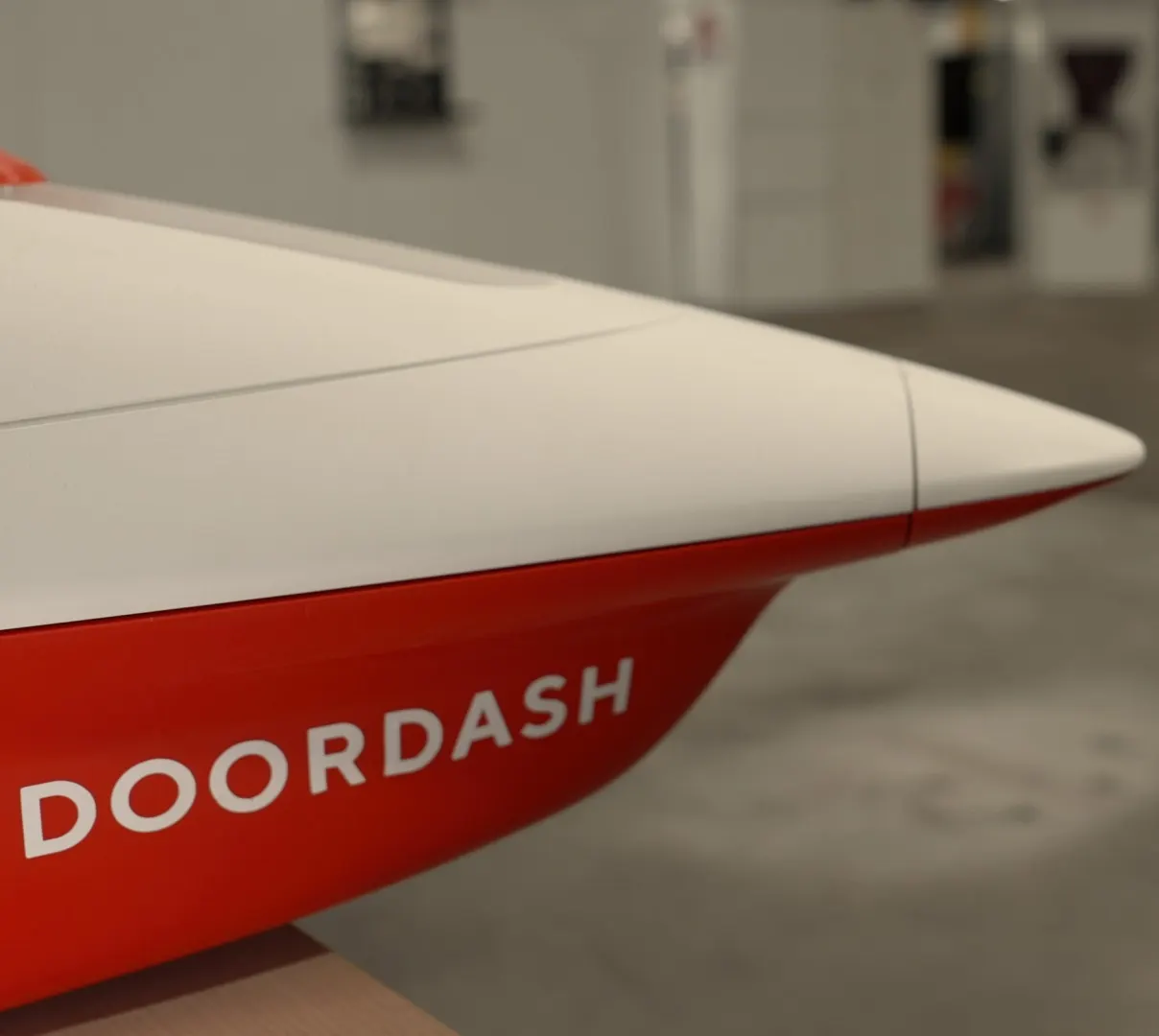
DoorDash is taking its delivery ambitions into the air. The company has launched DoorDash Air, an in-house drone delivery programme built by DoorDash Labs, the same robotics and autonomy team behind its Dot delivery robot. This is a notable shift because DoorDash is no longer only partnering with drone companies. It now wants to own more of the autonomous delivery stack itself.
In its announcement, DoorDash says the programme will use an aircraft designed for local commerce and built with mostly U.S.-made components. The company says the drone will complement partner systems already being scaled for short- and long-range delivery. The effort will eventually be integrated into the DoorDash app.
The regulatory piece matters. DoorDash has obtained Part 135 air carrier certification from the U.S. Federal Aviation Administration, allowing it to operate commercial drone delivery. That puts it in a small group of certified operators and gives the company more control over how drone delivery fits into its existing logistics network.
The business logic is simple. Some deliveries are too far or too slow for dense courier networks to handle efficiently, especially in the three-to-five-mile range. Drones could reduce delivery times for certain orders while letting human couriers focus on shorter, high-frequency trips. DoorDash is not trying to replace its whole delivery workforce overnight. It is trying to route each order through the method that makes the most sense.
This is also a robotics infrastructure story. DoorDash has spent years experimenting with partners such as Wing and Flytrex. Building its own drone programme means it wants more control over the aircraft, routing, handoff, safety systems and merchant experience. The hard part will not be showing that a drone can carry food. The hard part will be making drone delivery reliable enough, quiet enough, safe enough and cheap enough to matter at scale.
TechBooky’s recent article on Lyft and Baidu’s London robotaxi tests looked at a similar transport pattern. Autonomous systems are moving from demos into operational networks. Once that happens, the challenge becomes regulation, fleet management, public trust and economics, not just software.
DoorDash Air will need to prove itself city by city, and the company has not yet turned drone delivery into a mass-market service. But the direction is clear. Food delivery is becoming more automated, and DoorDash wants to make sure it is not only a marketplace for human couriers. It wants to be an autonomous delivery company too.
Related Reading
More contextual TechBooky stories selected from tags, categories and article context.
Paul Balo is the founder of TechBooky and a highly skilled wireless communications professional with a strong background in cloud computing, offering extensive experience in designing, implementing, and managing wireless communication systems.
We use cookies to ensure that we give you the best experience on our website. If you continue to use this site we will assume that you are happy with it.