Drone delivery has spent years sounding like a future that keeps moving further away. Airbound wants to make it feel much more practical.
The Indian startup has raised $37 million in fresh funding to scale autonomous drones designed to move small packages through the air at a cost that can compete with road transport. The round drew attention because Airbound is not selling drone delivery as a luxury experiment. It is trying to make the economics work for everyday logistics.
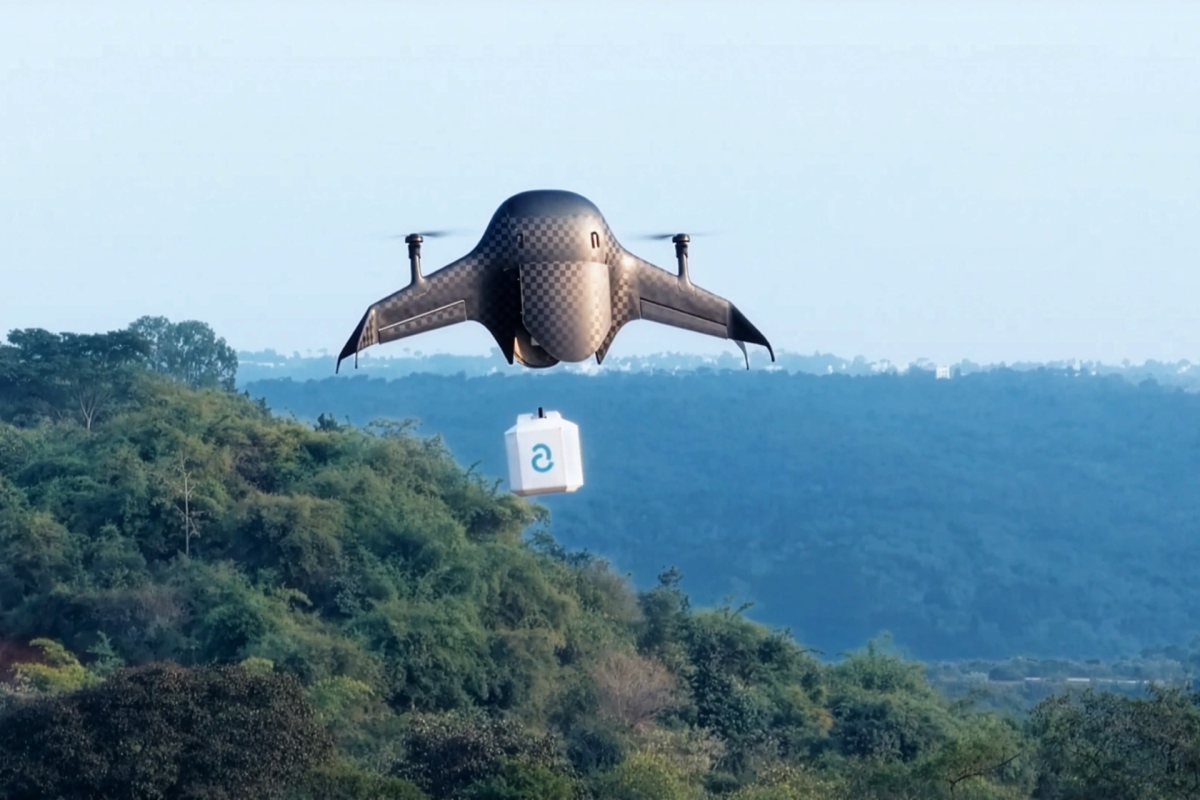
TechCrunch reports that the company is building ultra-light, tail-sitter drones that can take off vertically and then fly more like fixed-wing aircraft. That design matters because delivery drones have to solve two hard problems at once: they must operate in tight locations, but they also need enough range and efficiency to make each trip worth the cost.
Airbound’s pitch is that small, fast deliveries can be moved by air without the expense and traffic delays that come with road transport. Reports say its drones have already been used for autonomous missions in India, including medical and diagnostic-sample routes where time matters more than almost anything else.
That is where the story becomes interesting beyond India. In many emerging markets, the road network is uneven, traffic is unpredictable and healthcare logistics can be painfully slow. If drones can carry urgent samples, medicine, spare parts or high-value lightweight goods cheaply enough, the technology becomes less of a stunt and more of an infrastructure layer.
The challenge is that drone delivery has disappointed before. Regulation, weather, safety, maintenance, noise, battery life and unit economics have slowed many earlier attempts. Investors are no longer willing to fund demos forever. They want proof that drones can reduce real delivery costs, not simply look impressive in videos.
Airbound is entering the market at a better moment than some earlier players. Robotics, autonomy and AI planning systems have improved, while companies and governments are more open to unmanned systems because of what drones have shown in logistics, agriculture, surveillance and defence.
There is an Africa angle here too. African logistics companies have already shown that drone networks can work in medical delivery, especially where road access is difficult. The next phase will be whether such systems can expand into broader commercial logistics without becoming too expensive for the markets that need them most.
If Airbound can prove that airborne delivery can match trucking economics for the right payloads, the company will have done something important. It will have moved drone delivery from futuristic promise to operational math.
That is the real test now. The winners in this market will not be the companies with the most dramatic aircraft. They will be the ones that make a customer look at a delivery route and say the drone is simply the cheaper and faster option.
Related Reading
More contextual TechBooky stories selected from tags, categories and article context.
Paul Balo is the founder of TechBooky and a highly skilled wireless communications professional with a strong background in cloud computing, offering extensive experience in designing, implementing, and managing wireless communication systems.
We use cookies to ensure that we give you the best experience on our website. If you continue to use this site we will assume that you are happy with it.