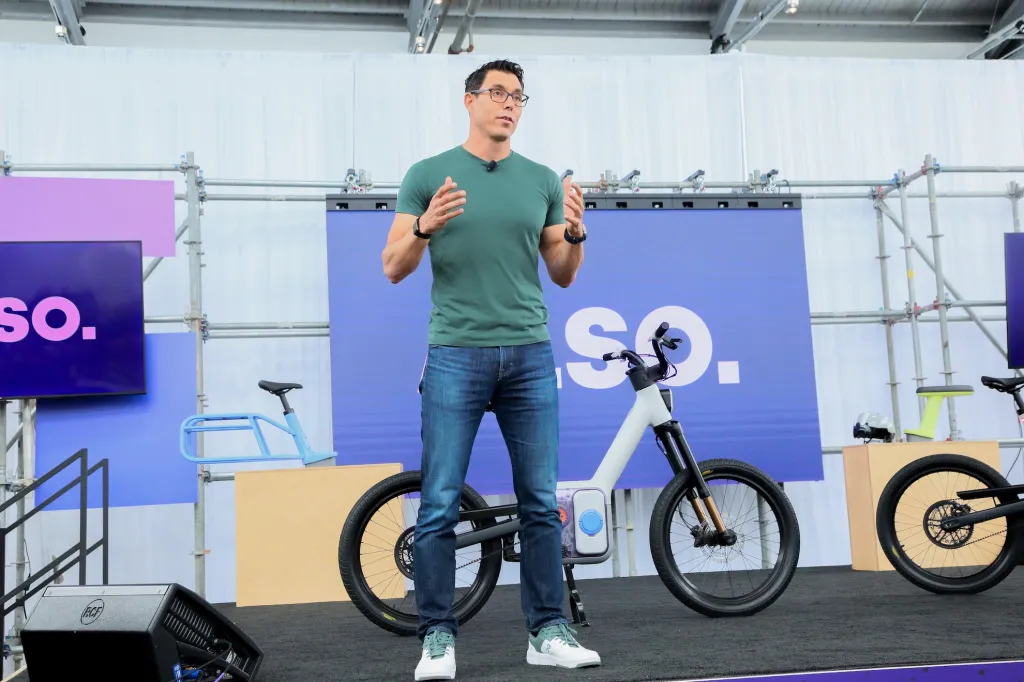
Rivian spinout Also has raised another $150 million, and the most interesting part of the story is not the e-bike. It is what the e-bike is supposed to become.
TechCrunch reported that the Series D round was led by Prysm Capital and included existing investors Eclipse, Greenoaks and MVP Ventures. The new round brings Also’s total funding to $455 million less than two years after the company was spun out of Rivian.
Also started with small electric vehicles, including pedal-assist bikes and commercial cargo quads. But the new funding points to a larger ambition: using the same platform thinking to build small autonomous vehicles for delivery and urban movement.
That is why the company is more interesting than another micromobility startup. Micromobility has had a difficult history, especially in shared scooters and bikes, where unit economics, vandalism, city rules and maintenance costs created problems. Also is trying to use a more hardware-and-platform-led approach, with Rivian DNA and a route into autonomous delivery.
TNW notes that the company is already above a $1 billion valuation and that customers include Amazon and DoorDash. Those names matter because delivery networks are exactly where small autonomous vehicles could eventually make sense.
The logic is straightforward. A full-size delivery van is useful for moving many packages across a city, but it is expensive, large and not always ideal for short neighborhood trips. A smaller electric autonomous platform could handle local delivery with lower operating cost if the technology, regulation and safety case work.
There is still a long road between a funded startup and a scaled autonomous fleet. Small autonomous vehicles must deal with sidewalks, bike lanes, roads, weather, pedestrians, curb access, theft, charging, insurance and city approval. Urban delivery is messy, and autonomy does not remove the mess. It changes the cost structure if it works.
The timing is useful because autonomy is moving back into investor focus. Tesla’s robotaxi work, Waymo’s expansion and smaller robotics companies all point to the same idea: the next transportation wave may not be only bigger cars, but specialized electric vehicles designed around particular jobs.
For Rivian, Also gives the broader ecosystem an interesting second act. Rivian itself is focused on consumer trucks, SUVs, vans and commercial fleets. Also takes some of the same electric-vehicle thinking into smaller formats, where the product can be cheaper, more flexible and potentially easier to deploy.
The bet is that e-bikes and cargo quads are the wedge, not the destination. If Also can turn small electric vehicles into trusted autonomous delivery platforms, it may have found a more practical route into autonomy than trying to replace the entire car at once.
Related Reading
More contextual TechBooky stories selected from tags, categories and article context.
Paul Balo is the founder of TechBooky and a highly skilled wireless communications professional with a strong background in cloud computing, offering extensive experience in designing, implementing, and managing wireless communication systems.
We use cookies to ensure that we give you the best experience on our website. If you continue to use this site we will assume that you are happy with it.