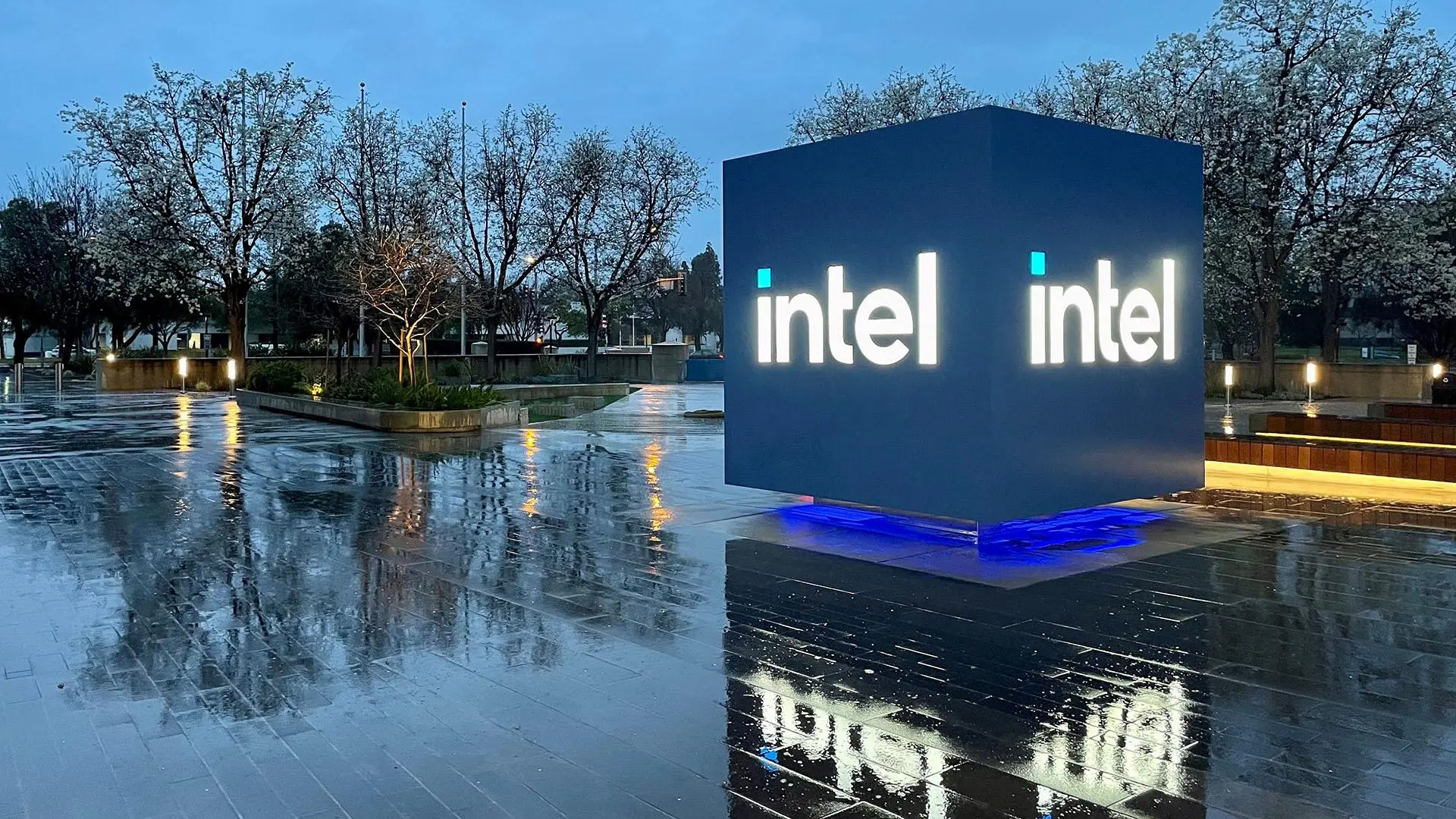
Intel has reported a stronger-than-expected second quarter, giving the company a rare earnings story that is not only about restructuring, delays or whether it can catch Nvidia. The chipmaker says AI-driven compute demand helped lift revenue 25 percent year over year to $16.1 billion, its strongest revenue growth in more than fifteen years.
In its Q2 2026 earnings release, Intel said GAAP earnings per share came in at a loss of $2.16, while non-GAAP EPS was $0.42. The company also generated $7.0 billion in cash from operations and guided for third-quarter revenue of $15.8 billion to $16.8 billion, with non-GAAP EPS expected at $0.38.
The headline loss looks ugly, but the operating story is more useful. Intel reported GAAP gross margin of 40.4 percent, up sharply from 27.5 percent a year ago, while non-GAAP gross margin reached 41.8 percent. Non-GAAP net income attributable to Intel was $2.2 billion, compared with a loss of $400 million in the same quarter last year.
The segment numbers show why investors will pay attention. Client Computing and Physical AI Group revenue rose 13 percent to $8.9 billion, Data Center and AI revenue jumped 59 percent to $6.3 billion, and Intel Foundry revenue rose 31 percent to $5.8 billion. That gives Intel a cleaner AI-linked growth story than it has had in a while.
CEO Lip-Bu Tan said AI demand is creating opportunity across Intel’s CPU franchise, ASICs, advanced packaging and wafer foundry network. CFO Dave Zinsner also said Intel is increasing investment in equipment, clean-room space and substrates to support expected growth across products and foundry this year and next.
That is the key tension. Intel needs to spend more to stay relevant in AI infrastructure, but it also needs to convince investors that those investments will produce durable customers and margins. The company highlighted rack-scale AI infrastructure, Xeon 6+, OpenVINO Physical AI, Panther Lake manufacturing on Intel 18A and expanded advanced packaging work as evidence that the turnaround is moving beyond slides.
The wider chip market is not waiting. Nvidia still dominates AI accelerators, while AMD is building stronger cloud-scale traction. TechBooky recently looked at how AMD’s Helios rack push is challenging Nvidia, and that same infrastructure race is now the context for Intel’s recovery attempt.
For Intel, Q2 is a useful step. Revenue is growing again, data-centre demand is stronger, foundry is improving and margins look healthier. But the company is still trying to prove that it can turn AI demand into a sustainable business, not just a good quarter. That makes the next few quarters important, especially as Intel increases capital spending while trying to hold investor confidence.
Related Reading
More contextual TechBooky stories selected from tags, categories and article context.
Paul Femi Balo is the founder and publisher of TechBooky. He covers artificial intelligence, African technology, digital infrastructure, enterprise technology and the global digital economy.
We use cookies to ensure that we give you the best experience on our website. If you continue to use this site we will assume that you are happy with it.