Apple has unveiled the iPhone 18 Pro and iPhone 18 Pro Max, and this year’s Pro story is not just about a faster phone. The company is using the new models to show how it wants premium iPhones to become the main home for personal AI, better cameras and more Apple-controlled connectivity.
The new phones were announced during Apple’s September event, which is streaming on the company’s official events page. The first wave of live launch details points to a familiar Pro and Pro Max split, but with meaningful internal changes: Apple’s A20 Pro chipset, a new C2 modem, iOS 27, 12GB of RAM and 256GB of base storage.
The A20 Pro is the centrepiece. The chip is being described as a 2nm processor with a 6-core CPU, a more capable GPU and stronger neural processing for Apple Intelligence. That matters because the iPhone’s AI future will depend heavily on what can run locally, what must move to Apple’s private cloud compute layer and how quickly Siri can respond without feeling like a web chatbot pasted into iOS.
Apple has also moved more aggressively on connectivity with the C2 modem. That is important because Apple has spent years trying to reduce its dependence on external modem suppliers. A better in-house modem gives the company more control over battery life, network performance, device design and long-term integration between hardware, software and services.
The camera system is another major part of the Pro pitch. The iPhone 18 Pro models are listed with an 18-megapixel front camera and a triple 48-megapixel rear camera setup. Wider launch coverage also points to a variable-aperture main camera, improved low-light performance, 4K Dolby Vision time-lapse video and more manual controls for creators who want tighter control over photos and video.
Battery life is also getting attention. The Pro Max is being positioned as the endurance model, with reports putting video playback as high as 45 hours on the largest phone, while other live market coverage says Apple is stressing better day-to-day battery performance across the Pro line. This matters because on-device AI, brighter displays, camera processing and gaming all increase pressure on battery efficiency.
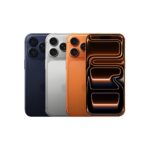
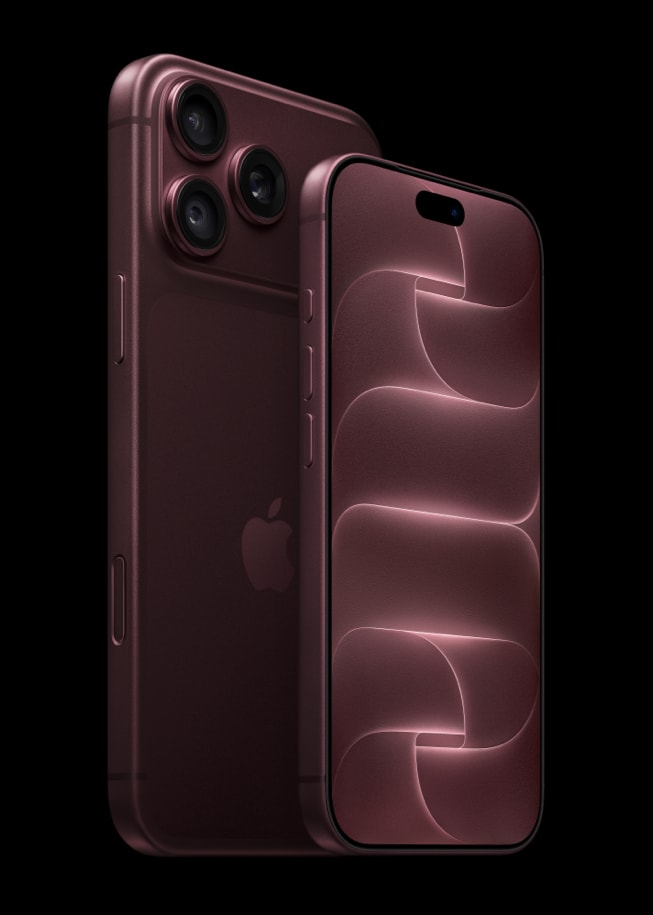
The design is not a complete reset, and that may be deliberate. Apple appears to be keeping the broad iPhone 17 Pro language with a premium metal frame, colour-matched rear glass and colours including deep black, silver, glacier and burgundy. In other words, the outside looks evolutionary while the inside is where Apple wants users to notice the difference.
The pricing is where this launch becomes more complicated. Early reports put the iPhone 18 Pro at around $1,199 and the iPhone 18 Pro Max at around $1,299 for 256GB storage. That higher entry point fits the wider pressure we have been tracking around memory, storage and AI hardware costs. TechBooky’s earlier analysis on Apple’s $2,000 iPhone moment made the same point: AI is not free, even when it is packaged inside a familiar phone.
This is also John Ternus’ first major iPhone launch as CEO, so the event carries a leadership signal. Tim Cook built Apple into a services and supply-chain powerhouse. Ternus now has to prove Apple can still make hardware feel exciting at a time when investors and users are asking whether AI assistants, not phones, are becoming the next major computing interface.
Apple’s answer is clearly that the iPhone remains the interface. The company is not trying to beat OpenAI or Google by turning the iPhone into a loud chatbot device. It is trying to make the phone a secure, private and polished AI computer that users already understand. That is a quieter story than the wider AI hype cycle, but it may be the one Apple is best equipped to sell.
The iPhone 18 Pro and Pro Max will therefore be judged on more than benchmarks. The real test is whether the A20 Pro, C2 modem, upgraded cameras and Apple Intelligence features make the phones feel meaningfully different in daily use. If they do, Apple can argue that its slower AI rollout was a strategy. If they do not, the Pro models may look like expensive hardware waiting for software to catch up.
Related Reading
More contextual TechBooky stories selected from tags, categories and article context.
Paul Femi Balo is the founder and publisher of TechBooky. He covers artificial intelligence, African technology, digital infrastructure, enterprise technology and the global digital economy.
We use cookies to ensure that we give you the best experience on our website. If you continue to use this site we will assume that you are happy with it.



 The new phones were announced during Apple’s September event, which is streaming on the company’s official events page. The first wave of live launch details points to a familiar Pro and Pro Max split, but with meaningful internal changes: Apple’s A20 Pro chipset, a new C2 modem, iOS 27, 12GB of RAM and 256GB of base storage.