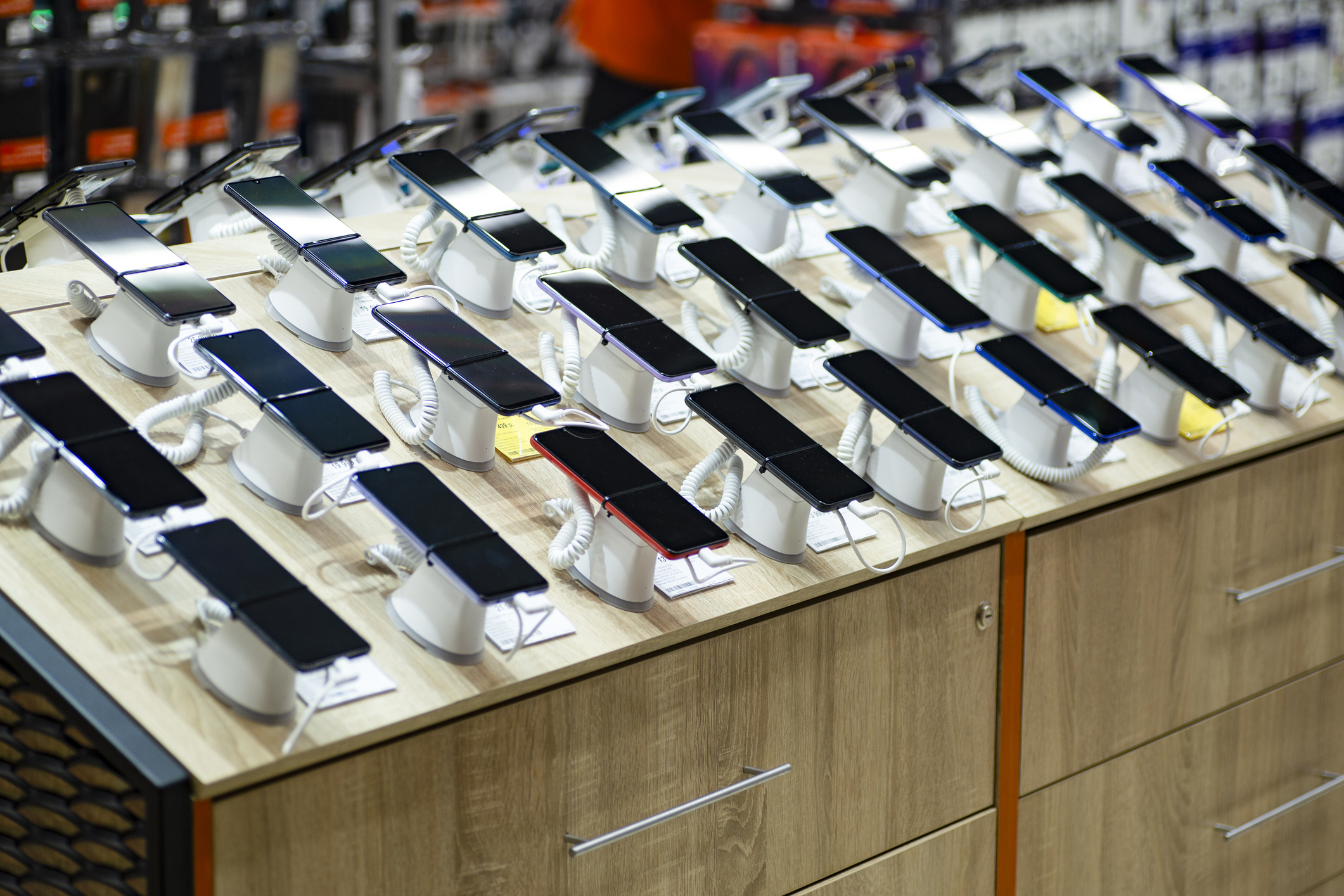
Smartphones store. Showcase with selling various new smartphones in electronics store during a sale. Mobile phone market concept. High quality photo
India’s smartphone market entered the festive season with an unusually sharp fall in shipments. Manufacturers sent 35.8 million phones into the country in the third quarter of 2026, down 26% from a year earlier, according to figures published by Omdia on 19 October. The research firm says it was India’s weakest third quarter for smartphone shipments since 2016.
Samsung moved back into first place with 6.7 million shipments, ahead of Vivo’s 6.4 million. Oppo followed with 4.9 million, Xiaomi with 4.7 million and Apple with 3.9 million. The change was about more than the order of the top five. Chinese smartphone brands collectively accounted for 68% of shipments, compared with 75% in the same quarter last year.
The numbers point to a difficult quarter for a market that had been expected to benefit from festive buying. Omdia attributes the decline to higher handset prices, cautious consumer spending and weakness in online sales channels. It also notes that Diwali fell later this year, pushing some stock deliveries by physical retailers from September into October.
That timing matters. Shipments measure phones supplied to distributors and retailers, not the number consumers bought at the till. A shipment decline can signal softer demand, but it can also reflect how much stock sellers already hold and when they choose to replenish it. September’s weakness therefore should not be read as a precise measure of festive-season sales. October’s figures will help show how much business was delayed rather than lost.
There is a broader cost pressure behind the quarterly timing. Memory prices and other component costs have been squeezing the economics of affordable smartphones, making it harder for brands to keep entry-level prices attractive while protecting margins. That is a challenge in India, where buyers have a large choice of models and small price differences can matter.
Samsung’s 6.7 million shipments put it at the top of the Indian market for the first time since the opening quarter of 2024, Omdia says. The firm points to demand for the Galaxy A07, A17 and A27, as well as Samsung’s premium line-up. Bank cashback, trade-in offers and financing also helped make the company’s phones more accessible at a time when shoppers were watching prices.
The shift in Chinese brands’ collective share does not mean they have ceased to dominate India’s phone market. At 68%, they still represent more than two-thirds of shipments. But the year-on-year drop is significant in a sector where Vivo, Oppo and Xiaomi have built extensive retail and distribution networks. Vivo shipped 6.4 million units, down 34% from a year earlier; Oppo shipped 4.9 million, down 24%; and Xiaomi shipped 4.7 million, down 28%, according to Omdia.
Apple’s 3.9 million shipments also kept it in the top five, underlining the growing importance of the premium segment even as the overall market contracted. The figures describe a market splitting in two directions: consumers who can use financing or trade-ins to move upmarket, and budget-conscious buyers facing fewer easy upgrades.
Omdia expects the Indian market to remain under pressure and forecasts a further low-single-digit shipment decline in 2027. It says pricing pressure could persist into at least the first half of next year. Those are projections, not reported sales, and the strength of October’s festive trade could alter the near-term picture.
Phone makers are also betting that useful artificial intelligence features will give buyers a reason to upgrade. In Omdia’s research, nearly four in ten respondents in India said they could be willing to pay more for a phone if its AI features were genuinely useful. The word “useful” is doing much of the work there. Buyers will need to see a practical improvement in photography, translation, productivity or support, not simply another AI label on the box.
India’s figures fit a wider pattern of pressure on device makers as component costs rise. TechBooky has also examined how memory costs weighed on global smartphone shipments. For the Indian market, the next test is whether the October retail season can offset a weak July-to-September quarter, and whether brands can keep phones affordable without sacrificing the features consumers now expect.
Related Reading
More contextual TechBooky stories selected from tags, categories and article context.
Paul Femi Balo is the founder and publisher of TechBooky. He covers artificial intelligence, African technology, digital infrastructure, enterprise technology and the global digital economy.
We use cookies to ensure that we give you the best experience on our website. If you continue to use this site we will assume that you are happy with it.