TechBooky AI Assistant
👋 Welcome to TechBooky AI Assistant

I can help with:
🔎 Tech News
🤖 AI Topics
💻 Gadgets
☁️ Cloud
✍️ Guest Posts
📢 Advertising
🔗 Backlinks
📩 Newsletter
  • AI Search
  • Cryptocurrency
  • Earnings
  • Enterprise
  • About TechBooky
  • Submit Article
  • Advertise With TechBooky
  • Contact Us
  • Data Intelligence
TechBooky
  • African
  • AI
  • Metaverse
  • Gadgets
  • Data Intelligence
  • AI Search
Generic selectors
Exact matches only
Search in title
Search in content
Post Type Selectors
Search in posts
Search in pages
  • African
  • AI
  • Metaverse
  • Gadgets
  • Data Intelligence
  • AI Search
Generic selectors
Exact matches only
Search in title
Search in content
Post Type Selectors
Search in posts
Search in pages
TechBooky
Generic selectors
Exact matches only
Search in title
Search in content
Post Type Selectors
Search in posts
Search in pages
Home Security

Iran-Linked Hackers Are Actively Disrupting US Infrastructure — And It’s Getting Worse

Paul Femi Balo by Paul Femi Balo
April 8, 2026
in Security
Share on FacebookShare on Twitter
Share this story

Send it to someone who should read it.

f Facebook X X in LinkedIn wa WhatsApp tg Telegram @ Email
In Brief
  • infrastructure, actively disrupting systems that control energy, water, and government operations, a development officials say marks a dangerous shift from espionage to real-world impact.
  • agencies, including the FBI, NSA, and CISA, the attackers are exploiting programmable logic controllers (PLCs) — the industrial devices that directly control physical processes in power...
  • Some of these intrusions have already caused operational disruptions and financial losses, with hackers manipulating system data and interfering with how infrastructure behaves in real time. ...

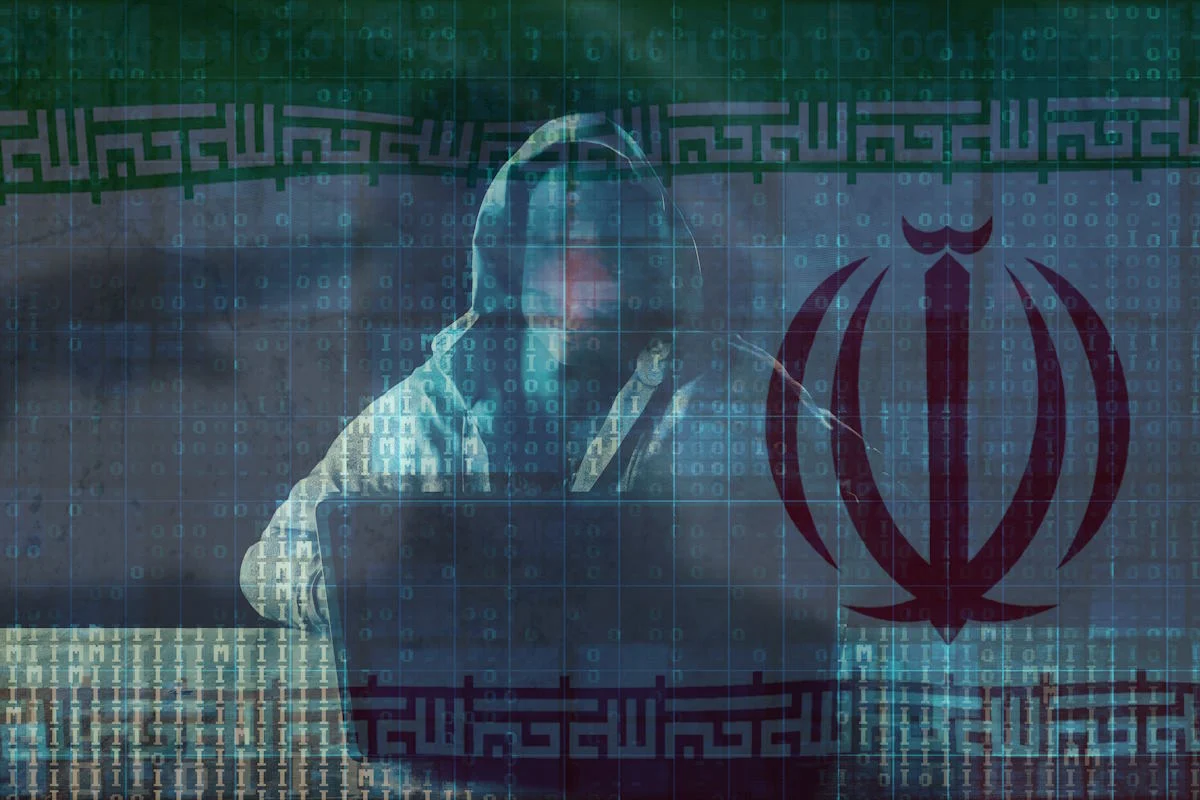
Iran-linked hackers have escalated cyberattacks on critical U.S. infrastructure, actively disrupting systems that control energy, water, and government operations, a development officials say marks a dangerous shift from espionage to real-world impact.

According to a joint advisory from multiple U.S. agencies, including the FBI, NSA, and CISA, the attackers are exploiting programmable logic controllers (PLCs) — the industrial devices that directly control physical processes in power plants, water facilities, and other essential systems. 

This isn’t theoretical. Some of these intrusions have already caused operational disruptions and financial losses, with hackers manipulating system data and interfering with how infrastructure behaves in real time. 

At the centre of the attacks are internet-facing industrial systems particularly PLCs and SCADA environments which were never originally designed with modern cybersecurity threats in mind. Once compromised, attackers can alter machine behaviour, falsify data, or shut down operations entirely.

The scale is what’s worrying.

Federal agencies say multiple sectors have been hit, including energy grids, water utilities, transportation systems, and government services, with some attacks specifically targeting widely used industrial hardware from vendors like Rockwell Automation.

This wave of attacks comes amid heightened geopolitical tensions, and officials believe the activity is tied to Iranian state-backed groups and affiliated hacking collectives. 

What makes this moment different is intent.

Also worth reading
France Blames Iran for Supermarket Fridge Cyberattack As the US and China Build Rival AI Blocs, Where Does Africa Stand? US-China AI Safety Talks Run Into A Trust Problem 1Password Funding Row Shows Open Source Is Political US Threatens Sanctions As Moonshot AI Kimi K3 Fight Escalates Hackers Tricked Meta’s AI Chatbot For Access Privileges To Instagram Accounts

Historically, many state-backed cyber operations focused on espionage stealing data, monitoring systems, or planting backdoors. But this campaign is increasingly about disruption and sabotage, echoing tactics seen in earlier cyberwarfare incidents like Stuxnet, where industrial control systems were directly manipulated. 

Security researchers say attackers are now going deeper into operational technology environments, moving beyond surface-level breaches into the core systems that keep infrastructure running. 

The implications are serious.

A successful compromise of PLC systems can lead to contaminated water supplies, power outages, equipment damage, or cascading failures across interconnected systems. U.S. agencies are now urging operators to urgently patch vulnerabilities, isolate critical systems from the internet, and increase monitoring for unusual activity. 

In simple terms: the digital battlefield is now directly connected to the physical world.

And as cyber operations become a central front in geopolitical conflicts, attacks like these are no longer edge cases — they’re becoming part of the playbook.

For infrastructure operators, the message is clear: this isn’t just another warning. It’s an escalation.

Related Reading

More contextual TechBooky stories selected from tags, categories and article context.

  • data centre
    Google Plans Texas Data Center That Relies Mostly on…
  • cisco logo
    Cisco Patches Critical Flaws That Could Let Hackers…
  • 2026-10-12t154034z-1680256209-rc2q1oaaopie-rtrmadp-3-france-cyberattack
    Hackers Defrost French Supermarket Fridges, Spoiling Food
  • handala hackers
    FBI Warns of Handala Hackers Using Telegram for Malware
  • Nigeria Bureau of Statistics Data breach
    Hackers Compromised The NBS Sever, But No Ransomware Yet
  • 211012130640-china-taiwan-flags
    Chinese Cyberattacks on Taiwan Hit 2.6M Daily in 2025
  • 1536x864_cmsv2_e4013f15-9055-57fe-aa73-dd8c65c57be3-9745866
    AI Data Centre Pollution Fight Puts Compute Boom On Trial
  • 3744b5fa-7062-412f-94a2-fb6d59bdc5d0_1793697000_default
    UK Cyber Agency Warns AI Ransomware Could Hit…
Keep Reading Smarter

Search TechBooky with AI

Use TechBooky's AI Search to explore the context behind this story and related coverage across the site.

Try AI Search
More On This Topic
Security
Follow TechBooky

Follow TechBooky for more technology stories and newsroom updates.

f Facebook X X in LinkedIn ig Instagram wa WhatsApp

Tags: hackersiranprogrammable logic controllerssecurityunited states
Paul Femi Balo

Paul Femi Balo

Paul Femi Balo is the founder and publisher of TechBooky. He covers artificial intelligence, African technology, digital infrastructure, enterprise technology and the global digital economy.

Search TechBooky
Open TechBooky AI Search Try the AI Assistant

BROWSE BY CATEGORIES

Receive top tech news directly in your inbox

subscription from
Loading

Freshly Squeezed

  • Microsoft 365 Outage Spreads Across Services as Recovery Drags On November 13, 2026
  • AI Safety Groups Sue to Halt New Models From Five Tech Giants November 13, 2026
  • Google Brings Gemini 4 Hydrogen to Search Worldwide November 13, 2026
  • Notion Warns of API Keys in Chats Exposed by Fireworks Breach November 13, 2026
  • Nigeria Opens N4bn 3MTT Funding to Training Partners November 13, 2026
  • Microsoft Outage Hits Outlook and Other 365 Services November 12, 2026
  • UK AI Chip Startup Fractile Raises $720M at $7B Valuation November 12, 2026
  • TSMC Approves Up to $1B in OpenAI and Anthropic Stakes November 12, 2026
  • Jensen Huang Resigns as Nvidia CEO, Colette Kress Takes Over November 12, 2026
  • Chinese AI Firms Race to Rent Nvidia Compute Abroad, Reuters Says November 12, 2026
  • Google Picks 10 Startups for Its First Africa Applied AI Lab November 12, 2026
  • AWS Opens First Chile Cloud Region With More Than $4B Planned November 12, 2026

Browse Archives

November 2026
M T W T F S S
 1
2345678
9101112131415
16171819202122
23242526272829
30  
« Oct    

Quick Links

  • About TechBooky
  • Advertise With TechBooky
  • Contact us
  • Submit Article
  • Privacy Policy
Generic selectors
Exact matches only
Search in title
Search in content
Post Type Selectors
Search in posts
Search in pages
  • AI
  • Data Intelligence
  • AI Search
  • African
  • Gadgets

© 2025 Designed By TechBooky Elite

Discover more from TechBooky

Subscribe now to keep reading and get access to the full archive.

Continue reading

We use cookies to ensure that we give you the best experience on our website. If you continue to use this site we will assume that you are happy with it.