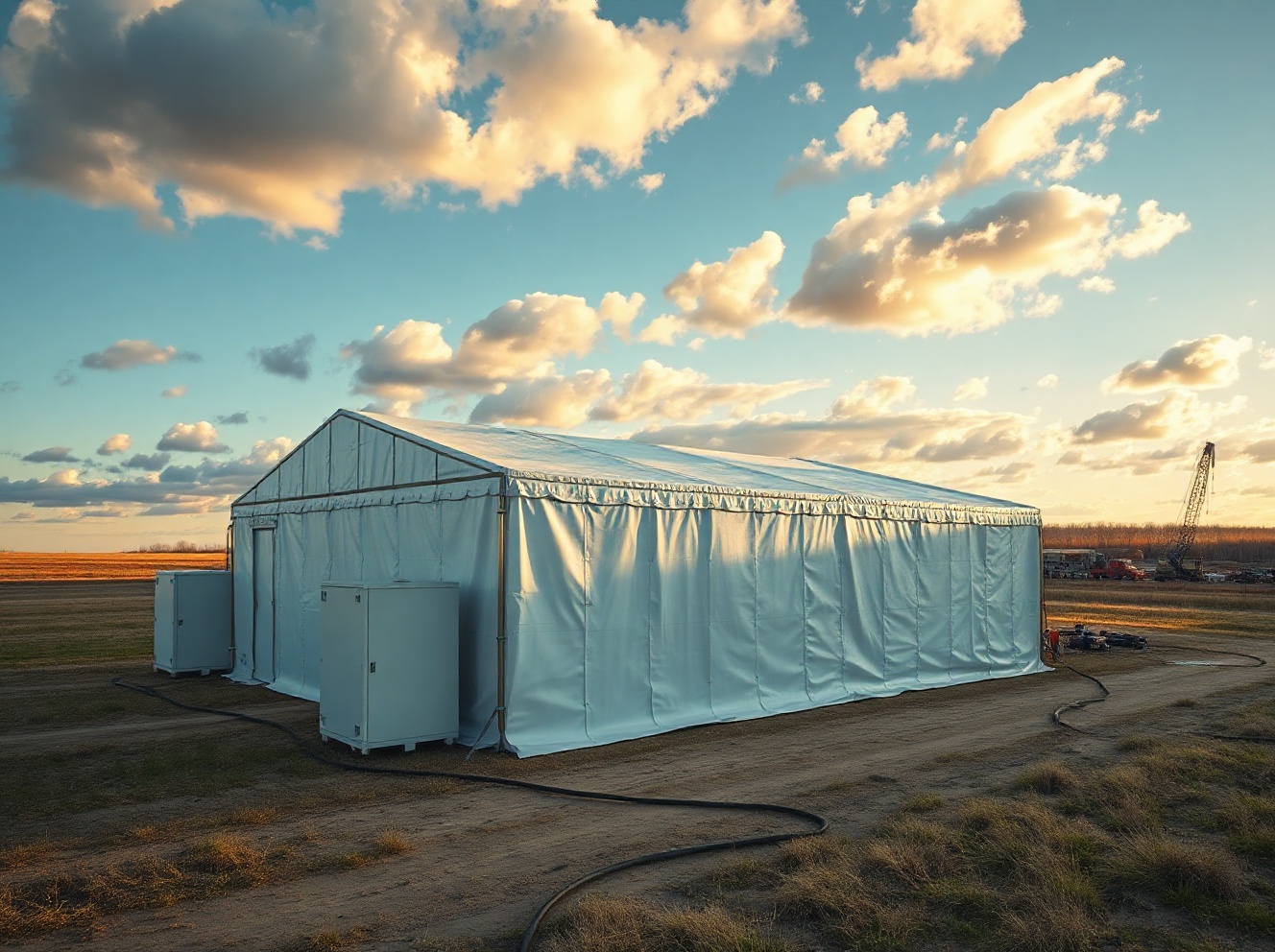
Meta is going ahead in the construction of data centres in tents just when everyone thought the AI data centre boom couldn’t get any stranger. Tesla and xAI seem to have the same contribution equally to the strategy.
This strategy is aimed at reducing building time and quickly increasing its AI capabilities. Meta has constructed data centres inside makeshift tent-like structures. This aggressive infrastructure move is a direct reflection of Tesla’s well-known early factory approach. In order to swiftly get around production constraints and obstacles and expand the Model 3 assembly line, Elon Musk constructed a huge makeshift tent structure in the Fremont factory parking lot in 2018. In contrast to conventional brick-and-mortar permanency, Meta is now using that precise blueprint of radical speed.
Based on Michael Thomas’s opinion, founder of Cleanview, which monitors data centre installations, Meta has constructed six tents, or “rapid deployment structures,” as the business refers to them, outside of New Albany, Ohio, in an effort to reduce construction time in half.
Thomas’s discoveries are not entirely novel. In an interview with a press team last year, Mark Zuckerberg, the CEO of Meta, discussed his intention to place the company’s multi-gigawatt data centers in waterproof tents.
However, Thomas’ photos and examination of local permits highlight the project’s scope and pace of building. Meta began constructing five 125,000-square-foot tents between April and June, according to city permits that Thomas examined. The structures have all been constructed, according to the satellite photos he posted on X.
The tents used are similar to those that Tesla erected in the parking lot of its facility in Fremont, California, for the hurried launch of the Model 3. Additionally, the complex is powered by 200 megawatts of adjacent modular gas turbines, a strategy made popular by rival xAI.
AI chips, which are probably worth billions of dollars, will operate inside the tents.
As Meta has had difficulty releasing its AI models to developers, the tents have sprouted up. According to a recent Wall Street Journal article, Meta’s most current model, Muse Spark, is finished, but the APIs that developers need to access it have been continuously delayed.
According to Meta, it plans to invest up to $145 billion in data centers and other capital projects. The sound of that has not pleased Wall Street, as Meta’s stock has dropped 5% so far this year. One method to reduce the cost is to place AI chips in tents.
Meta is yet to respond to the member of the press when they were reached out to, and once there is a response, there will be an update.
Also in another story, which had permitted documents and satellite imagery, it is confirmed that Meta constructed six giant, 125,000-square-foot tents in New Albany, Ohio, with five of these “rapid deployment structures” going up in a rapid burst. Building traditional concrete data centres takes years, but Meta has claimed that using weatherproof fabric structures can cut construction timelines in half.
And despite the word “tent,” these buildings house billions of dollars’ worth of high-performance AI chips, such as NVIDIA processors, supported by advanced prefabricated modular cooling and power units. To avoid waiting on local utilities, Meta has now deployed roughly 200 megawatts of modular gas turbines next to the tents, an off-grid power tactic popularized by Elon Musk’s xAI for its Colossus cluster.
Meta’s aim in doing this is that Wall Street has grown increasingly anxious about Big Tech’s aggressive AI spending, and this is putting Meta under severe financial and stock pressure. With capital expenditures projected to increase as high as $145 billion, the company is desperate to lower its real estate and infrastructure costs in order to ease investor anxiety. And at the same time, Meta faces a brutal race against its competitors like OpenAI, Google, and Microsoft. The delays in rolling out API infrastructure for its latest flagship models, such as Muse Spark, have added immense urgency to get servers online immediately, even if the housing is only temporary.
This move has divided tech industry analysts, and critics have warned that housing expensive, delicate hardware inside fabric structures introduces major liabilities related to physical security, extreme weather risks, and intensive cooling demands. Proponents, however, see it as a brilliant, agile approach to bootstrapping. They argue it allows Meta to bridge the gap and run AI models today while its permanent, multibillion-dollar gigawatt-scale data centre campuses are being built over the next several years.
Related Reading
More contextual TechBooky stories selected from tags, categories and article context.
We use cookies to ensure that we give you the best experience on our website. If you continue to use this site we will assume that you are happy with it.