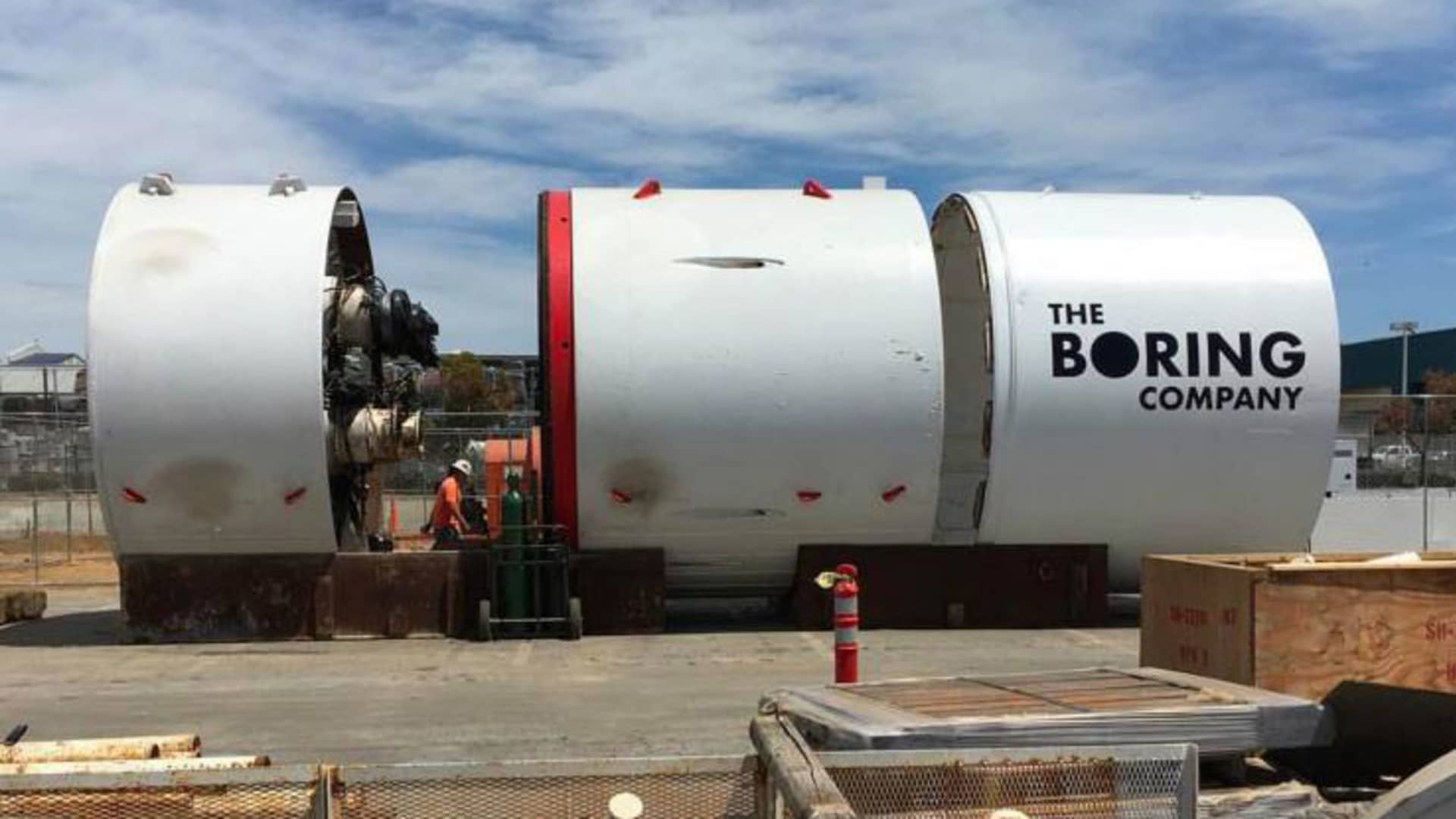
Elon Musk’s The Boring Company is reportedly trying to raise fresh capital at a valuation that would make the tunnelling startup look much less like a side project and much more like another serious Musk infrastructure bet. The Wall Street Journal reported that the company is in talks to raise about billion at a valuation of roughly billion. The deal has not closed, and terms could still change, but the number is significant because The Boring Company was last valued at about .7 billion in 2022.
That jump would put the company into a different class of private infrastructure startups. The Boring Company is best known for its Las Vegas tunnel system, where Tesla vehicles shuttle passengers through underground routes. It has also announced or pitched tunnel projects in places including Nashville, Dubai, Baltimore, Chicago and Los Angeles. The investment case is simple on paper: if cities are choking on traffic and surface infrastructure is politically slow, faster tunnel construction could become a major urban transport business.
The harder question is whether the company has shown enough execution to justify that scale of valuation. Musk has long argued that tunnelling should be cheaper and faster than traditional infrastructure projects. The Boring Company was created around that thesis. But tunnel projects are not software products. They face permitting, geology, labour safety, local politics, environmental rules, construction overruns and public procurement cycles. That makes a billion valuation a bet not just on technology, but on whether Musk can compress one of the slowest areas of infrastructure into something closer to a startup growth curve.
The timing is not accidental. SpaceX recently completed a historic public listing, and Musk’s wider empire is attracting renewed investor attention across rockets, satellites, artificial intelligence, transport, tunnelling and energy storage. TechBooky’s earlier look at SpaceX’s record IPO explained how investors are increasingly pricing Musk companies as connected pieces of one technology platform rather than isolated businesses. The Boring Company benefits from that perception.
There is a real synergy argument. The Boring Company uses Tesla vehicles in its Las Vegas loop. Musk’s infrastructure companies also share a broader narrative around transport, autonomy, energy and networked systems. If Tesla’s robotaxi story matures, an underground mobility network could look more attractive. If cities want high-throughput point-to-point transport without building new roads, tunnels may become more interesting. If investors believe Musk can keep using one company to support another, the valuation starts to look less strange.
But the risks are not minor. TechCrunch noted that tunnel workers have suffered serious injuries, and Nevada regulators previously said The Boring Company violated environmental rules hundreds of times. Those details matter because infrastructure companies are judged differently from app companies. A messaging startup can move quickly and patch problems later. A tunnelling company has to prove it can build safely, comply with local rules and deliver repeatable economics in the physical world.
The fundraising report also arrives as investors are still debating how much premium should attach to anything connected to Musk. SpaceX has given public markets a new way to buy into that story, but it has also exposed investors to Starship execution risk, Starlink economics, AI infrastructure ambitions and governance questions around Musk’s control. A richer Boring Company valuation extends the same debate into urban transport. Are investors funding proven infrastructure, or are they paying early for another Musk future market?
The answer may be both. The Boring Company has something many transport startups do not: real tunnels, operating systems, political attention and a founder who can move capital markets. It also has unresolved questions around scalability, safety and whether its model can work outside tightly controlled environments such as Las Vegas. A billion valuation would not settle those questions. It would simply make them more expensive to answer.
Related Reading
More contextual TechBooky stories selected from tags, categories and article context.
Paul Femi Balo is the founder and publisher of TechBooky. He covers artificial intelligence, African technology, digital infrastructure, enterprise technology and the global digital economy.
We use cookies to ensure that we give you the best experience on our website. If you continue to use this site we will assume that you are happy with it.