Africa’s push to make artificial intelligence more useful for its own people has moved from speeches to a more coordinated regional project. African telecommunications ministers have adopted the Abuja Ministerial Declaration on Meaningful Connectivity and backed a new pan-African AI language initiative called ATLAS Umoja AI, aimed at developing models and tools that understand African languages, cultures and local digital needs.
The announcements came during the African Telecommunications Union Conference of Plenipotentiaries in Abuja. CIO Africa reported that the declaration commits governments to policies around resilient digital infrastructure, meaningful connectivity, technology-neutral regulation, digital inclusion and locally relevant digital services. Alongside that policy layer, ATLAS Umoja AI is designed to give governments, researchers, startups and industry players a shared platform for African-language AI development.
The initiative brings together the governments of Benin, Kenya, Namibia, Nigeria and Togo, as well as the GSMA and African technology organisations including Awarri, Zindi, Pawa AI and Mozisha. A GSMA statement said Africa Umoja AI will help partners share expertise, datasets and best practices to build trusted and scalable AI that better reflects African languages and development priorities.
The timing matters because the AI boom is still mostly English-first, US-first and China-first. Most leading AI systems are powerful, but they still struggle with low-resource languages, local idioms, African accents, cultural context and country-specific public services. That creates a practical adoption problem. If people cannot use AI comfortably in the languages they speak every day, then AI becomes another premium technology that works best for the already-connected.
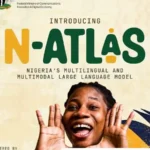
Nigeria’s N-ATLAS project already pointed in this direction. TechBooky’s earlier report on Nigeria’s local-language AI model showed why speech recognition and language support for Yoruba, Hausa, Igbo and Nigerian English are not cosmetic features. They are access tools. They determine whether students, small businesses, public agencies and ordinary citizens can use AI without translating themselves into someone else’s digital world first.
ATLAS Umoja AI takes that idea beyond one country. It is trying to build a continental collaboration model at a time when African AI work is often fragmented across universities, startups, government pilots and donor-backed projects. If those efforts can share datasets, evaluation standards, language resources and technical capacity, the continent has a better chance of building tools that are not just locally branded, but genuinely useful.
The technical problem is significant. Research published this year on the African language tax found that many African languages can be more expensive and slower to process in frontier AI systems because tokenizers split the same meaning into far more pieces than they do for English. In practice, that means users of some African languages can face higher inference costs, higher latency and smaller effective context windows. This is not only a language problem; it is an economic problem encoded into model infrastructure.
That is why local language AI matters for connectivity too. The Abuja Declaration is not only about building networks. It is about whether people who are already covered by mobile broadband actually find the internet useful enough to adopt it. Millions of Africans live within network coverage but remain offline because of cost, literacy, relevance, trust and language barriers. AI tools that speak local languages could support education, agriculture, healthcare, customer service, public information and small-business workflows, but only if they are built with African users in mind from the start.
There is also a business angle. Startups such as Howzit AI in South Africa are already showing how local-language assistants can become products, not just research demos. TechBooky’s recent look at Howzit AI’s South African language support made the same point from the startup side: global models may be available, but local context, pricing and language support can decide whether users actually adopt them.
The challenge now is execution. ATLAS Umoja AI will need high-quality data, privacy rules, consent frameworks, open evaluation, sustainable funding and a clear route from language models to practical services. It must also avoid becoming another conference announcement that fades after the press release. The useful test will be whether developers, researchers, schools, public agencies and startups can actually build on what the initiative produces.
Still, the direction is important. Africa does not need to copy the exact AI race happening in Silicon Valley or Beijing. It needs AI that lowers barriers for its own people. ATLAS Umoja AI is early, but if it works, it could help move African-language AI from scattered experiments into shared infrastructure.
Related Reading
More contextual TechBooky stories selected from tags, categories and article context.
Paul Femi Balo is the founder and publisher of TechBooky. He covers artificial intelligence, African technology, digital infrastructure, enterprise technology and the global digital economy.
We use cookies to ensure that we give you the best experience on our website. If you continue to use this site we will assume that you are happy with it.