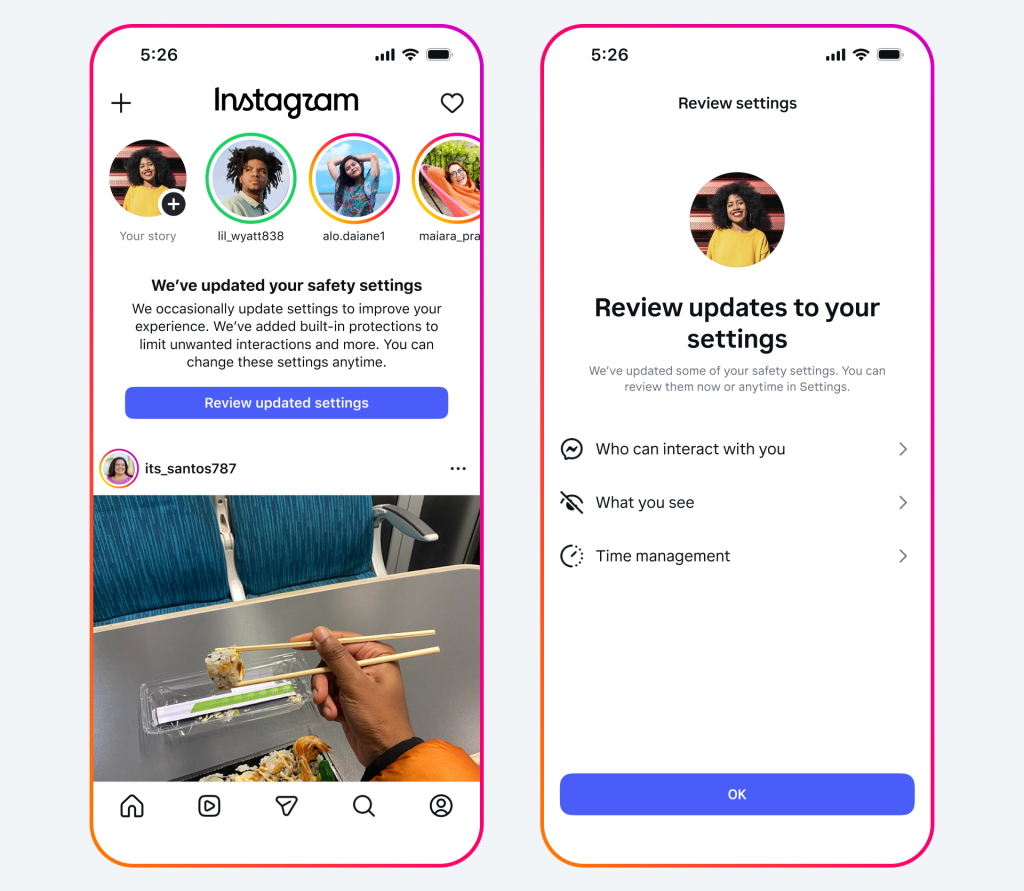
Meta is expanding its AI age-estimation system across the world to identify Instagram users it believes are teenagers, even when their profiles show an adult birthday. The company says the change will place millions more people into Instagram Teen Accounts and their built-in safety settings.
The global expansion announced on 9 November is about finding teens who would otherwise miss those protections, rather than introducing an entirely new type of account. Meta had already been using AI to spot possible age misrepresentation in some markets, a move TechBooky covered when the approach first emerged. The new development is its worldwide reach on Instagram.
Teen Accounts automatically restrict who can contact a young user, the material they are shown and how much time they spend on Meta’s apps. A teenager who entered an adult date of birth may now be moved into those protections if Meta’s systems estimate that the person is under 18. For parents, the practical point is that an adult birthday will no longer reliably leave a teen outside the protected experience.
Meta says it is still rolling out comparable age-estimation technology on Facebook. It plans to begin a global launch on Threads later this year. That timing matters because today’s worldwide expansion applies to Instagram, not all three services at once. Teen Accounts themselves are already available on Facebook and Messenger, but the deployment of this particular age-detection system is a separate step.
Meta has previously described a mix of signals for age assurance, including AI analysis of visual material and activity that may indicate a user’s age. Its earlier explanation of the technology also described its use to place suspected teens into age-appropriate experiences in selected markets. The company did not provide a detailed accuracy rate or country-by-country results for the new worldwide rollout in Monday’s announcement.
That absence leaves an important question for adults who may be classified as teens, and for teenagers whose accounts may not be detected. An AI estimate can be a useful backstop when a birth date is false, but its effectiveness depends on how often it gets the decision right and how easily a user can correct a mistake. Meta says parents can help ensure their teen’s age is accurate, but the announcement does not quantify mistaken classifications.
The company is also adding other signals in specific places. In Australia, it has begun using Apple’s age-range signal as an additional way to understand a user’s age. In the United States, parents will begin receiving Instagram notifications this month explaining how Meta places teenagers into age-appropriate protections and how to check that a child’s age is correct. Those details should not be mistaken for a universal Apple integration or a worldwide parent-notification launch.
The central problem for social platforms is straightforward. Teen safety settings only work as intended if the platform recognises that the person using an account is a teen. A self-declared birthday can be wrong, while requiring every user to submit identity documents would introduce a different set of privacy and access concerns. Meta is betting that an automated estimate can narrow that gap without making every account go through the same verification process.
The global scale raises the stakes on both sides. More teenagers could receive safer defaults without needing to ask for them. At the same time, the company will need to show that its system handles errors fairly across different regions and users. For now, Meta has announced a wider deployment and an expectation of millions more protected teens, not independently verified evidence that age misrepresentation on Instagram has been solved.
Related Reading
More contextual TechBooky stories selected from tags, categories and article context.
Paul Femi Balo is the founder and publisher of TechBooky. He covers artificial intelligence, African technology, digital infrastructure, enterprise technology and the global digital economy.
We use cookies to ensure that we give you the best experience on our website. If you continue to use this site we will assume that you are happy with it.