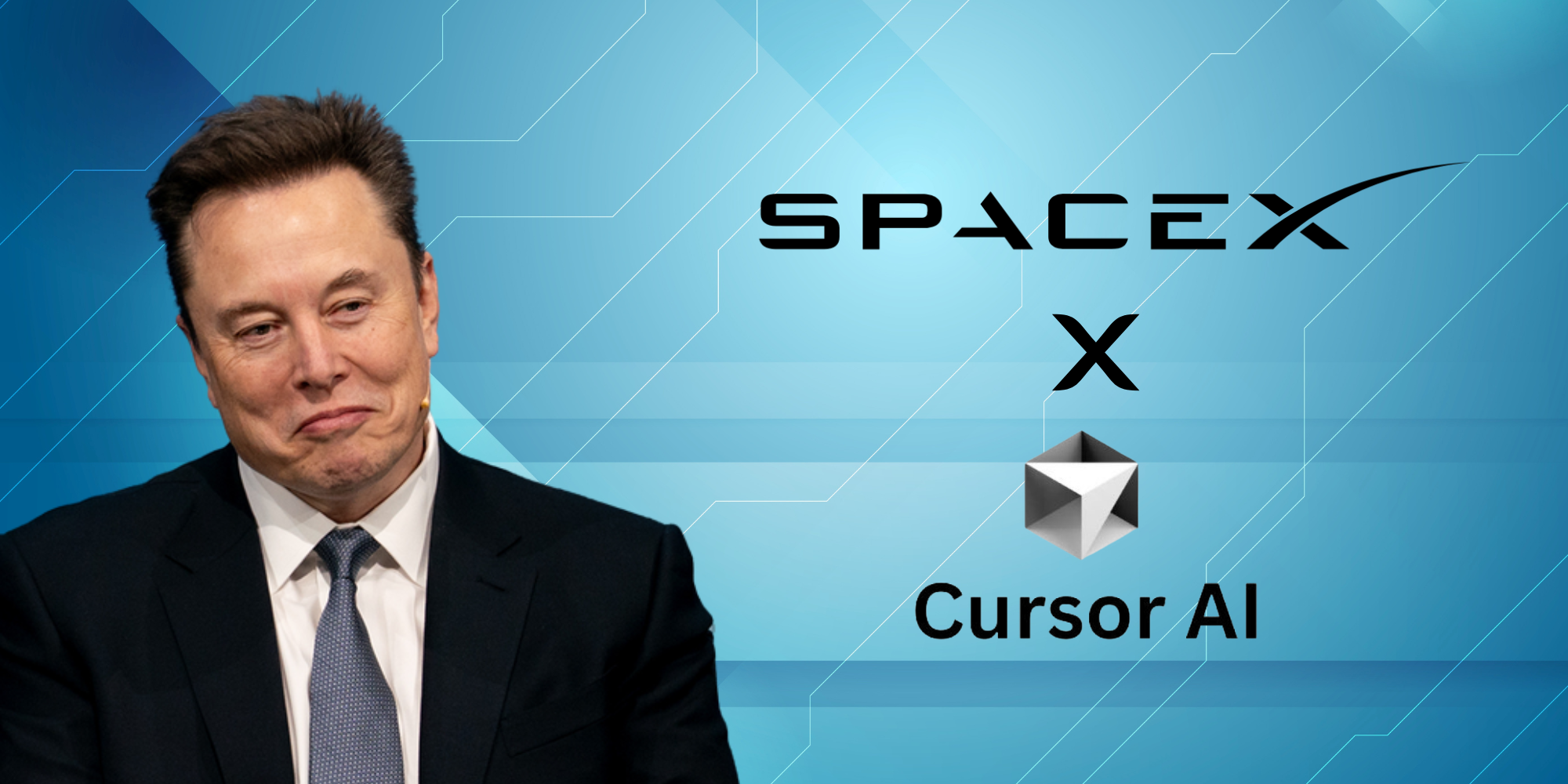
Cursor is now officially part of SpaceX, and the deal says a lot about how Elon Musk wants to compete in artificial intelligence.
In a short announcement, Cursor said it has been acquired by SpaceX, completing a process that began in April when it announced a partnership with SpaceXAI to accelerate model training. The company says the new structure gives it access to the computing power it needs to build lower-cost AI models for coding.
That is the simple version. The bigger version is that Musk is trying to pull together the pieces of a full AI stack. SpaceX has infrastructure and engineering culture. xAI has Grok. X has distribution and user data. Colossus gives the group massive compute. Cursor brings one of the most important developer surfaces in AI coding.
This matters because coding agents have become one of the fastest-moving parts of the AI market. Developers are no longer using AI only to autocomplete a line or explain a function. They are asking agents to read a repository, plan changes, edit files, run tests and keep working through errors. Whoever owns that workflow could end up sitting close to how modern software is built.
Cursor had already said in an earlier partnership note that more compute had helped it scale reinforcement learning and improve its Composer coding models. That makes the SpaceX acquisition logical. If AI coding tools are becoming model companies, they need serious compute. If model companies want developer adoption, they need products people use every day.
For Musk, the attraction is obvious. Grok is competing with OpenAI, Google, Anthropic, Meta and Chinese model labs, but consumer chatbots are only one battlefield. Coding tools are another. If Cursor becomes tightly connected to Grok and SpaceXAI compute, Musk can compete for developers directly, not only for chatbot users.
We recently wrote about Grok 4.6 and the way xAI is trying to push itself into the top tier of AI models. Cursor gives that effort a practical route into software teams. It also links to the wider coding-agent race, where companies such as Z.ai, OpenAI, Anthropic and Cognition are all trying to make AI feel less like a helper and more like a junior engineer inside the workflow.
There will be questions too. Cursor users may wonder how the acquisition affects neutrality, privacy, model choice and enterprise trust. Developers often want flexibility. They may like Cursor as a product while not wanting every workflow pulled into one company’s broader AI empire.
There is also the strategic question of whether SpaceX becomes more than a rocket and satellite company. Musk’s businesses are increasingly connected by compute, autonomy, communications and AI. Starlink can carry data. SpaceX can build infrastructure. xAI can train models. Cursor can put those models into developer hands.
The acquisition therefore looks less like a simple software deal and more like a statement of intent. The AI race is not only about who has the best model in a benchmark table. It is about who controls compute, distribution, data, developer workflows and the products people use every day. Cursor gives Musk one more layer of that stack.
Related Reading
More contextual TechBooky stories selected from tags, categories and article context.
Paul Balo is the founder of TechBooky and a highly skilled wireless communications professional with a strong background in cloud computing, offering extensive experience in designing, implementing, and managing wireless communication systems.
We use cookies to ensure that we give you the best experience on our website. If you continue to use this site we will assume that you are happy with it.