Perplexity and Nvidia are making a clear bet that the next useful AI agent may not live entirely in the cloud.
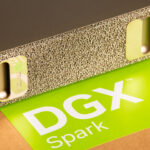
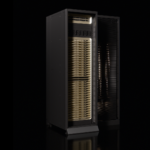
Perplexity has launched Portable Computer, a local-first version of its agentic Computer platform that runs on hardware users already own, starting with Nvidia’s DGX Spark desktop supercomputer and Linux machines equipped with Nvidia RTX GPUs. The product was developed with Nvidia and is designed to keep the model, files and workflow on the user’s machine by default.
VentureBeat reports that work completed locally consumes no cloud billing credits, while users can choose to escalate specific steps to a stronger frontier model when needed. The local launch supports Qwen 3.8 27B and Perplexity’s PPLX 27B, with Nvidia’s Nemotron 3.5 Lightning expected to follow.
The pitch is simple but powerful. Cloud AI agents can become expensive because they run for longer, call tools, review files, browse, retry and verify their work. A normal chatbot answers a question. An agent may spend an hour going through documents, spreadsheets, code, emails or business systems. That turns tokens into a real operating cost.
Portable Computer tries to change that equation. If the agent can run locally, the marginal token cost falls close to zero. It also means sensitive files do not have to leave the device for every step. For lawyers, finance teams, researchers, healthcare workers and enterprises dealing with confidential data, that privacy argument may be just as important as the cost argument.
The technical idea is not only to run a model locally. Perplexity is packaging the model, agent harness, tools, connectors and security sandbox into a single system. That matters because local AI has often been powerful but inconvenient. Users could run models through open-source tools, but setting up the full agent workflow was usually messy.
The company says the local agent can connect to services such as Google Drive, Gmail, GitHub and Slack, while asking permission before sending specific context to a cloud model. That hybrid model may be the practical middle ground. Local AI handles private or repetitive work, while frontier models are reserved for harder reasoning moments.
For Nvidia, this is strategically useful. The company has sold the world on massive AI data centres, but local AI gives it another growth story: personal and enterprise boxes that make AI agents useful at the desk level. DGX Spark and high-end RTX machines become more compelling if they can run real productivity agents, not just demos and hobbyist models.
This also fits the wider movement toward controllable AI infrastructure. We have seen the same idea at national scale in open-weight models and the AI race: whoever controls the model and compute layer has more leverage. Portable Computer brings that argument down to the individual machine.
The limitation is hardware. Requiring an Nvidia GPU with at least 24 GB of VRAM means this is not yet a mainstream laptop product. But the direction is important. If AI agents become everyday workers, people and companies will ask where those agents run, who sees the data, and how much the tokens cost. Perplexity and Nvidia are betting that more of that work will move back onto machines users control.
Related Reading
More contextual TechBooky stories selected from tags, categories and article context.
Paul Balo is the founder of TechBooky and a highly skilled wireless communications professional with a strong background in cloud computing, offering extensive experience in designing, implementing, and managing wireless communication systems.
We use cookies to ensure that we give you the best experience on our website. If you continue to use this site we will assume that you are happy with it.