The AI industry has spent the last two years talking about giant data centres, power shortages and the race to secure GPUs. Runware is now making a different argument: some of the compute crunch may be solved by smaller, modular AI data centres that can be deployed closer to where inference is needed.
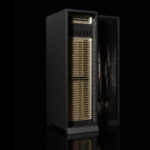
The company unveiled Sonic Inference Pod, a portable data-centre unit built specifically for AI inference. Runware says the system can deliver two times the inference throughput at 30 percent to 90 percent lower cost than traditional inference providers, with capacity beginning from 160 locations in the United States and Europe in the second half of 2026.
The basic idea is attractive because inference is becoming the daily cost centre of AI. Training frontier models gets the attention, but running those models for millions of users, agents, image tools, voice apps and enterprise workflows is what turns AI demand into a constant infrastructure problem. If every request has to travel to a faraway hyperscale data centre, latency, cost and capacity pressure all rise.
Runware wants the Sonic Inference Pod to sit closer to demand. The company says the pod is designed as a modular data centre that can be transported, deployed quickly and expanded by adding more units. TechCrunch also notes that the pods use closed-loop cooling rather than water-heavy cooling systems, an important claim at a time when data-centre water and power use are becoming political issues.
This is not a replacement for hyperscale data centres. Microsoft, Google, Amazon, Meta, OpenAI and others will still need vast campuses for training and large-scale AI workloads. But inference may not always need the same shape of infrastructure. A distributed model could help companies serve users in more places while reducing delays and avoiding some of the planning bottlenecks that come with traditional data-centre construction.
The timing is good. AI compute has become one of the hottest infrastructure topics in tech, from chip supply and energy availability to experimental ideas like orbital data centres for AI compute. The industry is no longer asking only who has the best model. It is asking who can run the model cheaply, reliably and close enough to users.
Runware is also trying to position itself around AI-native compute rather than generic cloud capacity. That matters because inference workloads behave differently from ordinary web hosting. They need fast response times, efficient model routing, GPU utilisation, caching and predictable cost. A pod optimised for inference can, in theory, do better than a general-purpose data centre trying to serve everything.
There are still open questions. Modular infrastructure only works if the economics survive real-world deployment, maintenance, power costs, physical security and hardware refresh cycles. AI chips change quickly, and a pod that looks efficient in 2026 must be upgradeable enough not to become stranded hardware by 2028.
There is also a regulatory and environmental layer. Distributed data centres may reduce some pressure on giant campuses, but they still need permits, grid access, security controls and responsible heat management. If these pods spread into many cities, governments will want to know where they are, how much power they use and what workloads they support.
Even with those cautions, Runware has put a useful idea into the compute debate. The future of AI infrastructure may not be only mega-campuses or space-based dreams. It may also include smaller boxes of compute placed where demand is rising fastest. If inference becomes as common as search, streaming or payments, the network that runs AI may need to become more distributed too.
Related Reading
More contextual TechBooky stories selected from tags, categories and article context.
Paul Balo is the founder of TechBooky and a highly skilled wireless communications professional with a strong background in cloud computing, offering extensive experience in designing, implementing, and managing wireless communication systems.
We use cookies to ensure that we give you the best experience on our website. If you continue to use this site we will assume that you are happy with it.