The AI industry has spent the last two years talking about chips. This week brings a sharper reminder that the next bottleneck may be local politics. Data centres need land, power, water, permits and public tolerance, and communities across the United States are increasingly saying no.
The Information reports that more than 500 US towns and counties now have active data-centre bans or restrictions, up from more than 300 in late June. The report says more than 150 temporary or permanent bans were passed in July alone, many during emergency meetings, as New York and Texas joined the wider pushback.
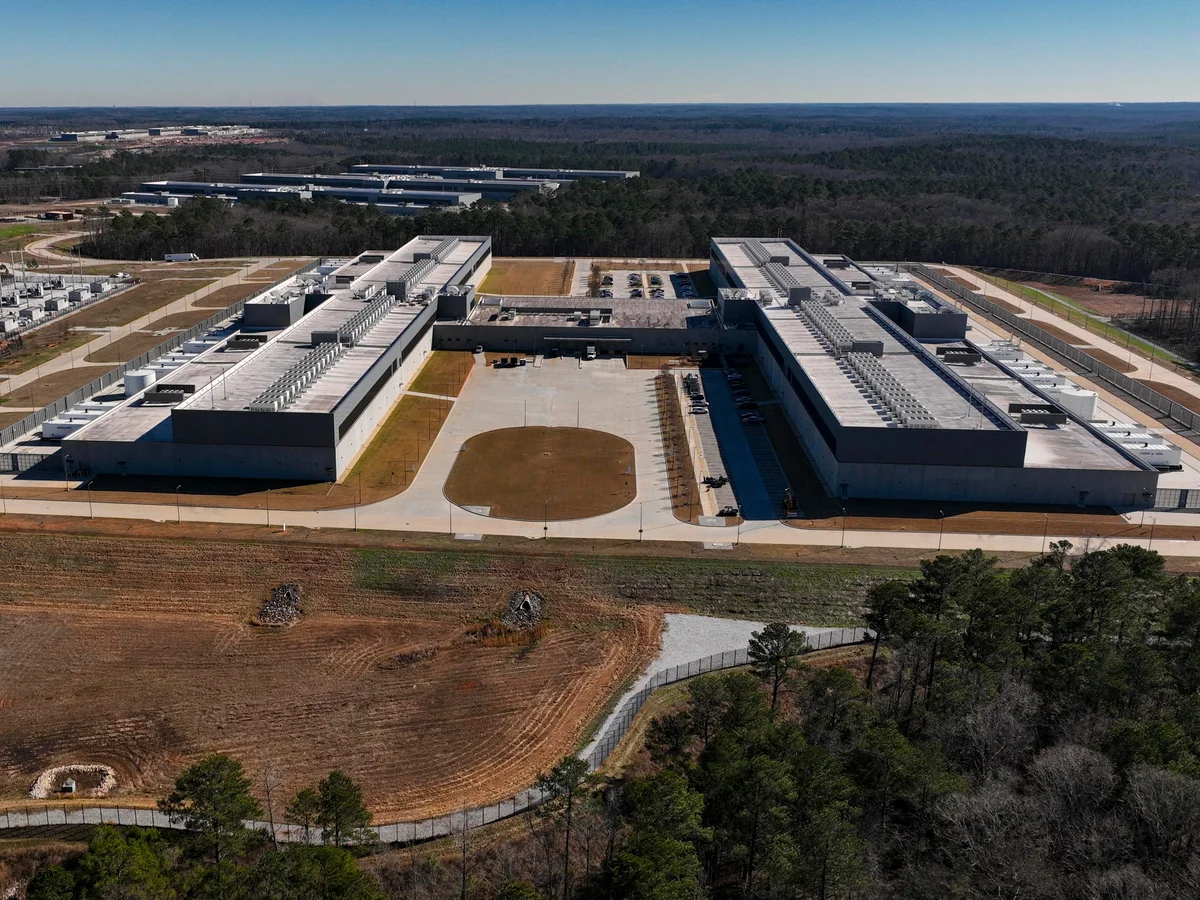
That number matters because the AI boom depends on physical infrastructure at an almost industrial scale. OpenAI, Anthropic, Google, Amazon, Meta, Microsoft and others can talk about agents, models and intelligence, but all of that eventually lands on real electricity grids, real land parcels and real communities that have to live beside the buildings.
The backlash is not only ideological. Communities are worried about power prices, grid stress, water use, noise, tax incentives, land use and whether data-centre jobs justify the disruption. For local officials, the question is becoming simple: why should residents absorb infrastructure strain so distant AI companies can train and serve models?
The policy pressure is visible at state level too. The National Conference of State Legislatures says lawmakers in 15 states are considering data-centre moratoriums, with supporters arguing that pauses can help communities study local effects and grid resilience. New York has passed a one-year moratorium on permits for data centres over 20MW through the legislature, while Texas has moved to slow approvals as grid-connection requests surge.
Texas is especially important because it has been one of the most attractive markets for large energy-hungry projects. Governor Greg Abbott recently directed state energy officials to scrutinise new data-centre grid requests, and reporting from Tom’s Hardware said more than 1,800 projects representing 474GW of demand were caught in the review process. That is several times the peak demand ever recorded by ERCOT, which explains why the politics changed quickly.
This is the less glamorous side of AI infrastructure. The world hears about Nvidia GPUs and billion-dollar model labs, but the model cannot run without substations, cooling, transmission lines, backup power and local permits. When residents resist those projects, the AI buildout becomes slower and more expensive.
The irony is that AI companies increasingly argue that compute is national infrastructure. If that is true, then local communities will demand national-level answers. Who pays for grid upgrades? Who controls water use? Who gets the tax benefit? Who bears the emissions? Who decides whether an AI data centre is more important than housing, farms, factories or ordinary ratepayers?
Africa should watch this closely. The continent wants more data centres, more cloud regions and more AI infrastructure, but it cannot ignore the same local questions. Power is already constrained in many markets. If AI data centres are built as private power islands while public grids remain weak, the politics will eventually turn.
The AI race is therefore becoming a civic infrastructure race. The winners will not only be the companies with the best models. They will be the companies and countries that can build compute without triggering a revolt from the people asked to host it. That may prove harder than buying GPUs.
Related Reading
More contextual TechBooky stories selected from tags, categories and article context.
Paul Balo is the founder of TechBooky and a highly skilled wireless communications professional with a strong background in cloud computing, offering extensive experience in designing, implementing, and managing wireless communication systems.
We use cookies to ensure that we give you the best experience on our website. If you continue to use this site we will assume that you are happy with it.