Slack is turning software work into a shared channel experience, and the timing says a lot about where AI coding agents are headed.
Slack has launched Slack Code, a new feature that creates project-specific coding channels where people and AI agents can work through software tasks together. The feature is available across Slack plans, while access to partner agents still depends on the agent provider.
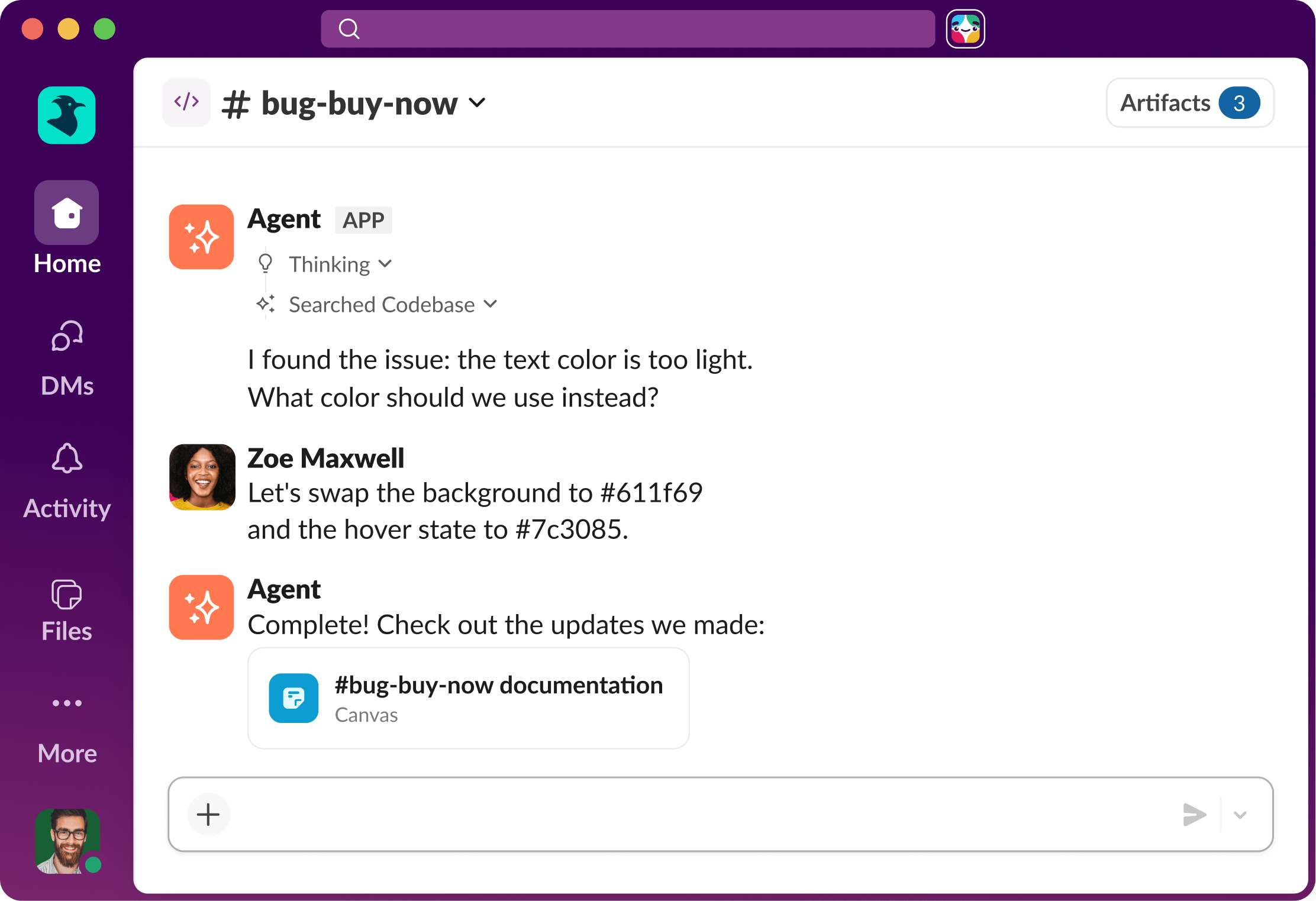
The idea is straightforward. A user can call a coding agent from a conversation, and Slack spins up a dedicated channel for the task. Inside that channel, the team can follow the plan, review code diffs, inspect live previews, give feedback and approve the work before it ships. When the task is complete, the channel can archive itself while leaving a record of what happened.
That matters because AI coding agents are moving from individual developer tools into collaborative workspaces. Coding assistants used to sit inside an IDE or terminal. Now Salesforce wants Slack to become the place where the team sees what the agent is doing, not just the place where people talk about it after the fact.
Slack’s own AI agents page already positions the platform as a home for third-party assistants and agent workflows, with security and app-review requirements for marketplace agents. Slack Code extends that strategy into software development, where visibility and approvals matter.
The partner list is the real signal. Reports say Slack Code supports agents from Anthropic, Cognition, GitHub, OpenAI and Vercel, including Claude Code, Devin, GitHub Copilot, ChatGPT and Vercel agents. That is a multi-agent strategy, not a one-model strategy.
This is consistent with the broader enterprise AI direction. Microsoft has already moved toward multi-model work inside productivity tools, including Anthropic models inside Word Copilot. The winning interface may not be a single model brand. It may be the work surface where several models can be used without disrupting the workflow.
For engineering teams, Slack Code solves one practical problem: context. A coding agent can generate code, but teams still need to know why it made a change, who approved it, what it touched and whether the output matches the original business request. Putting the work in a channel makes those questions easier to answer.
There are risks. Slack is not a replacement for source control, secure review, test automation or deployment governance. If teams treat agent-generated diffs as finished work just because they appear in a familiar chat interface, they will create new failure points. The tool is useful only if review discipline remains strong.
Still, Slack Code is a clear step toward multiplayer AI software development. AI agents are no longer being sold only as private assistants for individual developers. They are becoming visible teammates inside the places where work is planned, debated and approved.
Related Reading
More contextual TechBooky stories selected from tags, categories and article context.
Paul Balo is the founder of TechBooky and a highly skilled wireless communications professional with a strong background in cloud computing, offering extensive experience in designing, implementing, and managing wireless communication systems.
We use cookies to ensure that we give you the best experience on our website. If you continue to use this site we will assume that you are happy with it.