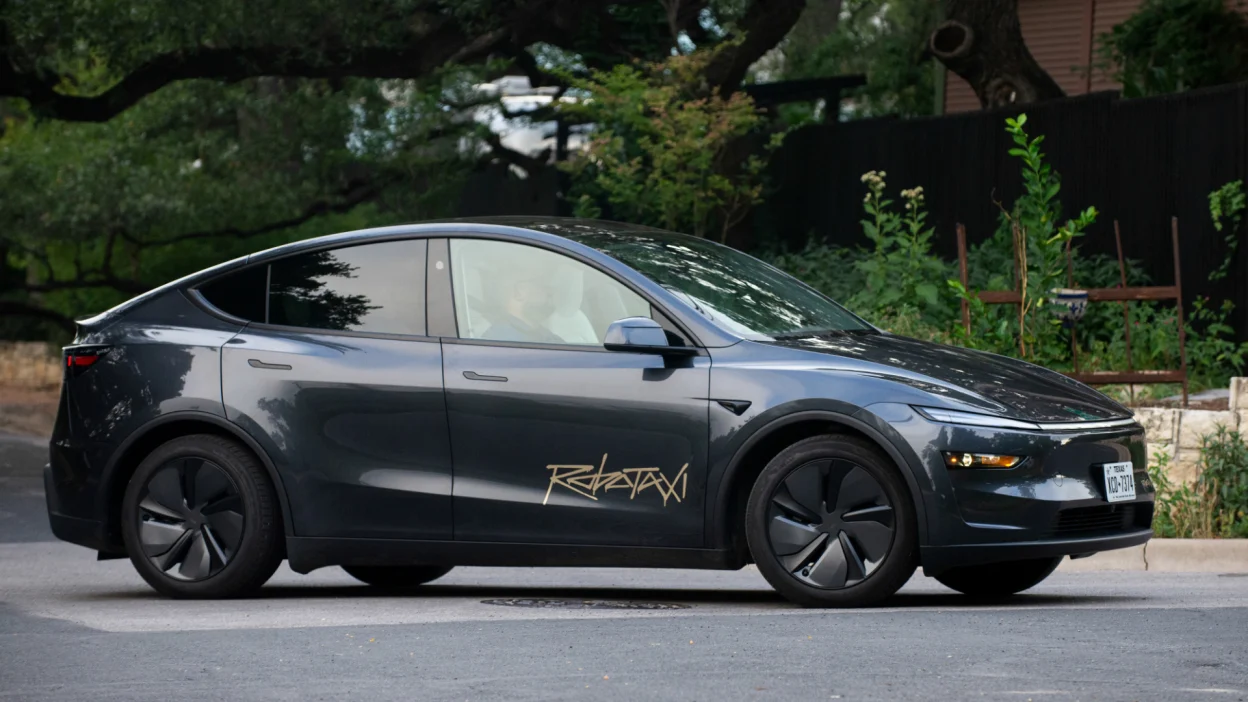
Tesla’s robotaxi story may have entered a more serious phase in Austin, but the details still need careful wording because the company has not publicly confirmed the full operational picture.
The Verge reported on August 20 that Tesla’s Austin robotaxi service appears to have gone fully unsupervised, citing data from Robotaxi Tracker. The tracker reportedly monitored 170 rides over the past two weeks across 54 vehicles and found no onboard safety drivers in those Austin rides.
That is potentially important because Tesla’s robotaxi rollout has always been tied to Elon Musk’s broader autonomy promise. A service with a safety monitor is a controlled demo. A service operating without an onboard safety driver is much closer to the commercial robotaxi model Tesla has been promising for years.
Robotaxi Tracker is a community-tracked dataset, not an official Tesla disclosure. That means the story should be read as a strong signal, not a full company-confirmed operational report. Tesla has not provided detailed fleet numbers, ride volume, intervention data or safety-performance metrics for the public to evaluate.
Still, the change matters because Tesla is preparing for Cybercab, the purpose-built robotaxi without traditional driver controls. If Tesla is increasing fully driverless Model Y activity in Austin ahead of Cybercab, it may be trying to prove that its autonomy stack can support a wider commercial rollout.
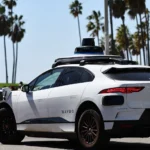
The competitive context is unavoidable. Waymo already operates large driverless fleets in several US cities and has spent years building public trust around robotaxi operations. Tesla’s advantage is that it has a large installed base of vehicles and a software-led autonomy strategy. Its weakness is that it has faced years of skepticism over timelines and safety claims.
For investors, unsupervised robotaxi activity is more than a transportation headline. Tesla’s valuation has long included a bet that autonomy can turn the company into a platform business, not just an electric-car maker. Real robotaxi scale would support that argument. Limited, opaque or slow deployment would weaken it.
The safety issue cannot be skipped. Driverless services need transparent reporting, clear incident data, regulator confidence and consumer trust. A robotaxi can drive thousands of uneventful miles and still face scrutiny after one visible mistake. Tesla’s public communication around safety data will matter as much as the technical progress.
This also connects to the wider AI-agent discussion. Cars are physical AI systems making decisions in public spaces. We have written about China’s robotics race becoming a market test, and Tesla’s robotaxis sit in the same broad shift from AI on screens to AI in the physical world.
For now, the cautious conclusion is this: tracker data suggests Tesla’s Austin robotaxi service has moved further into fully driverless operation. That is a meaningful signal, but the next step should be official fleet disclosure, safety data and a clearer explanation of how Tesla plans to scale beyond closely watched launch markets.
Related Reading
More contextual TechBooky stories selected from tags, categories and article context.
Paul Balo is the founder of TechBooky and a highly skilled wireless communications professional with a strong background in cloud computing, offering extensive experience in designing, implementing, and managing wireless communication systems.
We use cookies to ensure that we give you the best experience on our website. If you continue to use this site we will assume that you are happy with it.