MTN is moving deeper into AI infrastructure, and this time the plan is not only about connectivity. It is about owning more of the compute layer that African businesses will need as AI becomes a normal part of operations.
The group is working with Dubai-based investor Tarek Al Ashram to develop AI-ready data centres across Africa through a new company called Africa Data Hub Holding. Moneyweb, citing Bloomberg, reports that the venture will start with Nigeria and South Africa and could initially build about 150MW of AI data-centre capacity.
MTN’s own H1 2026 filing already points to a broader digital-infrastructure strategy, including data centres, tower assets and platform services. The new AI data-centre push fits that direction and gives MTN another route to diversify beyond traditional mobile connectivity.
The logic is clear. Africa has a growing digital economy, rising cloud demand and fast adoption of AI tools, but it still has a tiny share of global AI data-centre capacity. That leaves governments, banks, startups and enterprises dependent on infrastructure outside the continent for many heavy workloads.
Local AI data centres could change some of that. They can reduce latency, support data-sovereignty requirements, keep more enterprise workloads closer to local users and help African companies avoid waiting behind larger global customers for compute access.
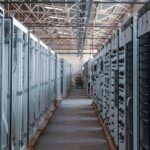
The challenge is that data centres are not just buildings with servers. They need stable power, cooling, fibre, physical security, land, permits, skilled operators and anchor customers. MTN has reach and network assets, while Al Ashram brings data-centre investment experience from the Gulf. That combination is why the partnership is worth watching.
Nigeria and South Africa are obvious starting points. Nigeria has scale, demand and a growing cloud market, while South Africa already hosts several major cloud regions and has a deeper enterprise technology base. If the model works there, MTN could extend it across its wider African footprint.
There is also a sovereignty angle. We have already seen Nigeria move toward stronger control of local cloud infrastructure through its sovereign cloud taskforce. AI will make those policy choices more urgent because models need data, and governments increasingly want sensitive data processed under local rules.
The risk is cost. AI infrastructure is expensive, power-hungry and difficult to run at high utilization. MTN will need customers beyond its own internal workloads, including hyperscalers, governments and large enterprises, if the economics are to work.
Still, the signal is important. Africa cannot participate meaningfully in the AI economy if it only consumes models hosted elsewhere. Someone has to build the compute base. MTN is now making a case that telecom operators can be part of that foundation.
Related Reading
More contextual TechBooky stories selected from tags, categories and article context.
Paul Balo is the founder of TechBooky and a highly skilled wireless communications professional with a strong background in cloud computing, offering extensive experience in designing, implementing, and managing wireless communication systems.
We use cookies to ensure that we give you the best experience on our website. If you continue to use this site we will assume that you are happy with it.