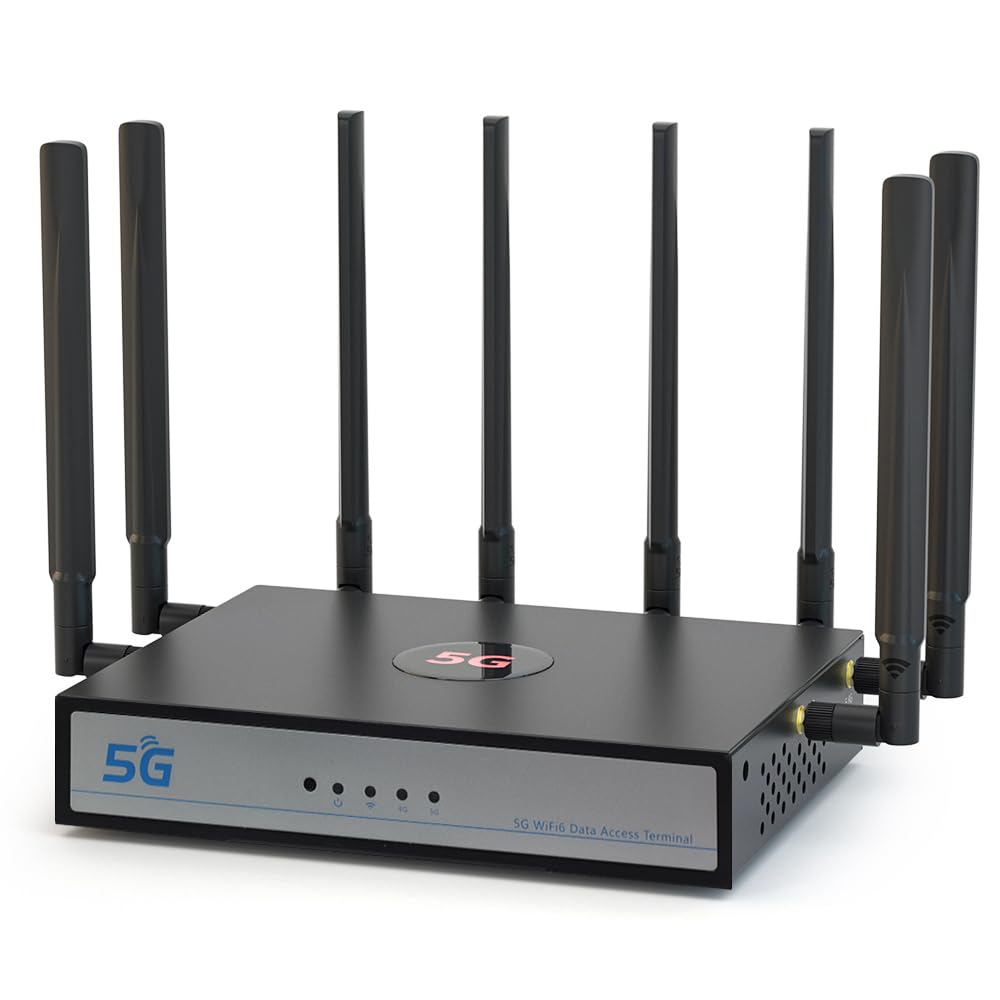
On paper, 300Mbps is 300Mbps. A 1GB file should not care whether the connection comes from a 5G router in Lagos, a fibre line in London, a cable broadband package in Texas or a full-fibre plan in Manchester. Bits are bits. But anyone who has used a fast Nigerian 5G router beside a decent UK or U.S. fixed broadband line knows the experience is often not the same. The speed test may flatter both connections. The real world usually does not.
That difference is the point many internet adverts conveniently blur. Operators sell speed because speed is easy to market. A big Mbps number looks clean on a billboard and reassuring on a router dashboard. But internet quality is not one number. It is a bundle of speed, latency, jitter, packet loss, congestion, routing, upload capacity, Wi-Fi quality, server distance and how close the content is to the user. If those other parts are weak, 300Mbps can behave like a sports car stuck in traffic.
The first correction is important. A Nigerian 300Mbps connection is not mathematically slower than a British or American 300Mbps connection. If both links are clean, uncongested and pulling from equally nearby servers, they can move the same amount of data per second. The problem is that those perfect conditions rarely exist equally. Advanced markets often have deeper fibre networks, denser peering, more local content caches, better backhaul, stronger last-mile consistency and lower latency to the services people use every day.
Speed tests are useful, but they are also narrow. They usually connect you to a nearby test server, open multiple download streams and try to show the best sustained throughput your connection can manage for a short period. That is not how every app behaves. Websites load many small files. Games need rapid round trips. Video calls need stable upload and low jitter. Cloud apps need responsive back-and-forth communication. A speed test can show 300Mbps while the connection still feels heavy because the network is slow to respond.
Cloudflare explains the basic split clearly; bandwidth is how much data can be transferred in a second, while latency is the time it takes data to go from your device to a destination and back. Both matter. High latency can slow web pages, hurt gaming, interrupt video and make interactive services feel less responsive even when raw download bandwidth looks good. That is why a user can see a high Mbps number and still complain that the internet feels slow.
There is also something called loaded latency, sometimes described informally as what happens when your connection is busy. A connection may have acceptable latency when nothing else is happening, then become sluggish when someone starts downloading a large file, updating a phone, streaming video or uploading to Google Drive. That is when video calls freeze, WhatsApp calls distort and pages hesitate. The network did not lose its headline speed; it lost responsiveness under pressure.
5G is fast, but it is still wireless
A 5G router is not the same thing as fibre to the home. Fibre is a dedicated physical path much closer to the user, usually more stable and less exposed to radio conditions. 5G, even very good 5G, is wireless. It depends on spectrum, signal strength, tower distance, indoor penetration, weather, building materials, interference, sector congestion, backhaul and how many other people are using the same cell at that moment.
That is why Nigerian 5G can be impressive at midnight and ordinary at 8 p.m. The same router, in the same room, can swing from excellent to frustrating because the tower is shared. If a neighbourhood gets crowded with 5G home routers, phones, MiFis and business connections, the cell has to divide capacity among many users. The customer still bought a plan that can reach high speeds, but the network is now behaving like a shared resource because that is exactly what it is.
Fixed broadband abroad can also be shared and congested, especially cable networks, but good fibre networks generally have a stronger consistency advantage. Ofcom’s 2026 Connected Nations update says full fibre is available to 82 percent of UK residential premises and gigabit-capable broadband to 89 percent. That kind of fixed infrastructure depth changes the user experience. The road from the home to the internet core is simply more predictable.
The U.S. picture varies widely by location, but the same principle applies where fibre or strong cable broadband is available. The FCC’s Measuring Broadband America work has long tracked not just download speed but latency and consistency across fixed broadband technologies. Its 2024 report notes that cable latency sits in a lower range than DSL, while fibre is generally the lowest-latency fixed option. In other words, the best fixed networks are not only fast; they respond quickly.
The server may be closer to London than Lagos
The second hidden factor is where the internet content actually lives. When someone in London downloads an iOS update, opens Netflix, syncs a Microsoft file or loads a popular website, there is a good chance some of that content sits in a nearby data centre, CDN cache or well-peered network. The request does not have to travel as far, and the return path is usually cleaner.
Cloudflare’s CDN explanation shows why proximity matters. When content is cached closer to the user, requests travel to a nearer edge server instead of going all the way back to a distant origin. That reduces latency and makes content feel faster. In advanced markets, the density of CDNs, cloud regions, internet exchanges and private interconnects is much higher, so many popular services are physically or logically closer to the user.
Nigeria has made progress, especially with local data centres, submarine cables, cloud edge locations and internet exchange growth. But the ecosystem is still not as dense as the UK or U.S. Too much traffic still depends on international paths, limited peering, congested routes or content that is not cached locally. A speed test to a nearby Nigerian server may look good, while a download from a poorly routed foreign server performs worse than expected.
This is where people get confused. They compare the number on the router, not the route the data takes. But the internet is not a straight pipe from your house to the app. It is a network of networks. The path from a Nigerian home to a game server, cloud service or software update may be longer, less direct or more congested than the path from a UK home to the same service. Same Mbps. Different journey. Different feel.
Nigeria’s real problem is consistency
Nigeria’s telecom sector has improved, but consistency remains the hard part. Cloudflare’s Nigeria year-in-review notes that internet quality should be understood through download speed, upload speed, idle latency and loaded latency, not download speed alone. That is exactly the correct lens for judging 5G home internet because the customer does not only download files; they work, stream, upload, call, game, trade, study and run cloud apps.
NCC-linked network performance reporting, as carried by Vanguard, also shows the unevenness inside Nigeria. Urban users enjoy faster average downloads and uploads than rural users, while higher latency continues to affect real-time services such as voice and video calls. The same report says 5G can offer strong speeds where available, but coverage remains concentrated in dense urban areas. That means Nigeria’s internet story is not simply fast or slow; it is uneven.
This is why two people can argue honestly about the same network. One person in Lekki, close to a strong tower and downloading from a cached server, may see brilliant performance. Another person in the same city but behind thick walls, on a congested sector or using a poorly routed service may see the same advertised plan feel unstable. Both experiences can be true.
Upload speed is another underrated issue. Many Nigerians judge home internet by download speed because operators market it that way. But modern work needs upload too: Zoom, Teams, backups, cloud storage, CCTV, creator uploads, remote work and gaming all suffer when upload capacity is weak or unstable. A UK fibre customer on a strong symmetric or near-symmetric plan may feel faster not because download is magically different, but because upload, latency and jitter are better behaved.
So what should Nigerians demand?
The first demand should be honesty in advertising. Operators should stop behaving as if peak download speed is the same thing as internet quality. Plans should show typical evening speeds, upload performance, latency, loaded latency, fair-use rules, throttling policy and whether the plan is really designed for home broadband use or simply repackaged mobile capacity in a router.
The second demand is deeper infrastructure. Nigeria needs more fibre backhaul, more fibre-to-the-home, more metropolitan fibre, more reliable power for sites, stronger tower density, better spectrum management, more local content caching and richer peering through local internet exchanges. 5G is useful, but it cannot be asked to carry every home, office and entertainment workload without the fixed infrastructure underneath it.
The third demand is better measurement. Regulators and operators should publish more city-level and neighbourhood-level quality data, not only national averages. Users should be able to see latency, loaded latency and packet loss trends by network and location. That would be more useful than vague claims about national broadband progress.
This is also why Africa’s data-centre and cloud buildout matters. Local AI cloud, enterprise hosting, content caches and regional infrastructure can reduce dependence on distant servers. We have written about Africa’s sovereign AI cloud push and planned AI data-centre investments because these are not abstract industry stories. The closer compute and content move to users, the better the internet can feel even before the last-mile speed number changes.
A 300Mbps Nigerian 5G router can be genuinely fast. It can also be genuinely worse in real use than a 300Mbps fibre line in the UK or U.S. Both statements can be true because Mbps measures capacity, not the full quality of the connection. The better comparison is not speed versus speed. It is speed plus consistency, latency, upload, congestion, routing and content proximity.
The danger is that Nigerian consumers are being trained to worship the wrong number. A big speed test screenshot is satisfying, but it does not prove that the network will hold a work call, load a cloud dashboard quickly, sustain a game session, upload a video or fetch a software update from a distant server without pain.
So the real question is not whether Nigeria can sell 300Mbps internet. It can. The harder question is whether Nigeria can deliver 300Mbps internet that behaves like 300Mbps when people actually need it. That will require less marketing theatre and more fibre, peering, caching, power, transparency and regulatory pressure. Until then, many Nigerians will keep buying fast internet that sometimes feels slower than it has any right to feel.
Related Reading
More contextual TechBooky stories selected from tags, categories and article context.
Paul Balo is the founder of TechBooky and a highly skilled wireless communications professional with a strong background in cloud computing, offering extensive experience in designing, implementing, and managing wireless communication systems.
We use cookies to ensure that we give you the best experience on our website. If you continue to use this site we will assume that you are happy with it.