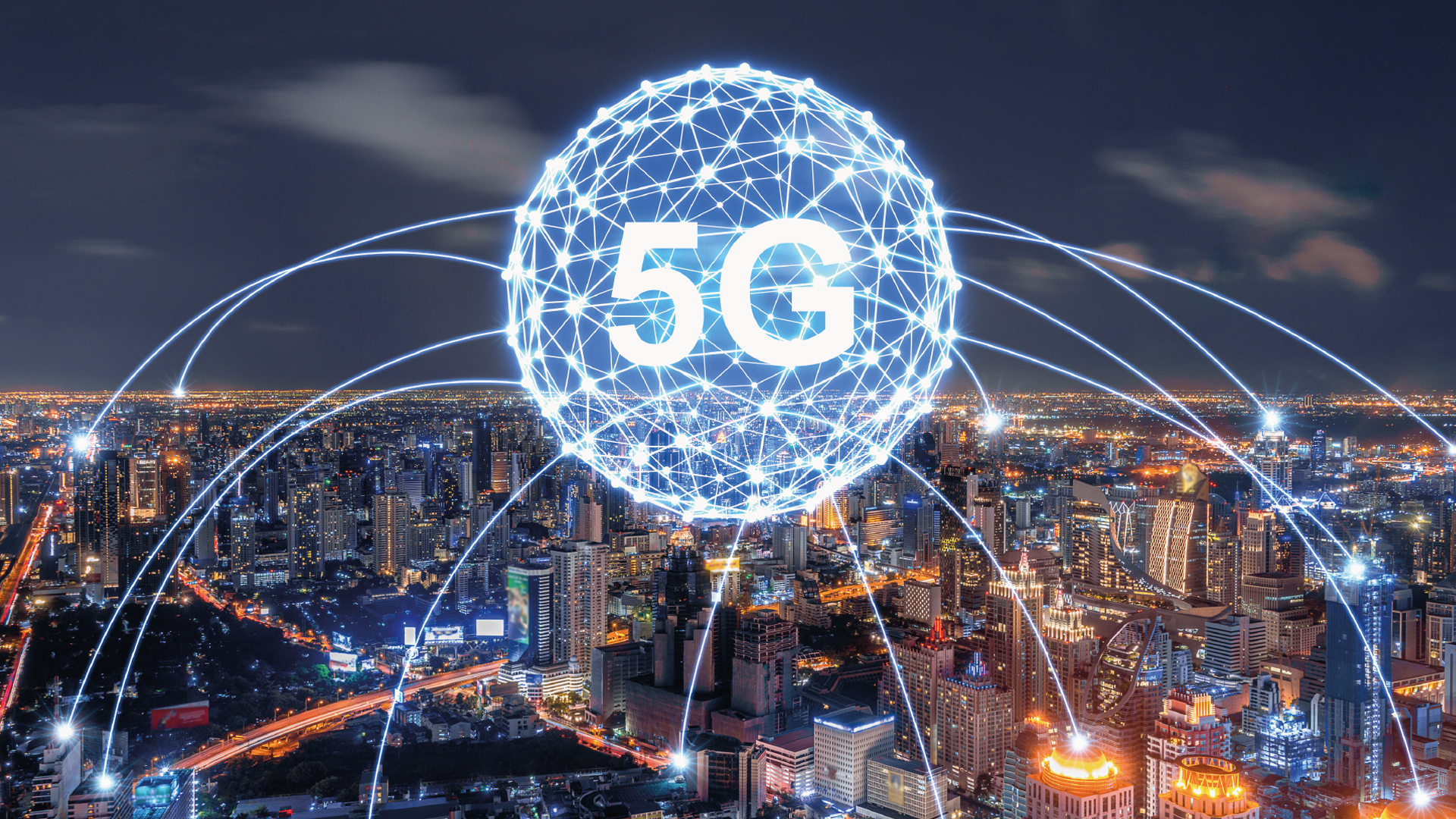
Nigeria’s 5G numbers are moving in the right direction, but the experience remains sharply unequal. New network performance data suggests that users in the country’s strongest urban markets can receive connections that are 30% to 40% better than those available in rural and northern communities.
The gap appears in the Nigerian Communications Commission and Ookla’s Q2 2026 Network Performance and 5G Reality Report, highlighted by Business a.m. Lagos, Rivers and the Federal Capital Territory continue to benefit from denser infrastructure, stronger backhaul and higher investment than many communities outside the biggest commercial centres.
5G accounted for 4.74% of mobile connections in July 2026, up from 3.17% a year earlier. Fourth-generation networks remained dominant at 54.31%, while 2G still represented 36.54% and 3G stood at 4.42%. Those figures show progress, but they also reveal how many subscribers still depend on older networks.
Even owning a capable phone does not guarantee a 5G connection. Active 5G use among compatible devices was reported at about 46% in Lagos and 53.1% in Abuja. Availability, device settings, data prices and inconsistent coverage can all prevent customers from using the network their phones support.
The urban advantage matters because reliable internet now shapes education, remote work, banking, healthcare and the ability of small businesses to reach customers. A faster network in Lagos can improve productivity, but it does little for a student or entrepreneur in a town where congestion, limited fibre and weak power infrastructure keep performance low.
It also explains why advertised speeds do not always match the experience people feel. TechBooky’s analysis of why 300Mbps in Nigeria can feel slower than the same speed abroad examined latency, routing, local hosting and network consistency. The same weaknesses become more visible when 5G is layered over uneven infrastructure.
Closing the divide will require more than additional spectrum. Operators need affordable fibre backhaul, shared towers, dependable energy and incentives to invest beyond their most profitable districts. Regulators should also publish granular performance data so coverage claims can be tested against what customers actually receive.
Nigeria can celebrate a growing 5G share without pretending the job is finished. The real measure of progress is not the symbol on a phone in Lagos or Abuja. It is whether fast, stable and affordable connectivity becomes ordinary across the country.
Related Reading
More contextual TechBooky stories selected from tags, categories and article context.
Paul Balo is the founder of TechBooky and a highly skilled wireless communications professional with a strong background in cloud computing, offering extensive experience in designing, implementing, and managing wireless communication systems.
We use cookies to ensure that we give you the best experience on our website. If you continue to use this site we will assume that you are happy with it.