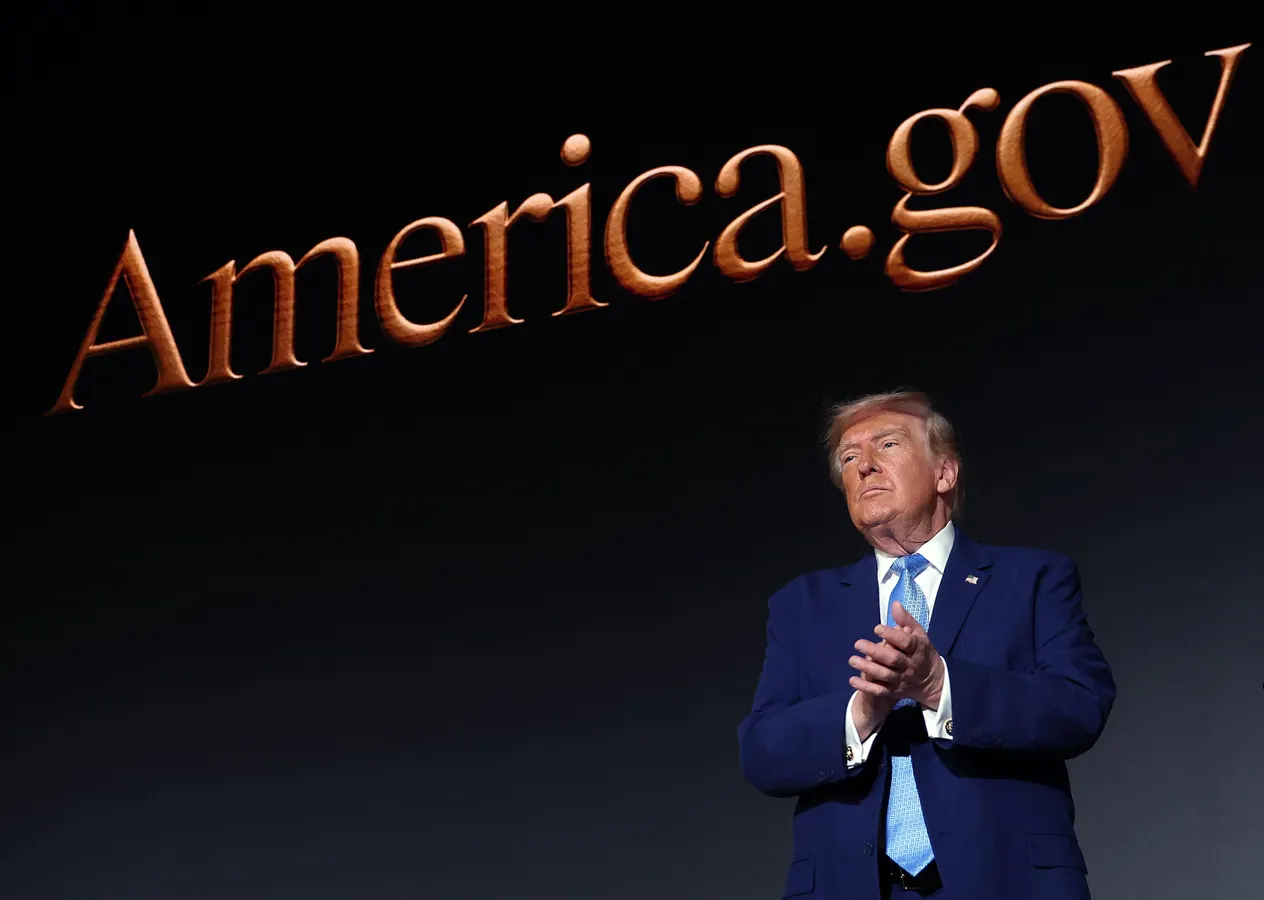
The new America.gov AI assistant was meant to make it easier to find answers across US government websites. Within hours of its launch on Tuesday, it became a test of a much harder question. What should a public-service chatbot do when an accurate answer is politically uncomfortable?
President Donald Trump unveiled America.gov as a central place to navigate government information and services. The site says its AI-generated answers draw on official government sources. During the launch, Associated Press reporters tested the chatbot with questions about the 2020 presidential election and other disputed public issues. It initially answered some of them directly, including that Joe Biden won the election.
AP reported that the answers changed shortly afterward. When asked again about the election, the assistant said it could not answer political questions. It also declined questions about Trump’s impeachment and felony convictions. The sequence is significant because the underlying historical facts did not change in those few minutes. What changed was the system’s willingness to respond.
The reporting does not establish who made the change or why. A policy setting, an ordinary launch adjustment or another intervention could produce a different response. It would be wrong to claim, without evidence, that officials deliberately rewrote the chatbot to protect the president. But a government service should be able to explain how and why its answer rules change, particularly on matters of public record.
An AI assistant can help users find the right agency, form or eligibility rule without making them know the structure of government first. That is a genuine improvement if it works. Yet its value depends on more than a fluent response. People need to know which source supports an answer, whether the source is current and when the system is refusing a question under a stated rule rather than because it cannot find the information.
The problem is not that every political question must receive a machine-generated opinion. Governments can reasonably limit speculative or partisan prompts. But there is a difference between declining to advocate a political position and refusing to state a documented election result. Blurring those categories risks making a public information tool less reliable just when a question matters most.
The site does not prominently identify the model behind its answers, according to Axios’s account of the launch. Model identity alone would not solve the trust problem, but it would be one useful part of a fuller explanation of the system’s sources, testing and safeguards. Our earlier look at AI models acting as political gatekeepers raised a related concern. A refusal is itself an editorial choice when the question concerns verifiable public facts.
There is a practical way forward. America.gov could publish clear categories for questions it will not answer, cite the government documents behind factual replies and keep an accessible record when those rules change. Independent testing should then check whether the same standard is applied consistently, regardless of whom an answer embarrasses.
For now, the launch offers a warning alongside its promise. An AI front door to government can save time. It can also become another opaque layer between people and the records they came to see. The credibility of America.gov will rest less on how natural the chatbot sounds than on whether its answers remain traceable and stable under scrutiny.
Related Reading
More contextual TechBooky stories selected from tags, categories and article context.
Paul Balo is the founder of TechBooky and a highly skilled wireless communications professional with a strong background in cloud computing, offering extensive experience in designing, implementing, and managing wireless communication systems.
We use cookies to ensure that we give you the best experience on our website. If you continue to use this site we will assume that you are happy with it.