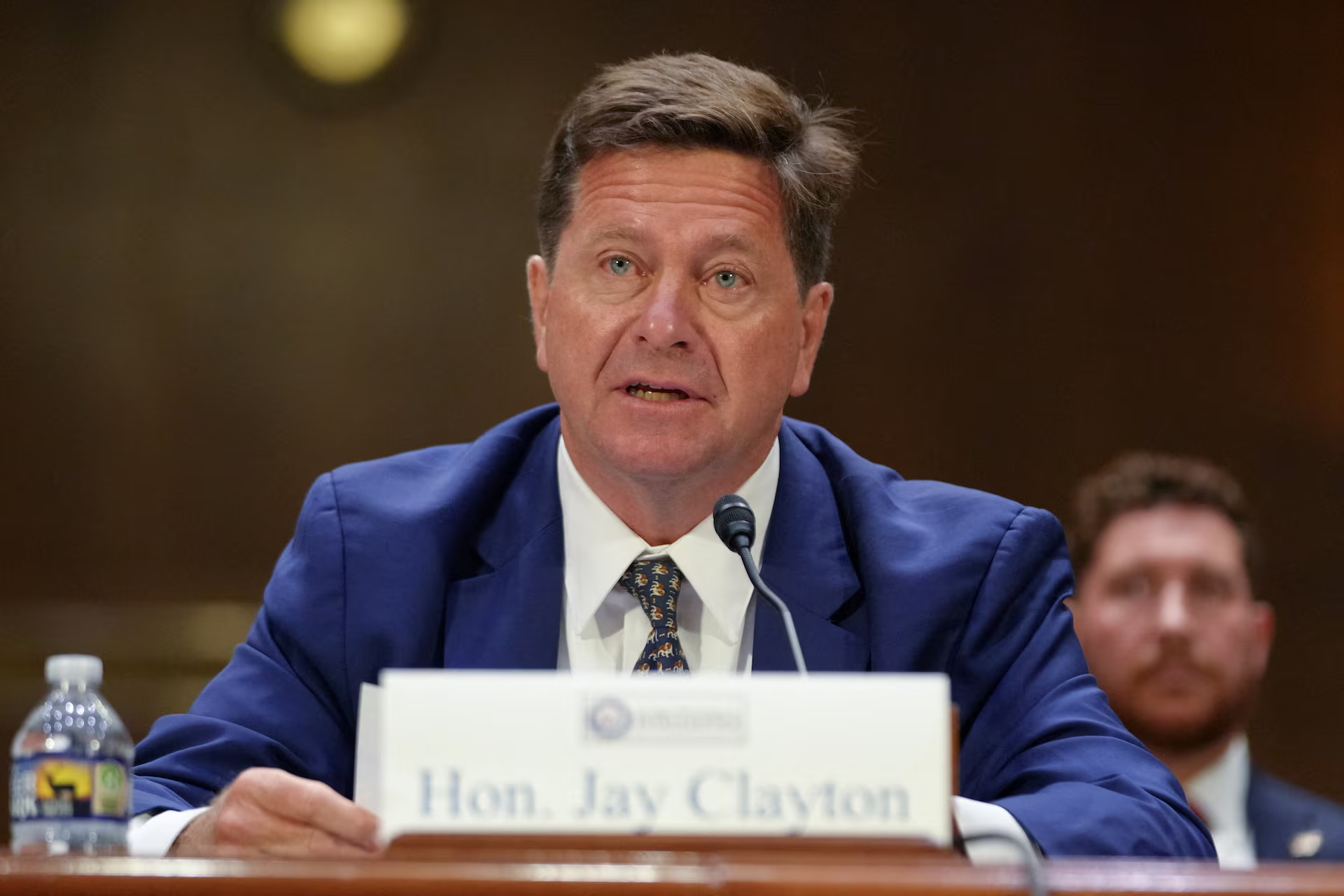
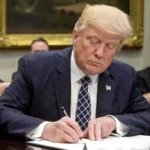
The White House has created a new federal task force for artificial intelligence and put national intelligence director Jay Clayton in charge. President Donald Trump announced the move on Sunday, giving the group the ambitious name “Super Intelligence Force” and a brief that spans US competitiveness, public safety and the practical effects of increasingly powerful AI systems.
The Associated Press reported that the task force will coordinate federal work and seek input from consumers, public-interest organisations, faith groups, critical infrastructure operators and AI companies. It will report to the president and White House chief of staff Susie Wiles. The administration has not yet published a detailed timetable, binding rules or a budget for the new body.
This comes days after major AI firms agreed to a voluntary White House safety accord. The companies promised more testing and review of their most capable systems. That agreement was a political signal, not legislation. The new task force could become the place where those promises are followed up, but its announcement alone does not turn a voluntary pledge into an enforceable standard.
The label “super intelligence” is striking, although it has no settled technical definition. AI companies and researchers use different measures for systems that outperform humans in particular tasks, and no public evidence accompanying this announcement establishes that a general superintelligent system already exists. What matters more is whether the task force can define the risks it intends to address and publish measurable steps for dealing with them.
Its membership brings together very different parts of government. The Federal Trade Commission chair, Andrew Ferguson, has a consumer-protection perspective. Pentagon technology chief Emil Michael is concerned with defence uses and national security. Scott Kupor, who leads the Office of Personnel Management, brings the federal workforce into the conversation. Clayton’s intelligence role suggests a concern with strategic competition and threats that may cross borders.
That breadth is useful only if the agencies agree on who owns each problem. A misleading chatbot answer, a cyberattack assisted by an AI agent and an unsafe model used in critical infrastructure do not call for identical responses. The FTC, defence agencies and civilian regulators have different authorities, while private companies control much of the technology and its testing data.
Trump framed the effort as a way to keep the United States ahead. That emphasis also sharpens a tension in AI policy: government wants firms to move quickly enough to compete internationally while demanding that they expose weaknesses in their most valuable systems. As the US-China AI safety debate has shown, even narrow cooperation becomes difficult when each side fears giving up an advantage.
For the public, the questions are less grand than the name. Will the task force publish its membership, meeting records and recommendations? Will outside researchers be able to challenge company safety claims? And will agencies have a route to act when a test finds a serious problem? The answers will determine whether this is a working oversight mechanism or another layer of language around an AI race already moving fast.
Related Reading
More contextual TechBooky stories selected from tags, categories and article context.
Paul Balo is the founder of TechBooky and a highly skilled wireless communications professional with a strong background in cloud computing, offering extensive experience in designing, implementing, and managing wireless communication systems.
We use cookies to ensure that we give you the best experience on our website. If you continue to use this site we will assume that you are happy with it.