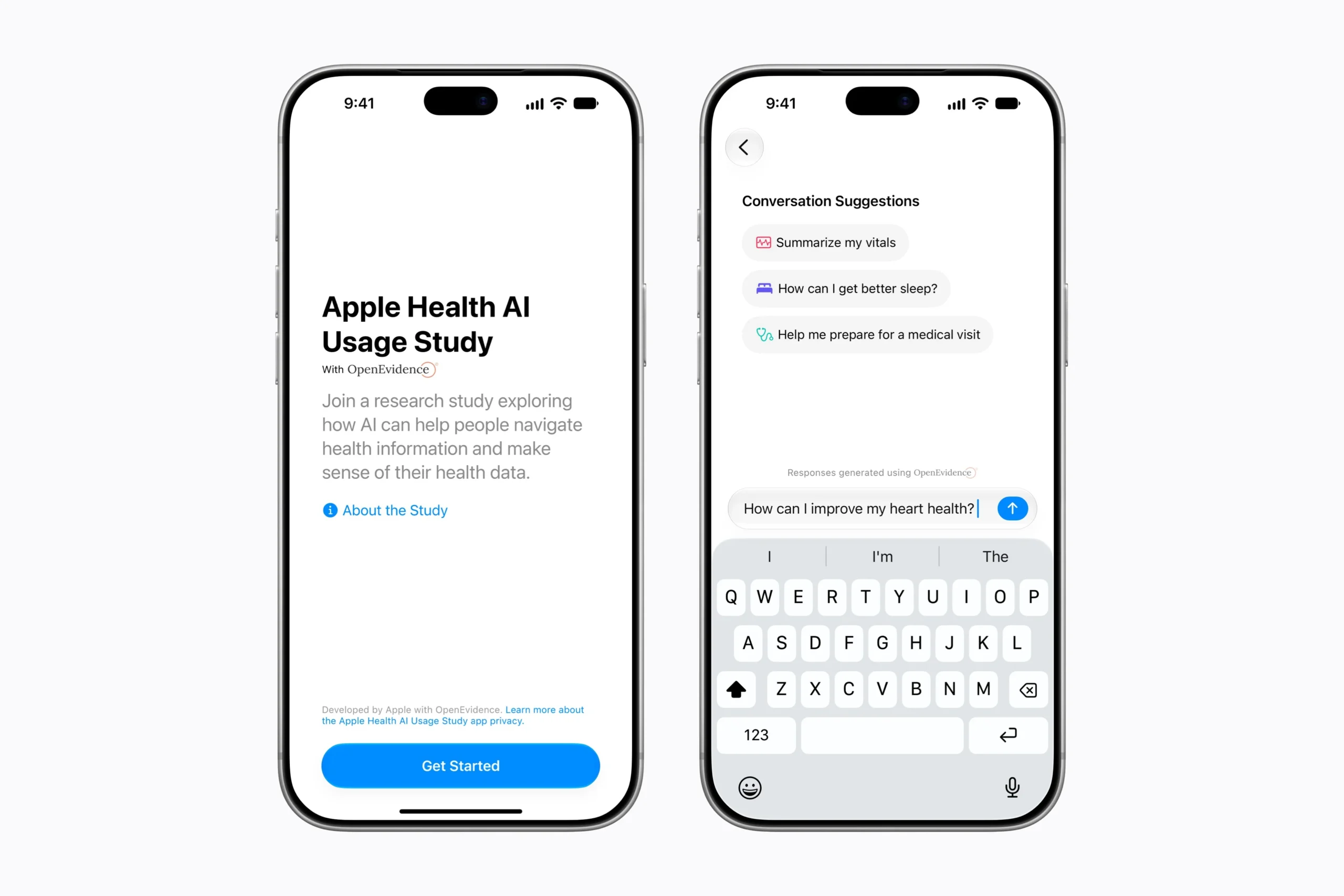
Apple has launched a US research study that will let up to 200,000 adults ask an AI tool questions about their health. The company is working with OpenEvidence to examine whether people trust the answers, understand them and make better use of medical information. It is a significant step into conversational health AI, but Apple is describing the project as research, not a new diagnostic service.
The Apple Health AI Usage Study, announced on 15 November, uses a dedicated app. Participants can ask everyday health questions and see linked citations from peer-reviewed clinical sources. They can choose whether to share HealthKit information such as sleep, activity, resting heart rate or laboratory results, allowing researchers to test whether personal context changes the relevance and clarity of responses.
The study is less a test of whether an AI system can sound convincing than of what happens after someone receives an answer. Apple says it will examine comprehension, trust, response quality and everyday health actions. It also wants to see whether the tool helps people prepare for appointments with clinicians. That distinction matters because a fluent answer can be misunderstood or relied upon too heavily, particularly when it concerns symptoms or treatment.
OpenEvidence supplies the medically grounded conversational technology. Apple designed the research experience and says answers will link back to clinical citations. A citation is not a guarantee that a response fits a particular patient, however. The study app is not intended to diagnose or treat a condition, and Apple tells participants to consult a medical professional about health concerns.
Health information is among the most sensitive data a consumer can share with an app. Apple says participation and HealthKit sharing are voluntary, that participants retain control over survey responses, and that study data will not be used to train AI models. The company also describes guardrails intended to recognise some concerning questions and direct participants towards a provider or other support. The research will test the user experience, not remove the need for independent scrutiny of those protections.
The US-only study is open to adults aged 21 or over with an Apple Intelligence-capable iPhone, beginning with the iPhone 15 Pro, running iOS 26 or later. It is not a general launch of an AI doctor inside the Health app. The eligibility rules and separate app also mean that any findings will first reflect a relatively specific group of iPhone owners.
The commercial question is easy to see even though Apple has not announced a consumer product from this work. The iPhone and Apple Watch already collect and present health signals. Conversational AI could make those signals easier to interpret, but it also raises harder questions about medical accuracy, privacy and where useful guidance ends and clinical advice begins. TechBooky has previously covered Apple’s newer Watch and Siri features. This study suggests the company is testing how far that broader intelligence layer might eventually extend into health, while leaving a clear line between research and a finished service.
Related Reading
More contextual TechBooky stories selected from tags, categories and article context.
Paul Femi Balo is the founder and publisher of TechBooky. He covers artificial intelligence, African technology, digital infrastructure, enterprise technology and the global digital economy.
We use cookies to ensure that we give you the best experience on our website. If you continue to use this site we will assume that you are happy with it.