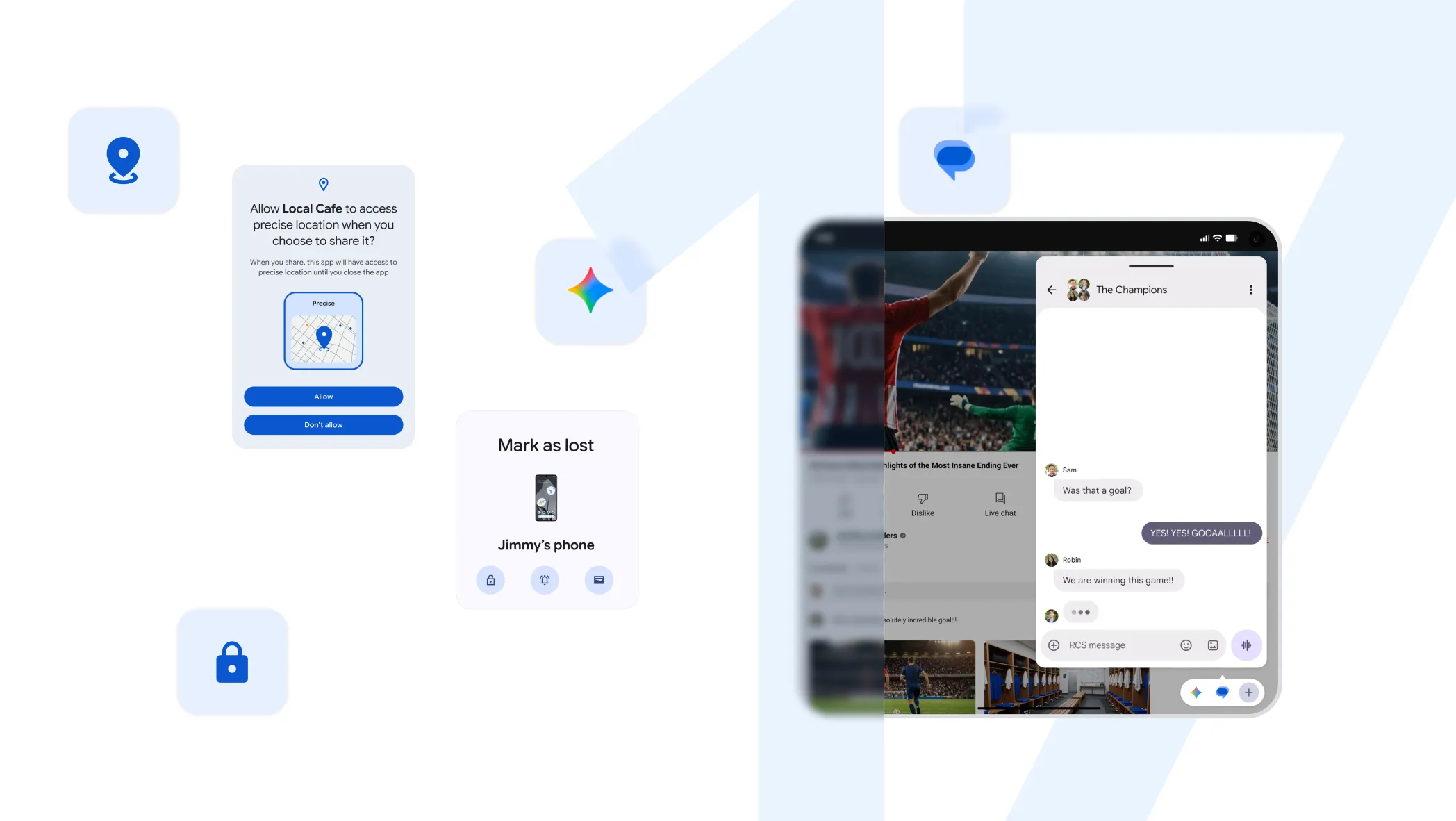
The latest version of Google’s mobile operating system introduces a collection of new multitasking tools, security upgrades and foldable-friendly features. Yet beneath the surface, Android 17 marks another major step in Google’s effort to transform Gemini from a chatbot into the intelligence layer powering nearly everything users do on their phones.
Rolling out first to Pixel devices, Android 17 arrives alongside Google’s latest Pixel Drop and a series of Gemini enhancements that signal where the company believes mobile computing is heading next.
One of the headline features in Android 17 is a new multitasking experience called Bubbles.
The feature introduces floating app windows and a dedicated bubble bar that allows users to quickly switch between recently used apps without constantly jumping back to the home screen. While this may sound familiar to desktop users, it’s a meaningful upgrade for Android tablets, foldables and larger-screen devices where multitasking has often felt awkward.
Google is also introducing Screen Reactions, a feature that lets users record their screen while simultaneously capturing video from the front-facing camera. The tool is designed for content creators who make tutorials, reaction videos or product demonstrations and previously relied on third-party apps to achieve the same result.
The bigger story is Google’s continued expansion of Gemini.
Alongside Android 17, Google is rolling out support for new Gemini-powered experiences, including the multimodal Gemini Omni model and Lyria 3, its latest AI music-generation technology. Pixel users are also gaining access to new speech and translation capabilities powered by AudioLM.
If you’ve been following Google’s recent announcements, this shouldn’t come as a surprise.
At Google I/O 2026, the company made it clear that Gemini is becoming the foundation of its entire ecosystem, spanning Android, Chrome, Workspace, Pixel devices and smart home products. Google appears determined to compete more aggressively with ChatGPT, Claude and Microsoft’s Copilot by embedding AI directly into everyday computing experiences rather than treating it as a standalone assistant.
Google is continuing to bet heavily on foldable devices.
Android 17 introduces dedicated gaming enhancements for foldables, including touchscreen controls optimized for larger displays and native controller remapping for gamers using external accessories. The company is clearly preparing Android for a future where foldable devices become far more mainstream than they are today.
The update also includes adaptive interface improvements that help apps work more naturally across different screen sizes, an area where Android has historically struggled compared to traditional desktop operating systems.
As expected, Android 17 also brings a range of security and privacy improvements.
Google has added stronger anti-theft protections, improved parental controls and additional privacy options that give users more control over how apps access sensitive information. The company says the update also includes numerous performance enhancements and under-the-hood optimizations designed to improve battery life and overall responsiveness.
While these features may not generate as much excitement as Gemini, they remain some of the most important upgrades for everyday users.
Android 17 may ultimately be remembered less for its multitasking tools and more for what it represents.
For years, operating systems have largely been about launching apps. Google’s vision appears different. The company wants AI to become the primary interface between users and their devices.
Instead of opening multiple apps to complete a task, future versions of Gemini could potentially handle much of the work automatically, understanding context, navigating services and completing actions on a user’s behalf.
Android 17 doesn’t fully deliver that future yet.
But it makes one thing very clear: Google is no longer building an operating system with AI features.
It’s building an AI platform that happens to run Android.
Related Reading
More contextual TechBooky stories selected from tags, categories and article context.
Paul Balo is the founder of TechBooky and a highly skilled wireless communications professional with a strong background in cloud computing, offering extensive experience in designing, implementing, and managing wireless communication systems.
We use cookies to ensure that we give you the best experience on our website. If you continue to use this site we will assume that you are happy with it.