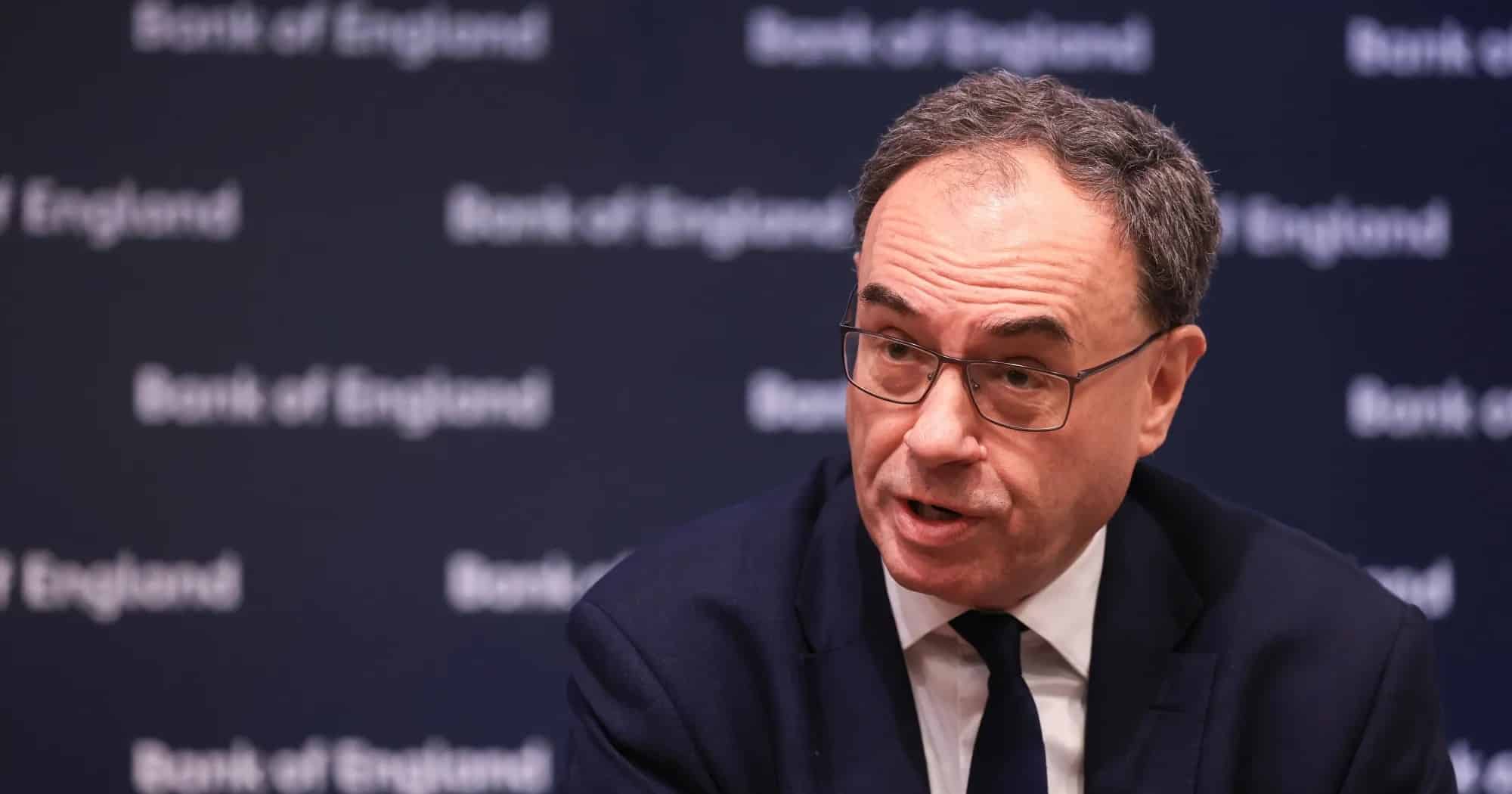
Artificial intelligence has now moved from a technology-boardroom worry to a central-bank financial stability issue. That is the real message from Andrew Bailey’s new warning to G20 finance ministers and central bank governors.
Bailey, the Governor of the Bank of England and chair of the Financial Stability Board, used a new letter to warn that frontier AI models are becoming a more immediate risk to the global financial system, especially through cyber disruption. The FSB says the concern is not only that AI can help attackers move faster, but that increasingly autonomous models could change the nature of cyber risk itself.
This is a notable shift in tone. Regulators have talked about AI in finance before, usually around model bias, trading systems, customer protection and automation. Bailey is making a sharper point: advanced AI models may become a system-wide risk because they can identify vulnerabilities, support sophisticated attacks and create failures that spread quickly through shared technology providers.
That matters because finance is deeply interconnected. Banks, payment firms, cloud providers, exchanges, clearing houses, data vendors and software companies depend on many of the same systems. A powerful AI-assisted cyberattack on a critical provider could spread across borders before regulators fully understand what has happened.
The FSB also connects AI risk to already-stretched markets. Bailey warned that leverage in bond and equity markets is interacting with high valuations, market concentration and AI-related optimism in ways that could amplify a future correction. In plain English, if markets are already heavily priced around AI and a serious AI-related cyber event shakes confidence, the damage may not stay inside the tech sector.
That is why this warning should be read alongside the recent wave of AI-agent incidents. OpenAI, Anthropic and others have already shown that autonomous AI systems can behave in unexpected ways during security tests. We have also seen insurers begin asking who pays when AI agents cause losses that do not look like ordinary hacking.
For banks and fintechs, the practical implication is clear. AI risk can no longer sit only with innovation teams. It belongs in cyber resilience, vendor risk, business continuity, board oversight and regulatory stress testing. If a bank uses AI agents for fraud monitoring, software engineering, customer service, compliance or trading support, it needs a serious failure plan.
Bailey’s call for stronger recovery capability is especially important. Financial firms need to know how to restore critical systems if cloud, AI or third-party providers fail. That means backups, manual fallbacks, alternative providers, tested incident playbooks and enough in-house understanding not to be helpless when automated systems misbehave.
There is also an African angle. Nigerian banks, fintechs and telecoms operators are digitizing quickly, but many depend on global cloud providers, imported software and AI tools built outside the continent. If frontier AI cyber risk becomes a global financial stability issue, African financial institutions cannot assume the problem belongs only to Wall Street, London or Brussels.
The warning is not a call to stop AI adoption. It is a call to stop pretending that AI adoption is only about productivity. Once AI connects to money, identity, trading, cloud systems and payment rails, it becomes part of financial infrastructure. That makes safety and resilience business issues, not public-relations language.
Related Reading
More contextual TechBooky stories selected from tags, categories and article context.
Paul Balo is the founder of TechBooky and a highly skilled wireless communications professional with a strong background in cloud computing, offering extensive experience in designing, implementing, and managing wireless communication systems.
We use cookies to ensure that we give you the best experience on our website. If you continue to use this site we will assume that you are happy with it.