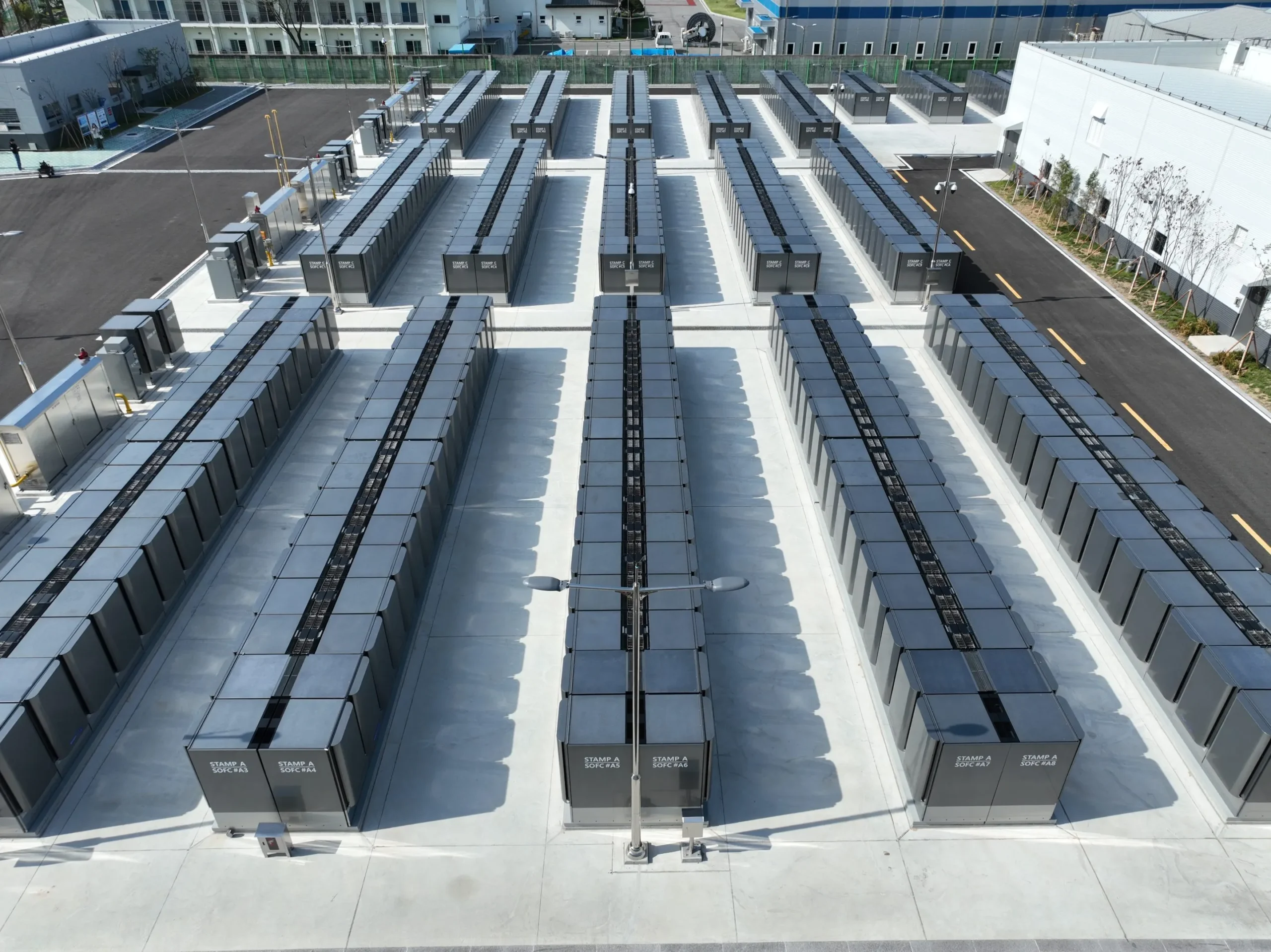
Bloom Energy has turned AI’s power problem into a record quarter. The fuel-cell company reported second-quarter revenue above $1 billion for the first time and raised its full-year outlook, helped by growing demand from hyperscalers, AI labs, neocloud companies and data-centre operators looking for reliable onsite power.
In its official Q2 2026 results, Bloom reported record quarterly revenue of $1.065 billion, up 166 percent from a year earlier. Product revenue grew 215 percent, and the company raised full-year revenue guidance to between $3.9 billion and $4.2 billion. That implies roughly 100 percent year-over-year growth at the midpoint.
MarketWatch reported that Bloom’s adjusted earnings of 78 cents per share beat analyst expectations of 41 cents. The Wall Street Journal also reported that the company swung to a quarterly profit as sales climbed, with CEO KR Sridhar pointing to demand from AI infrastructure customers.
This is a useful earnings story because it connects directly to the bottleneck Big Tech is running into. AI companies can order chips and servers, but those systems are useless without reliable electricity. Grid interconnection queues are slow, new transmission takes years and local communities are pushing back against huge data-centre loads. That makes onsite power more attractive, especially for operators trying to bring capacity online quickly.
TechBooky’s recent draft on AI data centres facing possible power cuts on the PJM grid captured the other side of the same problem. The AI buildout is no longer only stressing chip supply. It is stressing power systems. Bloom’s quarter shows that companies sitting near that power constraint can become AI infrastructure winners even if they are not traditional software or semiconductor names.
Bloom’s fuel cells offer a different proposition from ordinary backup generators. The company sells onsite systems that can provide steady electricity near the customer, which matters when data-centre operators cannot wait for the grid to catch up. It is not a perfect solution, and questions around fuel sources, cost and materials will remain. But the market is clearly rewarding anything that can help AI infrastructure get reliable power faster.
The guidance raise is the main signal. Bloom is no longer being treated only as a clean-tech company. It is increasingly being priced as an AI infrastructure power company. That may sound strange, but it reflects where the compute race has gone. The next constraint is not only intelligence. It is electricity.
Related Reading
More contextual TechBooky stories selected from tags, categories and article context.
Paul Balo is the founder of TechBooky and a highly skilled wireless communications professional with a strong background in cloud computing, offering extensive experience in designing, implementing, and managing wireless communication systems.
We use cookies to ensure that we give you the best experience on our website. If you continue to use this site we will assume that you are happy with it.