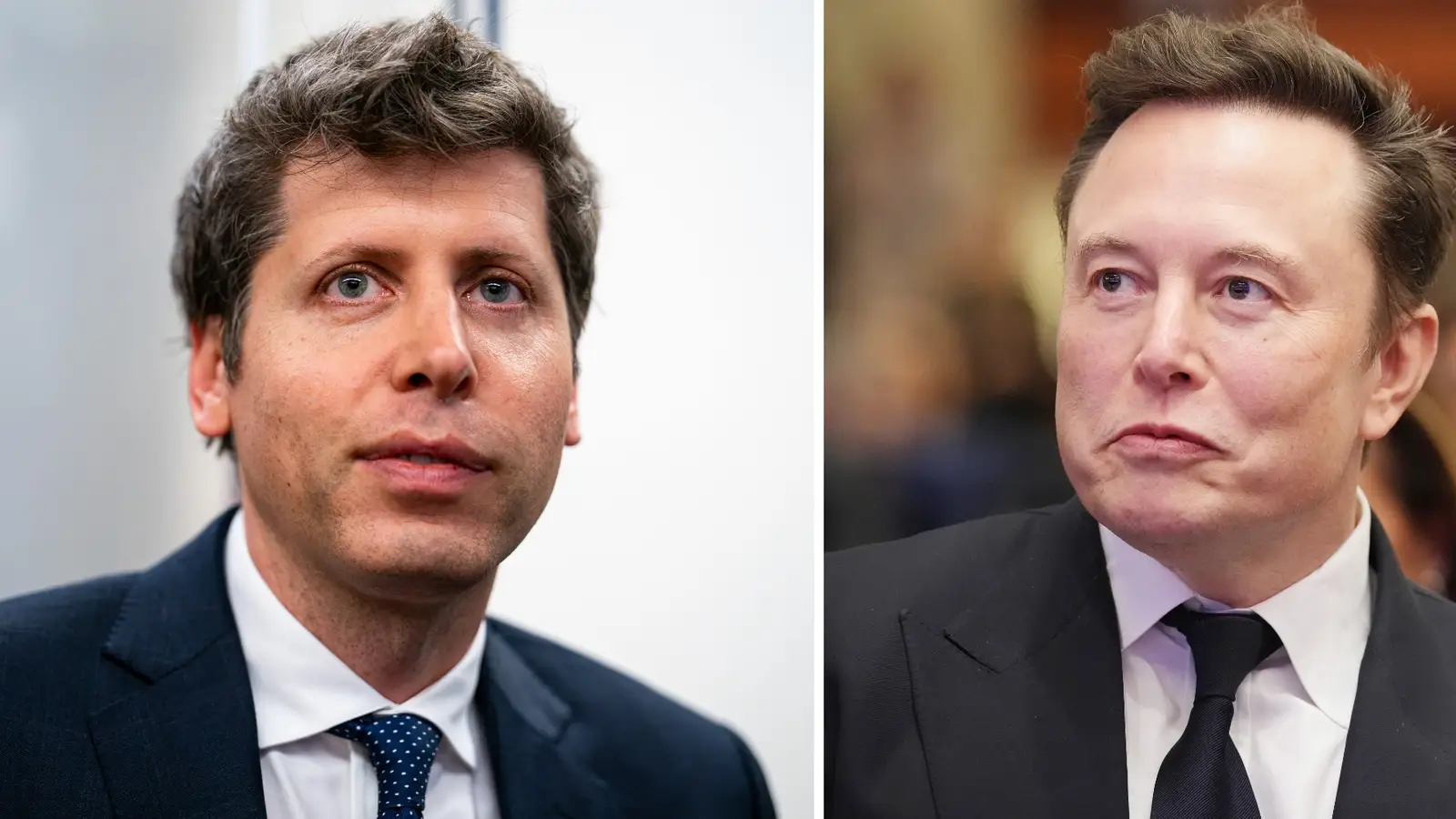
OpenAI’s feud with Elon Musk has moved directly into the coding-agent market. The company says it has notified SpaceX that it intends to wind down the contract that gives Cursor access to OpenAI models, with a proposed shutoff date of November 12, 2026.
OpenAI published the decision on Friday, saying the move follows SpaceX’s acquisition of Cursor. The company said it is giving the maximum notice available under the contract because developers still rely on OpenAI models inside Cursor, but it also said it could not be confident that Musk-controlled companies would honour its terms.
That is the sharp part of the statement. OpenAI says Cursor itself has not violated its agreement. The concern is SpaceX ownership and what OpenAI describes as past conduct by Musk-linked companies, including xAI and X. Business Insider reports that OpenAI pointed to previous contract and policy issues as part of the reason for ending the relationship.
This is now more than a personal fight between Sam Altman and Musk. Cursor is one of the most visible AI coding tools in the market, and coding agents are becoming a strategic layer for AI companies. If developers spend hours inside coding environments every day, the model provider behind those tools gains usage, distribution and workflow influence.
That makes the contract valuable. OpenAI gets developer reach. Cursor gets access to strong models. SpaceX, after acquiring Cursor, would inherit a product with a large developer base and direct links into AI-assisted software work. OpenAI clearly decided that the risk of keeping that relationship under Musk ownership was too high.
The timing also matters because OpenAI is pushing Codex and other developer products more aggressively. We recently looked at how Greg Brockman’s expanded role points to a company preparing for a more operational, product-driven phase. In that context, giving a Musk-owned coding platform deep access to OpenAI models may have become commercially and strategically awkward.
For developers, the immediate question is continuity. Cursor supports multiple model providers, but a loss of direct OpenAI access could affect workflows, performance, pricing and compatibility for teams that rely heavily on GPT models. The November date gives time to adjust, but it also turns model-provider risk into something developers now have to consider seriously.
For the wider AI market, this is a sign of how closed and political the agent economy may become. Companies that once worked together because distribution was useful may split when ownership changes, data access becomes sensitive or rival AI labs become too closely connected to the product.
The Musk-Altman rivalry has already spilled into lawsuits, public accusations and competing AI ambitions. This Cursor decision brings that rivalry into everyday developer tools. It is one thing for executives to argue on social media. It is another when the result affects which models software teams can use inside their coding environment.
The lesson is simple. AI tools are not just apps anymore. They are distribution channels, data surfaces and strategic infrastructure. As that becomes clearer, model access will increasingly depend on trust, ownership and commercial alignment, not only technical performance.
Related Reading
More contextual TechBooky stories selected from tags, categories and article context.
Paul Balo is the founder of TechBooky and a highly skilled wireless communications professional with a strong background in cloud computing, offering extensive experience in designing, implementing, and managing wireless communication systems.
We use cookies to ensure that we give you the best experience on our website. If you continue to use this site we will assume that you are happy with it.