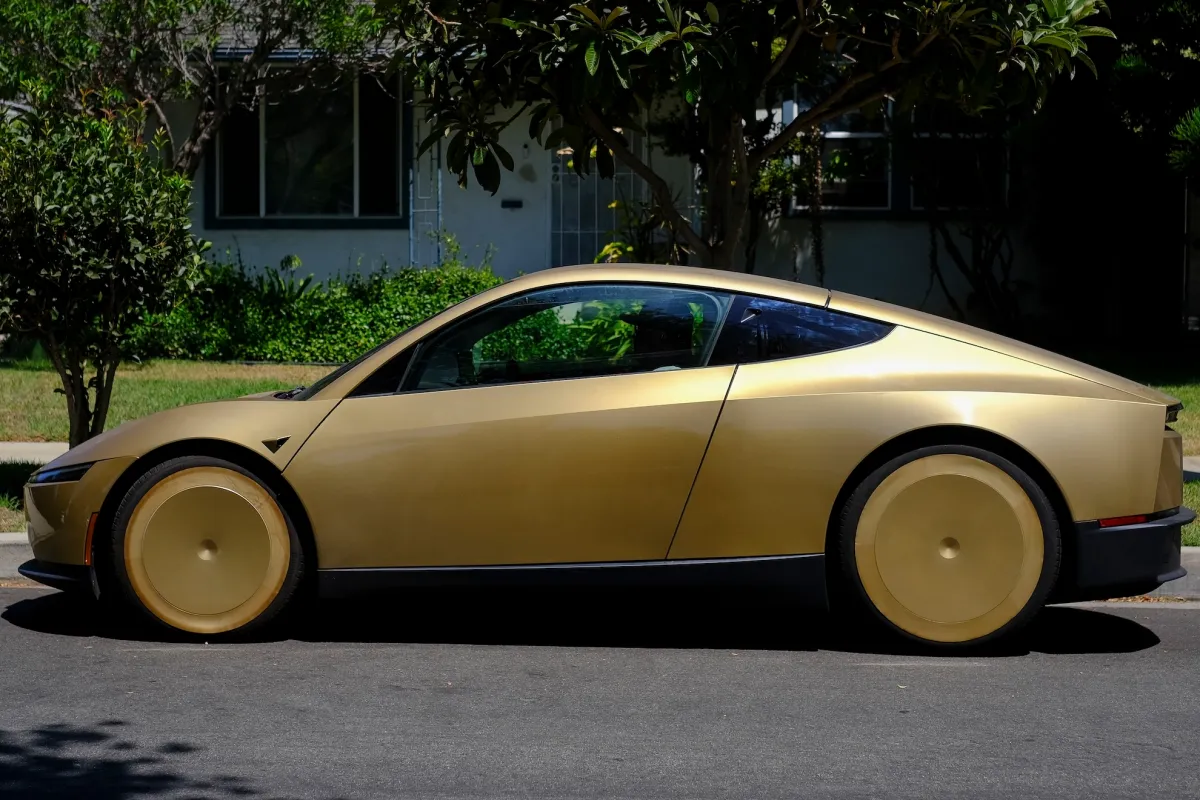
Tesla’s Cybercab has finally moved from promise to paid rides, but the launch has been unusually quiet for a company built on spectacle. AP reports that Elon Musk has launched a fleet of steering-wheel-free Cybercabs in Austin, Texas, expanding Tesla’s robotaxi service with a purpose-built autonomous vehicle.
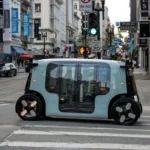
The Cybercab is a two-seat electric vehicle with no steering wheel or pedals. It relies on Tesla’s camera-based autonomous driving approach rather than the lidar and radar-heavy systems used by some rivals. The launch is important because Tesla has spent years telling investors that autonomy will transform the company from an electric carmaker into a mobility and AI platform.
But the rollout also raises questions. The Verge described the launch as muted, noting that the event was closed to much of the press and did not have the kind of broad livestream spectacle Tesla often uses for major product moments. Reports point to only dozens of registered Cybercabs in Texas, not the mass deployment many people once associated with Musk’s robotaxi promises.
Regulation is now the centre of the story. Axios reported that federal regulators are evaluating Tesla’s Cybercab rollout, while Texas rules give companies room to operate driverless vehicles without approving each model one by one. That gap between state flexibility and federal safety oversight may become one of the most important questions around the Cybercab.
Tesla has a powerful argument: if autonomous driving works at scale, it can reduce transport costs, improve vehicle utilisation and create a new business line beyond selling cars. That is why investors keep paying attention, even when Tesla’s robotaxi timelines have slipped. But the company must now prove that Cybercab can operate safely outside carefully managed conditions.
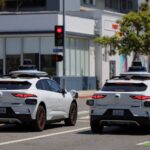
The competitive pressure is real too. Waymo already has a larger robotaxi footprint, and its rivalry with Tesla has become one of the clearest tests of competing autonomy philosophies. Waymo uses a more sensor-heavy approach. Tesla wants to prove that cameras and neural networks can scale faster and cheaper.
For riders, the question is more emotional than technical. Will people step into a vehicle with no steering wheel, no pedals and no human driver? Some will do it for novelty. A real business needs ordinary passengers to trust the experience repeatedly, especially at night, in bad weather, in heavy traffic and after the first highly publicised incident.
That is why the quiet launch may be the real story. Tesla has put Cybercab on public roads, but it still has to answer the questions that matter most: how fast can it scale, what happens when something goes wrong, how regulators will treat a car without traditional controls, and whether the economics can match the hype. The robotaxi future is here in Austin, but it is not yet settled.
Related Reading
More contextual TechBooky stories selected from tags, categories and article context.
Paul Femi Balo is the founder and publisher of TechBooky. He covers artificial intelligence, African technology, digital infrastructure, enterprise technology and the global digital economy.
We use cookies to ensure that we give you the best experience on our website. If you continue to use this site we will assume that you are happy with it.