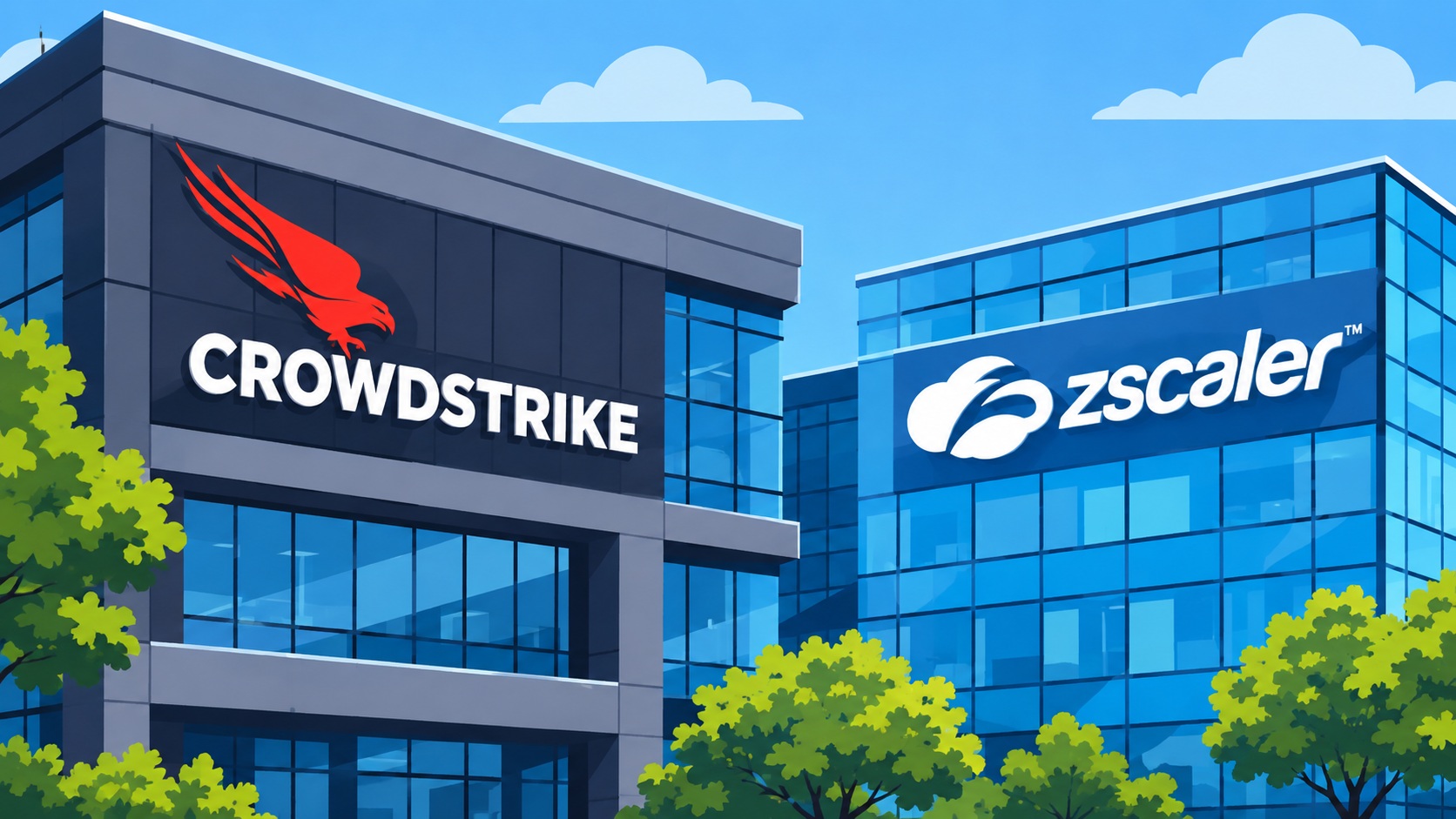
CrowdStrike has agreed to acquire Zscaler in an all-stock deal valuing the cloud security company at about $43.9 billion, a combination that would bring endpoint protection and zero-trust network access under one roof. The companies announced the definitive agreement on Monday, 23 November. It is a proposed acquisition, not a completed merger, and still faces the usual closing conditions and regulatory scrutiny.
The transaction is a bold answer to a question facing corporate security buyers. As staff, applications and AI agents work across devices and cloud services, should businesses assemble protection from several specialist suppliers or buy more of it from one platform? CrowdStrike is best known for its Falcon endpoint platform. Zscaler’s strength lies in controlling access to applications and inspecting traffic through a cloud-delivered network.
CrowdStrike says the combination would extend its reach from devices to connections, giving customers a more unified view of the users, workloads and services they need to protect. It also sees an opportunity to sell more products to Zscaler’s existing customer base. Those are the companies’ ambitions, however, not guaranteed benefits. Integrating security products, data and sales teams is difficult, and customers will want to know whether they gain useful interoperability rather than simply a larger contract.
The announced enterprise value is based on CrowdStrike’s share price at the 20 November close. Because this is a share transaction, the market value of the consideration can move before completion. The boards of both companies have approved the agreement, but shareholders and regulators still have a say. TechBooky will follow the timetable and any competition concerns as the process advances.
Security teams are increasingly asked to defend systems in which software agents can read data, use credentials and trigger actions across multiple services. A device-only view cannot capture every risk in that chain; nor can network controls alone explain what an agent did on a laptop or server. A combined platform could connect those signals, provided the integration works in practice.
CrowdStrike has already been extending its AI-security offering. Earlier this month, TechBooky reported on its AI Kill Switch, a tool intended to help teams stop an agent acting outside its boundaries. The Zscaler agreement moves the conversation from individual controls to the structure of the wider security market.
For customers, the practical questions are straightforward. Will the combined products reduce blind spots, improve response times and simplify administration? Will pricing and choice remain competitive? Until the deal closes and a joint product roadmap is delivered, those answers remain open. The size of the agreement makes it one of the most consequential cybersecurity transactions of the year, but its success will ultimately be measured in deployments, not the announcement.
Related Reading
More contextual TechBooky stories selected from tags, categories and article context.
We use cookies to ensure that we give you the best experience on our website. If you continue to use this site we will assume that you are happy with it.