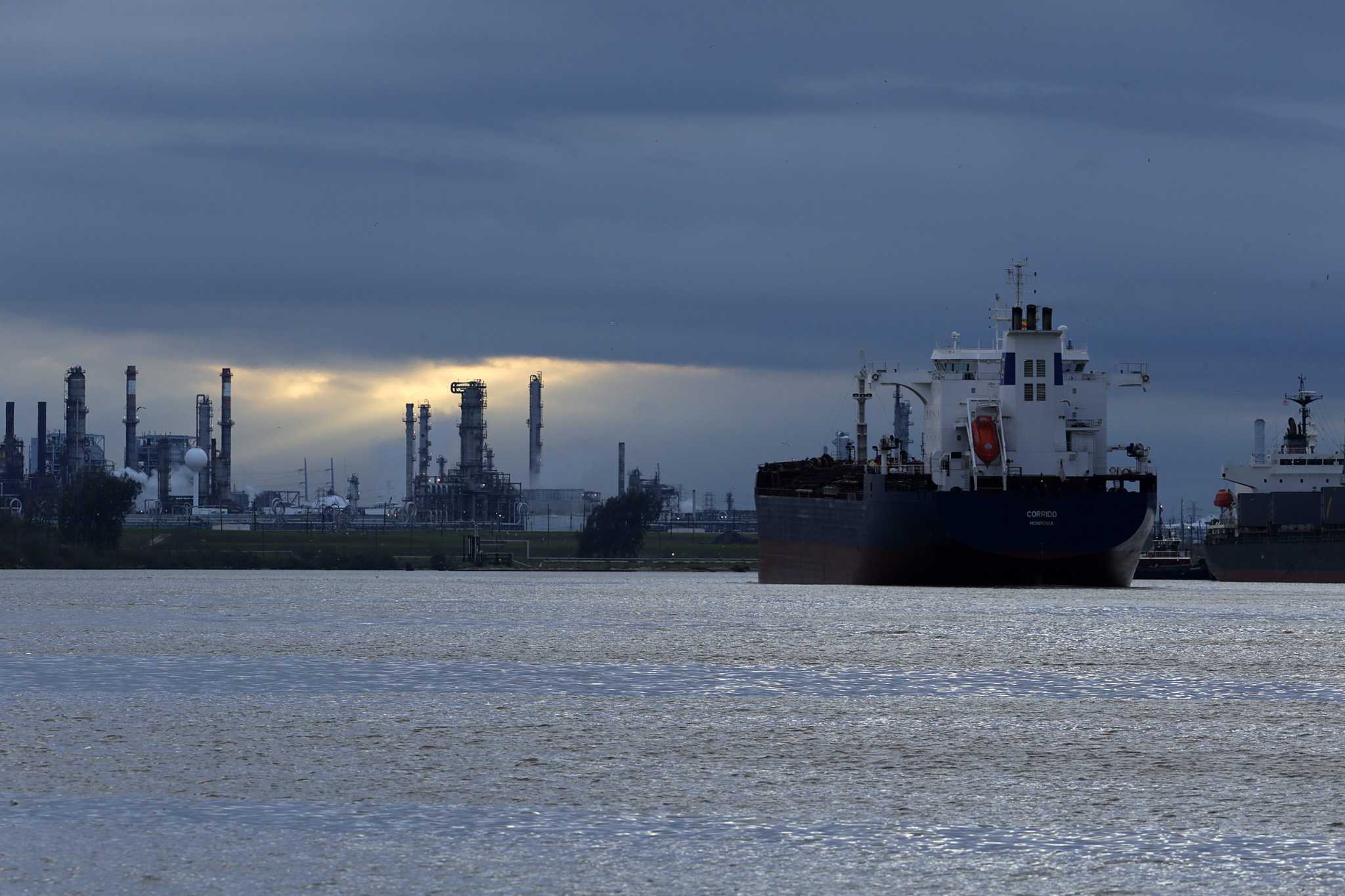
A ship navigates through Buffalo Bayou heading to a dock along the Houston Ship Channel Thursday, Jan. 19, 2017, in La Porte. ( James Nielsen / Houston Chronicle )
US ports are facing sustained cyber pressure as attackers probe the digital systems that keep cargo, fuel and ships moving. A Financial Times investigation published on 22 November describes a sharp volume of attempted intrusions against port networks and vessels. The distinction matters. A blocked login attempt is not the same as a successful breach, and the figures should not be read as evidence that thousands of port systems have been compromised.
The Port of Corpus Christi, a major US crude export gateway, reportedly encounters hundreds and sometimes thousands of attempts a day. The Port of Los Angeles has also described a very large volume of blocked malicious activity. Ports are attractive targets because their systems connect terminals, shipping lines, customs processes, road transport and industrial equipment. A failure at one point can delay goods far beyond the waterfront.
Modern logistics depend on schedules, cargo records, access controls and communications that move between many organisations. Criminals can seek payment through ransomware or stolen data, while state-linked actors may be interested in disruption or intelligence. An attack on a gate-management system could slow the movement of containers even if cranes and vessels themselves remain safe. That is why the response has to cover business software as well as operational technology.
The risks are not theoretical. The FT report discusses cyber incidents involving vessels and shipping companies, although the public evidence for each case differs. It would be misleading to treat every attempted intrusion, phishing message and confirmed compromise as a single attack campaign. What is clear is that operators are having to defend a much broader network of suppliers, contractors and connected devices than in the past.
US authorities have been strengthening maritime cyber expectations. The Coast Guard’s maritime cybersecurity resource centre brings together guidance for ports, vessels and facilities, while a Maritime Administration advisory urges operators to improve access controls, vulnerability management and configuration practices. These measures are less dramatic than a breach headline, but they reduce the chance that routine probing becomes a serious incident.
Port operators should know which systems are internet-facing, separate critical equipment from ordinary office networks, require strong authentication for remote access and test how operations continue when a digital service is unavailable. Shipping companies and suppliers need the same discipline because a port’s security is partly determined by the partners connected to it. Incident reporting and exercises can expose gaps before an emergency does.
For readers outside the US, the lesson is global. Trade routes depend on interconnected digital infrastructure, so a prolonged disruption can affect delivery times, commodity flows and prices across continents. TechBooky has previously covered new approaches to enterprise security, but ports show why basic resilience still matters. The immediate story is a rise in pressure on critical systems, not a claim that global trade has been paralysed.
Related Reading
More contextual TechBooky stories selected from tags, categories and article context.
Paul Femi Balo is the founder and publisher of TechBooky. He covers artificial intelligence, African technology, digital infrastructure, enterprise technology and the global digital economy.
We use cookies to ensure that we give you the best experience on our website. If you continue to use this site we will assume that you are happy with it.