A private chat should remain private when an AI assistant arrives on your phone. That sounds obvious. Yet Signal’s latest move shows how quickly the meaning of privacy changes when the operating system can read what an app displays. A message may travel under end-to-end encryption, then appear in plain sight to an assistant that can inspect the screen. The assistant did not break the encryption. It stepped around it.
In a 20 November statement, Signal said it was restricting AI agents built into iOS and Android from potentially capturing and storing its users’ conversations. The company has introduced screen protection for supported versions of its app, following an earlier measure against Microsoft’s Recall feature on Windows. This is not proof that Apple or Google has secretly used Signal chats to train AI models. It is evidence of a design problem; a privacy-focused app cannot fully control what a more powerful layer of software can see.
Encryption protects a journey, not every destination
End-to-end encryption is essential because it keeps intermediaries from reading a message in transit. But the intended recipient must be able to read it. Once the text appears on a phone, screen-reading tools, notifications and other operating-system features become part of the privacy story. That does not make encryption pointless. It means the promise of a private conversation depends on more than the messaging app alone.
AI assistants make this boundary especially important. Their value is that they can look across apps, gather context and act for the user. The same access that helps someone find an address in a conversation could expose a confidential source, a family discussion or a disappearing message. Even if processing happens on the device, users and their contacts deserve to know what is read, where it goes, how long it remains available and whether it can be used for another purpose.
The word ‘training’ in this argument is a warning about possible secondary uses of data, not an allegation that these assistants are currently training on Signal messages. Screen capture, local storage, remote processing and model training are different activities. Each needs its own clear disclosure and safeguards. Conflating them would let technology companies dismiss a legitimate concern as an inaccurate accusation.
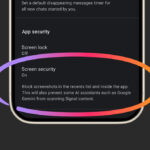
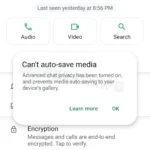
Signal’s support guidance says its protection can block screenshots, screen recordings and on-screen reading by AI assistants. On supported iPhones, the Block Siri AI control is on by default. On Android, screen security turns on when an assistant first attempts to read the Signal screen, although users can enable it sooner. People may turn the setting off, including temporarily on iPhone when they need a screenshot.
That is a reasonable emergency measure, but it is also a poor long-term bargain. A user should not have to choose between ordinary functions such as taking a screenshot and protection against unwanted AI access. Nor should every app developer have to reverse-engineer each new assistant and build a separate workaround. Signal says its own screen blocking does not cover every path to app data, including possible access through files and other system interfaces. It also says it cannot provide equivalent screenshot protection on macOS.
This is where Apple, Google and Microsoft have the greater responsibility. They control the operating systems and the permissions that agents use. They should offer a documented, enforceable way for apps to exclude sensitive content from AI reading and processing across screens, notifications, files and accessibility interfaces. The rule should be independently testable and should not disable basic app functions as the price of privacy.
Consent belongs to everyone in a conversation
There is a second problem that a simple permission prompt cannot solve. When I allow an assistant to read my messaging app, I may also expose messages written by other people. Those contacts did not necessarily consent to an AI system processing their words. An operating-system prompt framed as ‘help me with this app’ cannot quietly become blanket permission over every participant’s information.
Privacy-sensitive apps therefore need a meaningful veto, even where a device owner is enthusiastic about AI. This need not ban useful assistants. It would set a boundary that developers and users can understand before an agent crosses it. Sensitive financial, health, legal and journalistic services face the same issue. Signal is simply among the first to make the conflict impossible to ignore.
There is room for a workable compromise. Operating systems can provide narrow, explicit sharing controls for a particular action, show users exactly what an agent will receive, and keep an accessible record of that access. App developers should be able to declare protected surfaces and revoke access. Independent researchers should be able to test whether those promises hold. A privacy guarantee is much stronger when it is a technical boundary than when it is an assurance in a settings menu.
AI should earn access, not inherit it
The AI industry wants assistants that can understand everything happening on a device. That ambition may make software more useful, but it reverses a principle people have come to rely on; information entrusted to one app should not automatically become available to another service. TechBooky’s report on Signal’s new controls explains what users can switch on today. The larger question is what the platform owners will change tomorrow.
If an assistant wants to enter a private conversation, it should ask in a way that is specific, understandable and genuinely optional. And if the app says no, the operating system should make that no stick. Private chats should not become an AI training ground, or an AI reading room, merely because a phone has gained a clever new feature.
Related Reading
More contextual TechBooky stories selected from tags, categories and article context.
Paul Femi Balo is the founder and publisher of TechBooky. He covers artificial intelligence, African technology, digital infrastructure, enterprise technology and the global digital economy.
We use cookies to ensure that we give you the best experience on our website. If you continue to use this site we will assume that you are happy with it.