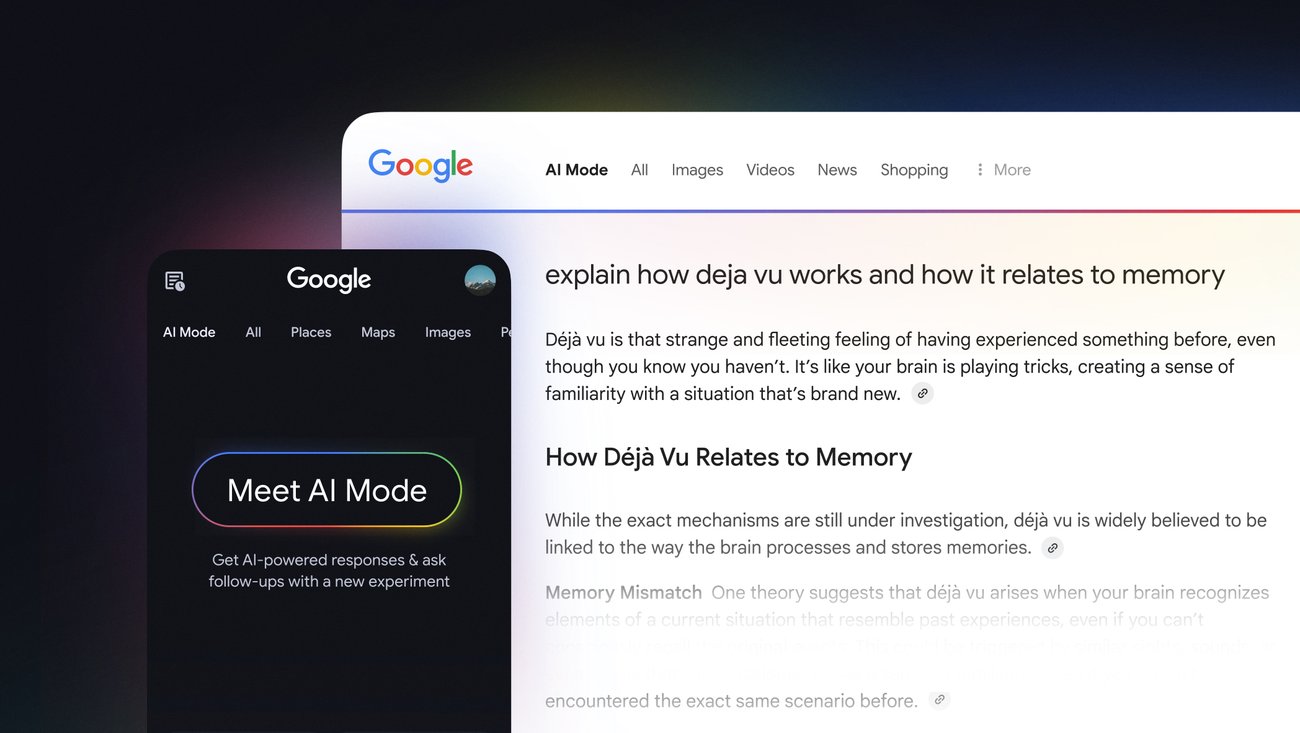
Google’s AI search shift is becoming more visible on the results page. The company is now automatically expanding some AI Overviews at the top of Search, which can push traditional web links further down and force users to scroll before they reach the open web.
Some searches now show a full AI Overview first, followed by an Ask anything box, before the normal list of links appears. Google says the dynamic expansion happens for queries where its systems decide the fuller AI response will be useful, and that it cancels the expansion if a user has already started scrolling.
That sounds like a small interface change, but it is not small for publishers. Google Search has historically been a gateway to websites. AI Overviews move more of the answer into Google itself. When those summaries expand automatically, the first screen becomes even more dominated by Google’s own AI layer.
The company has argued for years that generative AI can make Search more useful by helping people understand complicated topics faster. Google’s official Search work around AI Overviews and AI Mode has been built around that promise: less clicking around, more direct answers, and more follow-up exploration inside Search.
The user benefit is obvious. If someone asks a broad question, a clean summary can save time. The problem is the trade-off. If users get enough information from the AI answer, fewer of them may click through to the publishers, creators and businesses that produced the underlying information in the first place.
This is why the debate is not only about design. It is about the economics of the web. Publishers depend on search traffic, affiliate clicks, advertising, subscriptions and brand visibility. If AI summaries answer more queries directly, publishers may supply the raw material while Google captures more of the attention.
The timing is also awkward because Google is not the only company moving in this direction. OpenAI is testing ads around ChatGPT in India, and AI assistants are increasingly becoming search-like products. The internet is shifting from link lists to answer engines, and the companies that control those answer layers will control a lot of value.
Google will argue that Search still sends traffic and that AI summaries include links. That may be true in some cases. But placement matters. A link below a long generated answer is not the same as a top blue link. If the first interaction is with Google’s summary and follow-up box, the user’s habit changes over time.
For businesses, SEO may have to adapt again. Ranking in Search will still matter, but appearing inside AI summaries, being cited clearly and building direct audiences may matter more. Publishers that depend only on search referral traffic are likely to feel more pressure as AI interfaces keep expanding.
The bigger point is that Google is redesigning the web’s front door while asking publishers to trust that traffic will survive. That trust is getting harder to maintain as AI Overviews become larger, more automatic and more central to the search experience.
Related Reading
More contextual TechBooky stories selected from tags, categories and article context.
Paul Balo is the founder of TechBooky and a highly skilled wireless communications professional with a strong background in cloud computing, offering extensive experience in designing, implementing, and managing wireless communication systems.
We use cookies to ensure that we give you the best experience on our website. If you continue to use this site we will assume that you are happy with it.