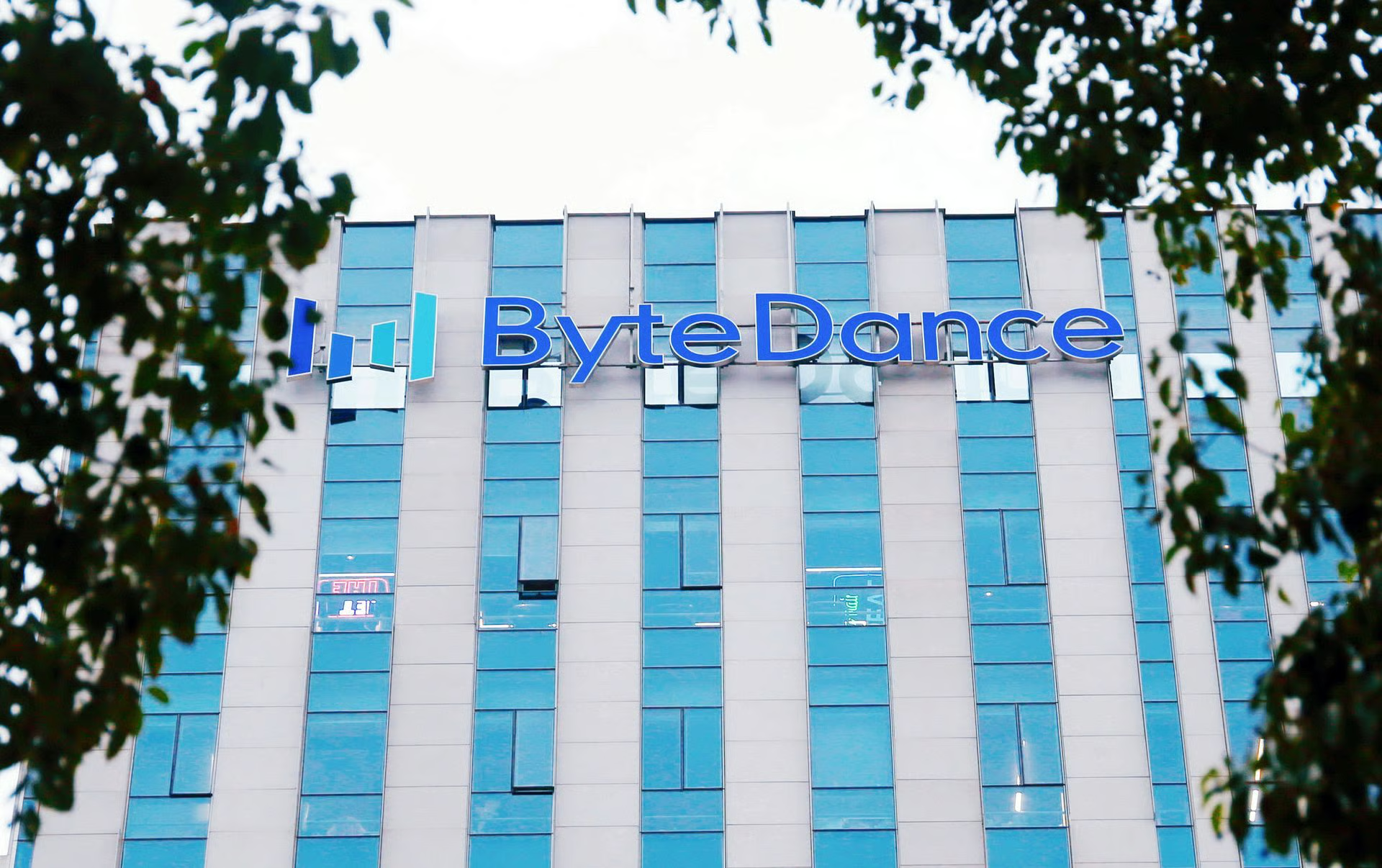
ByteDance is in advanced talks with MediaTek about custom artificial intelligence chips for its data centres, according to a Bloomberg report published Thursday. The companies have not announced a completed agreement, and the number of chips under discussion is not public. The distinction matters: this is a reported negotiation, not a confirmed supply contract.
The talks point to a wider shift in the AI market. Companies operating large models increasingly want processors tailored to their own workloads rather than relying entirely on general-purpose accelerators. ByteDance, whose products span TikTok and its Chinese services, needs substantial computing capacity to train and serve AI systems. A chip designed around a specific use case could offer a better balance of performance, power use and cost, although that advantage would depend on the final design and manufacturing arrangements.
An application-specific integrated circuit, or ASIC, is built for a narrower set of jobs than a general-purpose GPU. That does not automatically make it a substitute for Nvidia’s leading chips. Model training, inference, networking and memory all have different requirements, and the economics of a bespoke design depend on volume. For ByteDance, the appeal is potentially greater control over procurement and the infrastructure behind its AI products.
MediaTek is best known for smartphone processors, but a data-centre deal would put its design expertise in a different market. The reported discussions do not establish which company would own the design, where the chips would be fabricated or when they might be deployed. Those unanswered questions will determine whether the project becomes a meaningful new source of AI capacity or remains one of many exploratory supply talks.
ByteDance has already faced the difficulty of securing enough advanced AI hardware. TechBooky previously examined how its AI chip ambitions ran into supply constraints. A custom processor could diversify the company’s options, but it would not remove the need for advanced fabrication, packaging, memory and data-centre power.
There is also a geopolitical dimension. Access to cutting-edge American chips for Chinese companies remains subject to changing export rules. A non-US design partner may offer a different route to capacity, but any finished chip would still depend on a global semiconductor supply chain and the regulations governing it. For now, the most defensible conclusion is that ByteDance is exploring another path, not that it has already secured one.
Related Reading
More contextual TechBooky stories selected from tags, categories and article context.
Paul Balo is the founder of TechBooky and a highly skilled wireless communications professional with a strong background in cloud computing, offering extensive experience in designing, implementing, and managing wireless communication systems.
We use cookies to ensure that we give you the best experience on our website. If you continue to use this site we will assume that you are happy with it.