The latest retreat in artificial intelligence shares has become a test of the entire chip trade, not just a bad day for one company. South Korea’s Kospi fell 7.6% on Thursday, while Japan’s Nikkei 225 lost 4.9%, according to Associated Press market reporting. The move followed losses on Wall Street and reached the Asian companies that supply memory and other hardware for the world’s AI infrastructure.
The sharp decline does not mean demand for AI chips has disappeared. It means investors are asking a harder question about the price of that demand. Data centres, advanced processors and power capacity require enormous upfront spending, often funded with debt. Higher bond yields make that borrowing more expensive, while richly valued chip stocks leave little room for disappointment.
Samsung Electronics and SK Hynix give the Kospi unusually heavy exposure to the memory-chip cycle. High-bandwidth memory is a key component in AI systems, so expectations for both companies have been tied closely to the pace of accelerator production and cloud capital expenditure. That concentration can magnify gains when confidence rises and losses when the market turns cautious.
A Reuters report on Thursday’s global tech selloff put Seoul’s drop at almost 8% and the Nikkei’s at about 5%. The agency pointed to rising interest rates and crowded bets on data centres and AI suppliers. This is a valuation and financing concern, not proof that chip orders have stopped.
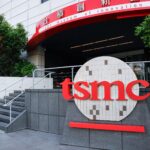
The contrast is striking because the industry’s operating numbers have not uniformly weakened. TSMC’s latest earnings, for example, showed a 69% profit increase as AI-chip demand supported its quarter. Strong supplier revenue can coexist with falling share prices when investors think growth has already been priced in, or worry that customers will struggle to earn enough from the infrastructure they are buying.
That distinction matters. A selloff is a market judgment about future returns, not a measurement of the AI industry’s current technical progress. The next clues will come from cloud companies’ spending plans, chipmakers’ order books and the financing costs of data-centre operators. If those remain robust, the drop may prove a reset in expectations. If borrowing pressure begins to delay projects, the effects could reach far beyond stock prices.
Related Reading
More contextual TechBooky stories selected from tags, categories and article context.
Paul Balo is the founder of TechBooky and a highly skilled wireless communications professional with a strong background in cloud computing, offering extensive experience in designing, implementing, and managing wireless communication systems.
We use cookies to ensure that we give you the best experience on our website. If you continue to use this site we will assume that you are happy with it.