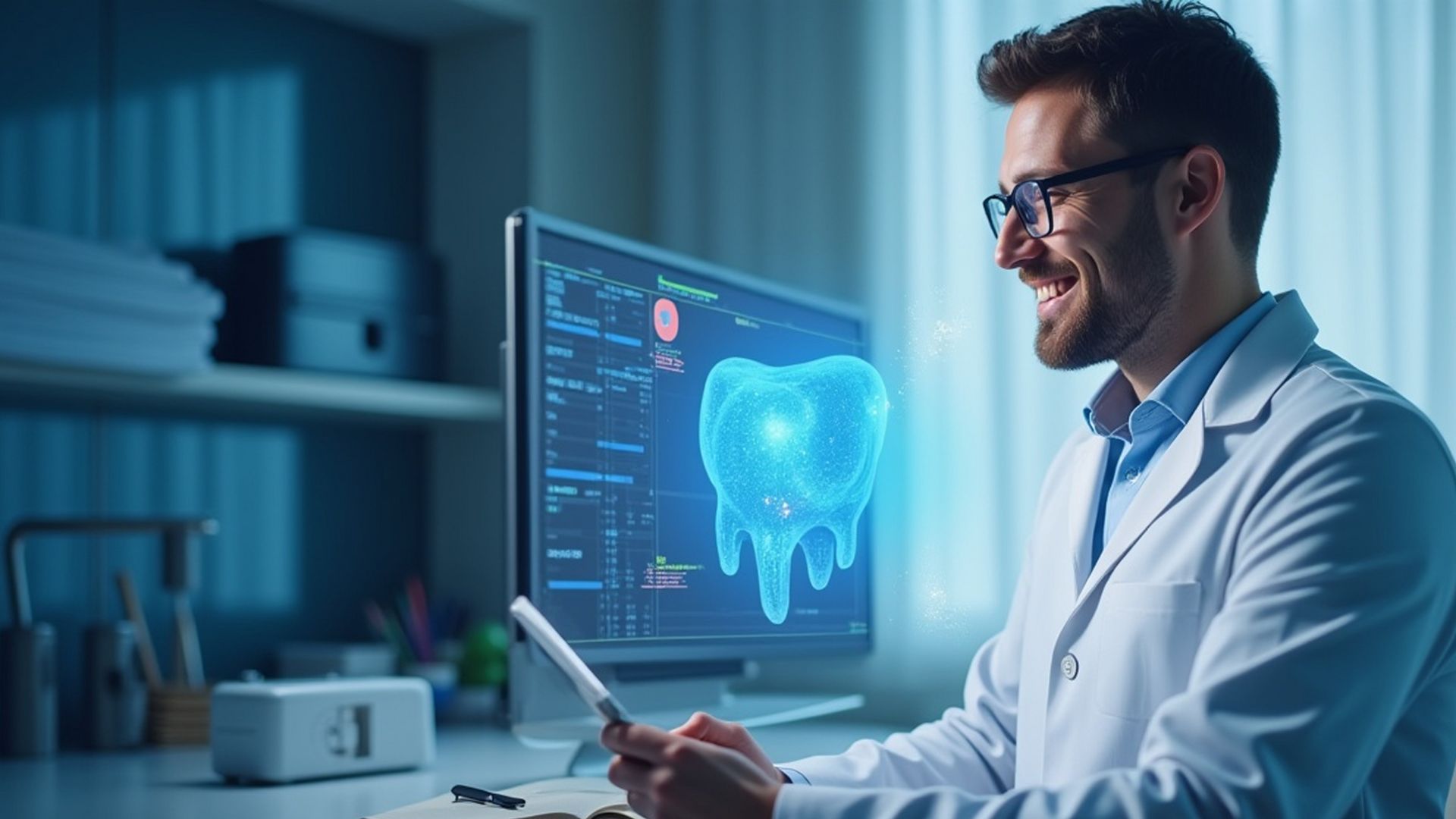
Technology is changing the way dental practices work across the UK. From booking appointments to planning complex treatments, digital tools are helping dentists provide faster, more accurate and more personalised care.
Artificial intelligence (AI) is becoming a valuable support tool, helping dental teams improve efficiency while allowing them to spend more time with patients.
The aim is not to replace dentists. Instead, AI and modern technology are helping professionals make informed decisions, reduce manual tasks and improve the overall patient experience.
Smarter Diagnosis and Treatment Planning
One of the biggest changes is the use of AI to support diagnosis. AI software can analyse digital X-rays and scans, helping dentists spot signs of tooth decay, gum disease and other oral health problems that might otherwise be difficult to detect in the early stages.
Research has shown that AI systems can achieve high levels of accuracy when identifying dental conditions. Some studies have reported accuracy rates of more than 90% for detecting dental decay on radiographs when used alongside clinical assessment. This gives dentists an extra level of confidence while still leaving the final decision in the hands of the clinician.
Digital treatment planning is also becoming more common. Three-dimensional scans allow dentists to create detailed models of a patient’s mouth, making procedures such as dental implants, orthodontics and crowns more precise.
Improving the Patient Experience
Technology is making visits to the dentist smoother from the very first appointment. Many practices now offer online booking, digital forms and automated appointment reminders. These simple improvements reduce paperwork and help patients manage their appointments more easily.
AI-powered chat assistants and AI receptionists using the likes of InTouchNow are also appearing on practice websites or being used as the first choice for telephone answering. They can answer common questions, explain treatments and help patients find available appointments outside normal opening hours. This means patients can receive support at any time without waiting for a phone call.
Digital communication also helps practices keep patients informed about treatment plans, aftercare and routine check-ups, leading to better engagement with oral health.
Making Practice Management More Efficient
Running a successful dental practice involves much more than treating patients. Reception teams spend a great deal of time managing appointments, processing paperwork and handling enquiries.
AI and practice management software can automate many of these routine tasks. Appointment scheduling, payment reminders and patient records can all be managed more efficiently, reducing administrative workload and allowing staff to focus on delivering excellent customer service.
The UK dental software market continues to grow as more practices invest in digital systems to improve productivity and streamline daily operations.
Using Advanced Technology in the Treatment Room
Modern dental surgeries now use a range of digital equipment that improves both comfort and accuracy, with the phrase often known as ‘digital dentistry.’
Intraoral scanners are replacing traditional dental impressions in many practices, making them perfect for showing before and after for treatment such as Invisalign (Source: Elegance Dental). Instead of using impression trays, dentists can create detailed digital scans in just a few minutes.
Three-dimensional printing is also becoming more widely used. Crowns, surgical guides, retainers and other dental appliances can often be produced more quickly and with greater precision than traditional methods.
The use of digital workflows can reduce treatment times and improve consistency, helping both patients and clinicians achieve better outcomes.
Supporting Preventive Care
AI is also helping practices move towards more preventive dentistry. By analysing patient records and risk factors, AI tools can identify people who may be more likely to develop tooth decay or gum disease.
This allows dental teams to offer personalised advice before problems become more serious. Preventive care not only improves long-term oral health but can also reduce the need for more complex treatment later.
According to the World Health Organization, oral diseases affect around 3.5 billion people worldwide. Using technology to support prevention could therefore have a significant impact on public health.
Looking Ahead
The use of AI and technology in dentistry is expected to continue growing over the coming years. As software becomes more advanced and digital equipment becomes more accessible, more practices will adopt these tools as part of everyday care.
While technology cannot replace the experience, judgement and reassurance provided by a qualified dentist, it is becoming an important partner in modern dental care. By combining clinical expertise with intelligent technology, dental practices can deliver more efficient services, improve patient outcomes and create a better experience for everyone who walks through the door.
Related Reading
More contextual TechBooky stories selected from tags, categories and article context.
We use cookies to ensure that we give you the best experience on our website. If you continue to use this site we will assume that you are happy with it.