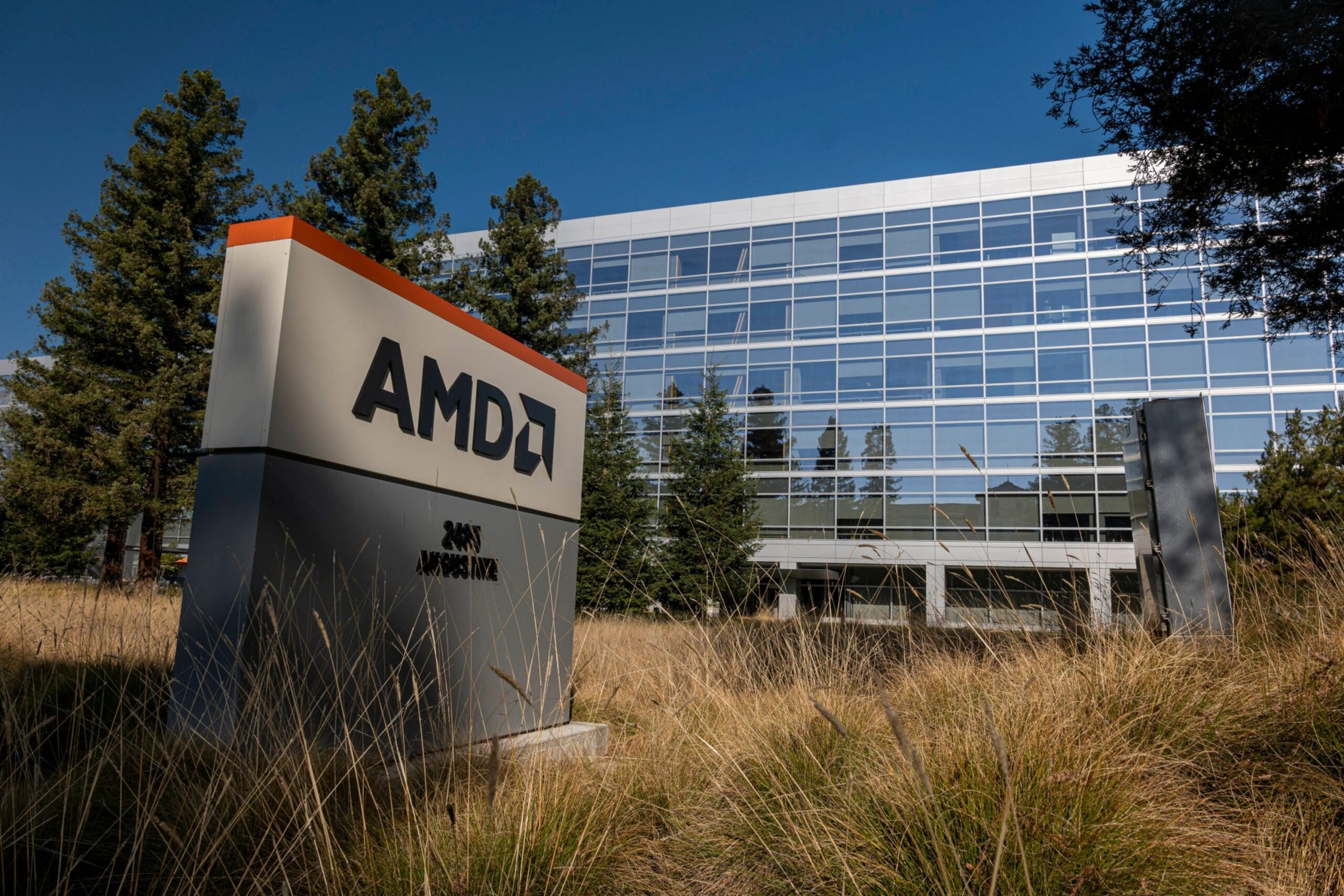
AMD has reported the kind of quarter that shows why Wall Street is still willing to treat the company as one of the serious challengers in the AI chip race, even if Nvidia remains the giant everyone is chasing.
In its second-quarter 2026 results, AMD said revenue rose 50 percent year over year to a record $11.5 billion. Gross margin came in at 54 percent, operating income reached $2.0 billion, net income was $2.3 billion and diluted earnings per share was $1.38. On a non-GAAP basis, AMD reported earnings of $1.66 per share.
The real story is the data-centre business. AMD said data-centre revenue reached $6.7 billion, up 107 percent from a year earlier, driven by demand for EPYC server processors and Instinct GPUs. That means data centre now accounts for 58 percent of AMD total revenue, which is a major shift for a company that was once discussed mostly through PCs, consoles and gaming graphics.
Lisa Su framed the quarter around AI and compute demand, saying AMD entered the second half with momentum as EPYC demand accelerates, Instinct deployments scale and Helios begins to ramp. That Helios line matters because AMD is trying to sell more than individual chips. It wants customers to see it as a full-stack AI infrastructure supplier with CPUs, GPUs, networking and software working together.
AMD also guided for third-quarter revenue of about $13 billion, plus or minus $300 million, with non-GAAP gross margin expected at about 56 percent. That forecast suggests the company expects the AI infrastructure cycle to keep moving in its favour through the second half of the year.
There is still a gap between AMD and Nvidia, but AMD is no longer relying only on the argument that buyers want a second supplier. Its recent AI announcements show a clearer platform strategy. The company has talked up Helios rackscale systems, the Instinct MI400 family, 6th Gen EPYC CPUs, ROCm software and partnerships with companies including Anthropic, Microsoft, OpenAI, Oracle, Meta and Cerebras.
That is why the quarter connects directly to the wider compute shortage debate. Microsoft recently deepened its AMD relationship around Helios and next-generation EPYC systems, a move we looked at in AMD Helios and Microsoft AI infrastructure push. The point is that AI labs and cloud providers are no longer buying chips casually. They are trying to lock down entire systems that can serve training, inference and agentic workloads at scale.
The contrast inside AMD business is also revealing. Client and gaming revenue rose 6 percent to $3.8 billion, helped by a 23 percent jump in client revenue from Ryzen demand. But gaming revenue fell 31 percent to $779 million because of lower semi-custom revenue. Embedded revenue rose 19 percent to $977 million. The company is still broad, but the centre of gravity has clearly moved toward AI and data-centre compute.
Investors may still be demanding more. Several market reports noted that AMD shares slipped after hours despite the beat, partly because expectations had already run high around AI chip stocks. That reaction says less about whether AMD had a bad quarter and more about how difficult it has become for AI infrastructure companies to satisfy a market that keeps pricing in faster growth.
For AMD, the path is now clear but not easy. It needs to keep winning large cloud and AI lab deployments, prove that ROCm and Helios can make life easier for developers and buyers, and show that its data-centre growth can translate into durable earnings. The second quarter gave AMD strong evidence. The next test is whether it can turn this momentum into a deeper challenge to Nvidia without being treated as only the alternative supplier.
Related Reading
More contextual TechBooky stories selected from tags, categories and article context.
Paul Balo is the founder of TechBooky and a highly skilled wireless communications professional with a strong background in cloud computing, offering extensive experience in designing, implementing, and managing wireless communication systems.
We use cookies to ensure that we give you the best experience on our website. If you continue to use this site we will assume that you are happy with it.