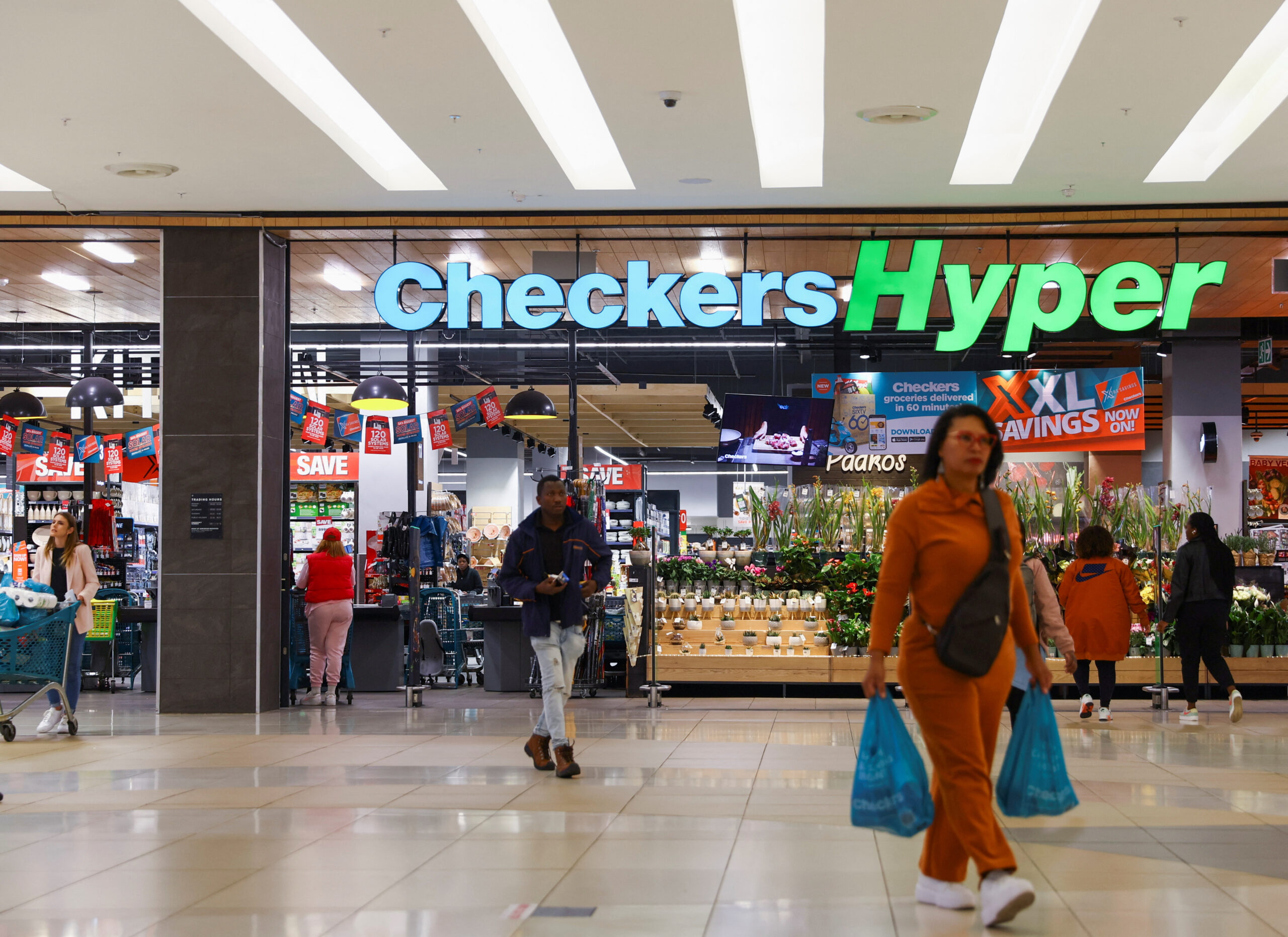
FILE PHOTO: Shoppers leave after shopping at an outlet of retailer Checkers in Sandton, near Johannesburg, South Africa, July 27, 2023. REUTERS/Siphiwe Sibeko/File Photo
South African consumers are still shopping more often on local e-commerce platforms than on international sites such as Temu and Shein, a useful reminder that price is not the only thing that wins online retail. Connecting Africa reported findings from the Online Retail in South Africa 2026 study by World Wide Worx, Mastercard, Peach Payments and Ask Afrika.
The study surveyed 1,400 South African online shoppers and found that local platforms remained the primary shopping channel for 43.6 percent of respondents. International platforms were the main channel for 10.6 percent, up from 9 percent in 2025. That means foreign platforms are growing, but local stores still sit at the centre of online shopping behaviour.
The platform ranking tells the story clearly. Takealot remained the most-used platform, used by 35.3 percent of online shoppers, followed by Shein at 21.5 percent, Checkers Sixty60 at 15 percent and Temu at 11.6 percent. Amazon, which entered South Africa in 2024 and launched Prime locally in 2026, was used by 12.7 percent of surveyed shoppers before the Prime launch.
This is important because Temu and Shein have often been treated as unstoppable low-price machines. They are certainly influential, but South Africa shows that trust, delivery reliability, returns, payment habits and local familiarity still matter. A cheap product is less attractive if a buyer is unsure about delivery, customs, returns or product quality.
Tax changes also appear to have slowed the Chinese platforms. South Africa changed how small parcels under R500 are treated, removing a previous concession that allowed low-value parcels to enter at a flat 20 percent duty without VAT. That made imported cheap goods less frictionless and gave local players some breathing room.
The lesson for African e-commerce is not that foreign platforms are weak. It is that local platforms can still compete when they offer convenience, speed and trust. The same user who compares prices on Temu may still buy groceries through Checkers Sixty60 or household items through Takealot because those services fit everyday life better.
There is a wider business connection here. African digital markets are often judged by whether global platforms enter or exit. But as Uber’s Nigeria exit showed, local operating reality can be more important than global brand power. E-commerce works the same way. Logistics, payments, customer service and regulation decide the winner.
South Africa’s e-commerce market is still growing, with online retail now accounting for about 10 percent of total retail turnover and expected to reach R159 billion in 2026. That growth gives both local and foreign platforms room to fight.
For now, the most interesting point is that local trust still has value. Temu, Shein and Amazon can reshape the market, but they have not erased the advantage of platforms that understand South African consumers, payment habits, delivery expectations and retail culture.
Related Reading
More contextual TechBooky stories selected from tags, categories and article context.
Paul Femi Balo is the founder and publisher of TechBooky. He covers artificial intelligence, African technology, digital infrastructure, enterprise technology and the global digital economy.
We use cookies to ensure that we give you the best experience on our website. If you continue to use this site we will assume that you are happy with it.