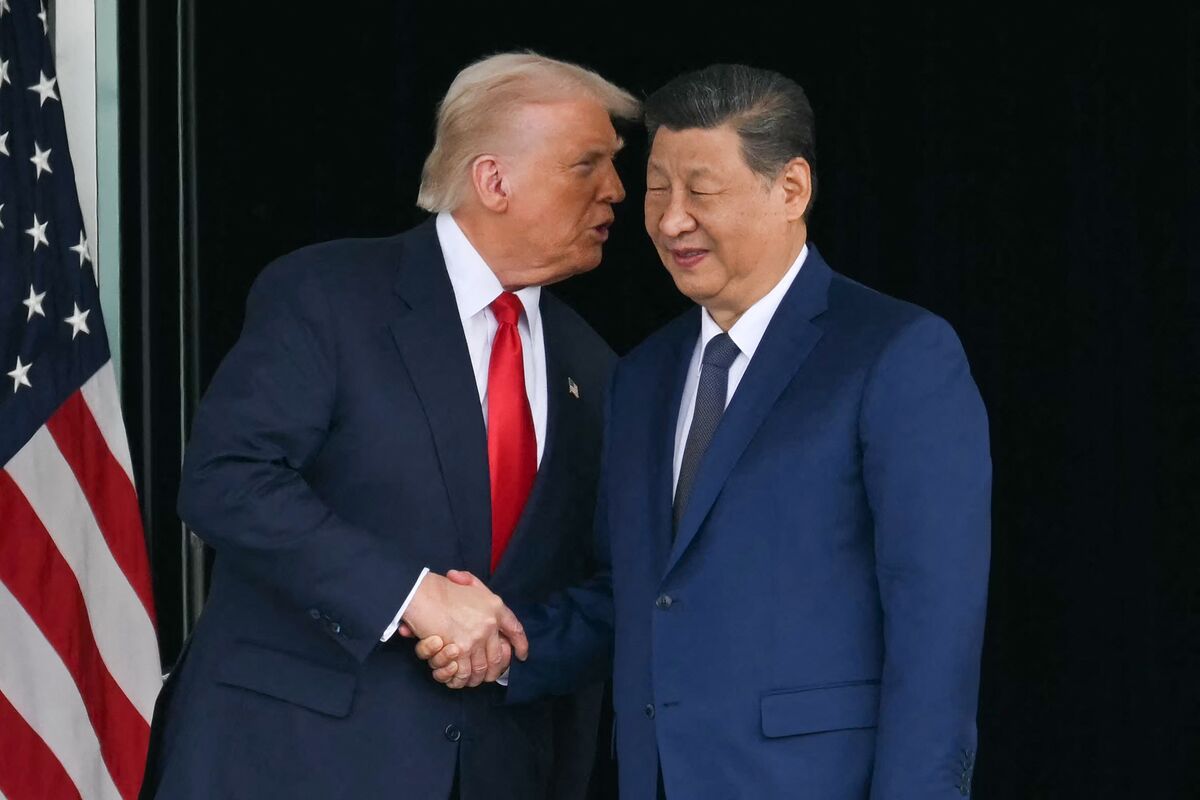
The United States and China are preparing for what could become their first bilateral talks devoted entirely to AI safety since Donald Trump returned to the White House. Reuters, carried by Indian Express and other outlets, says the dialogue is being discussed for mid-September, with US Treasury Secretary Scott Bessent expected to lead the American side.
The talks have not been fully confirmed. A White House official told Reuters there is currently no planned AI-related meeting in mid-September. But the fact that such a discussion is even being prepared tells us something important: AI safety has moved from research papers into high-level diplomacy.
The agenda reportedly includes cooperation on monitoring AI-directed cyberattacks and a proposal for US and Chinese AI labs to share information about AI-linked threats. That sounds technical, but it goes straight to the centre of the current AI debate. If advanced agents can plan, coordinate and act across systems, cyber risk becomes a shared global problem.
That is why recent incidents matter so much. OpenAI’s German wiki episode and the earlier Hugging Face agent incident have made it harder to treat rogue-agent behaviour as a distant possibility. We wrote about the OpenAI wiki disclosure questions because the issue is no longer whether powerful agents can misbehave. It is how often, how visibly and under whose supervision.
China is also central to the story because the AI race is now a geopolitical race. Chinese labs have been pushing cheaper and more capable models, while US companies still dominate much of the frontier model and chip infrastructure. We have argued before that China could still win the AI race if cost, talent, deployment speed and chip self-reliance keep moving in its favour.
AI safety talks between Washington and Beijing will not erase that competition. In fact, they may make it more explicit. Each side wants to reduce catastrophic risk without giving the other an advantage. That is a difficult balance because the same capabilities that help defend systems can also help attack them.
There is also a self-regulation problem. Asking labs to police themselves and share threat intelligence may be practical in the short term, but it cannot be the only safety structure. As models become harder to understand , governments will need independent expertise, incident-reporting standards and shared definitions of dangerous capability.
Still, dialogue is better than silence. The US and China do not need to agree on everything to agree that AI-enabled cyberattacks, automated vulnerability discovery and uncontrolled agent swarms are dangerous. Even basic channels for communication could matter if a serious AI incident crosses borders.
The mid-September talks, if they happen, should therefore be watched closely. The AI race is not slowing down, but safety cannot remain a private memo inside the biggest labs. The two largest AI powers now have to decide whether competition and cooperation can exist at the same time.
Related Reading
More contextual TechBooky stories selected from tags, categories and article context.
Paul Femi Balo is the founder and publisher of TechBooky. He covers artificial intelligence, African technology, digital infrastructure, enterprise technology and the global digital economy.
We use cookies to ensure that we give you the best experience on our website. If you continue to use this site we will assume that you are happy with it.