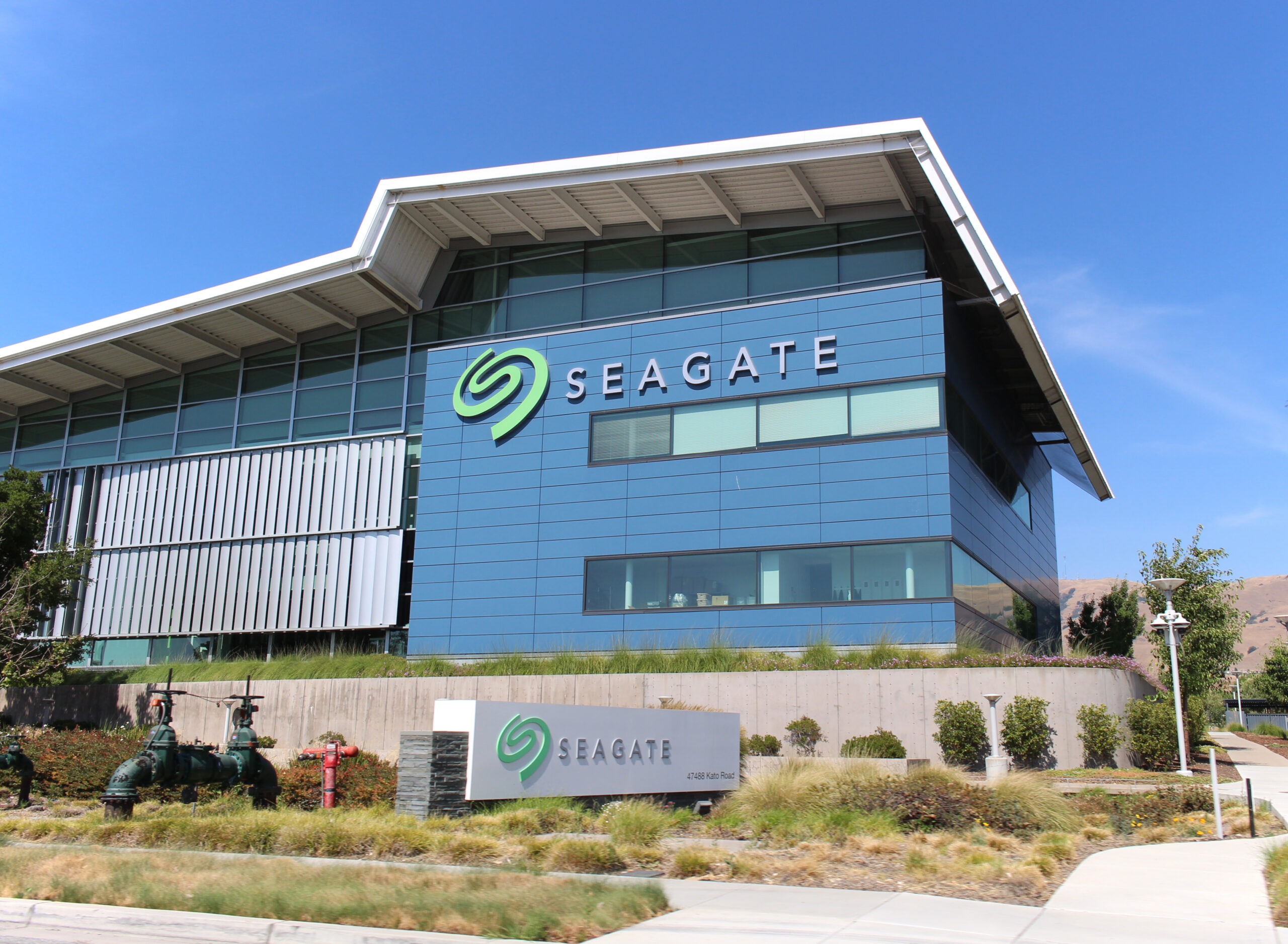
Seagate has given the AI infrastructure market a reminder that the data-centre boom is not only about GPUs. The company reported a much stronger fiscal fourth quarter than Wall Street expected, with storage demand tied to cloud and AI workloads pushing revenue and profit sharply higher.
In its official fiscal Q4 2026 results, Seagate reported revenue of $3.6 billion, GAAP diluted earnings of $5.58 per share and non-GAAP earnings of $5.71 per share. Free cash flow reached $1.1 billion. Those numbers beat expectations, and the company also guided for fiscal first-quarter revenue of about $4.1 billion and non-GAAP earnings of about $7.30 per share.
The Wall Street Journal reported that net income rose to $1.29 billion from $488 million a year earlier, while revenue climbed to $3.63 billion. Barron’s noted that Seagate shares jumped after hours as investors responded to both the earnings beat and the strong guidance.
The simple explanation is that AI creates data, and that data has to live somewhere. High-end accelerators get most of the attention because they train and run the models. But the same AI systems also generate logs, embeddings, training datasets, synthetic data, video, enterprise records and backup copies. That turns mass-capacity storage into a less glamorous but very important part of the AI supply chain.
That is why Seagate’s quarter matters beyond one storage company. The AI infrastructure story has moved into chips, networking, power, cooling, land, memory and now storage. TechBooky’s earlier report on AI spending, data centres and memory chips made the same point from the cost side. AI demand is spreading through every layer of the data-centre stack, and investors are starting to price companies based on how close they sit to that expansion.
There is still risk in the story. Seagate shares had fallen sharply before the report because investors were questioning whether AI infrastructure spending had become overheated. Chinese storage and memory competition is also becoming a bigger concern. Strong earnings do not remove those questions, but they do show that demand is still flowing into real hardware orders, not only into AI headlines.
For now, Seagate has a better answer than many AI-adjacent companies. It is not selling a promise about future intelligence. It is selling storage to companies already building and running data centres. If AI keeps producing more data, the storage layer may remain one of the quieter winners of the compute race.
Related Reading
More contextual TechBooky stories selected from tags, categories and article context.
Paul Balo is the founder of TechBooky and a highly skilled wireless communications professional with a strong background in cloud computing, offering extensive experience in designing, implementing, and managing wireless communication systems.
We use cookies to ensure that we give you the best experience on our website. If you continue to use this site we will assume that you are happy with it.