Africa’s AI conversation is moving from excitement to infrastructure, and the next Korea-Africa Economic Cooperation meeting captures that shift neatly. The 8th KOAFEC Ministerial Conference will run in Seoul from September 8 to 11 under the theme of harnessing AI and digital infrastructure for Africa’s transformation.
That may sound like conference language, but it points to a real issue. Africa cannot build a meaningful AI economy on speeches alone. It needs connectivity, data centres, skills, cloud capacity, digital public infrastructure, affordable devices, energy and policies that make deployment possible.
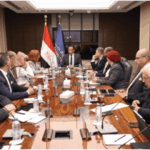
The African Development Bank is one of the founding pillars of KOAFEC, alongside Korea’s Ministry of Finance and Economy and the Export-Import Bank of Korea. TechAfrica News reported that the 2026 meeting will bring together African ministers, Korean officials, investors, private-sector leaders and innovators to explore technology, investment and value creation.
Korea is an interesting partner in this conversation because it understands the link between industrial policy, broadband, semiconductors, manufacturing, consumer electronics and skills. For African economies, the lesson is not to copy Korea exactly. The lesson is that digital transformation works better when infrastructure, education, enterprise demand and policy move together.
That is why this discussion connects with the argument around AI sovereignty and local cloud infrastructure in Nigeria. If African countries want to use AI in health, agriculture, public services, finance and education, they need more than imported tools. They need systems that can be governed locally and adapted to local realities.
The risk is that partnerships become another way for Africa to depend on external platforms, external financing and external standards. That is not automatically bad, but it must be negotiated carefully. A useful partnership should transfer capability, not just technology. It should help African firms and institutions build, operate and maintain digital systems over time.
There is also a private-sector angle. Events like GITEX Nigeria show that African startups want global exposure, but exposure only matters when it leads to procurement, financing, infrastructure access and market expansion. Korea-Africa cooperation could become valuable if it helps move startups from visibility to real commercial opportunities.
This is why the KOAFEC theme matters. AI may be the headline, but infrastructure is the story underneath. Without it, Africa becomes a market for everyone else’s AI. With it, the continent has a chance to build tools, companies and public systems that reflect its own priorities.
Related Reading
More contextual TechBooky stories selected from tags, categories and article context.
Paul Balo is the founder of TechBooky and a highly skilled wireless communications professional with a strong background in cloud computing, offering extensive experience in designing, implementing, and managing wireless communication systems.
We use cookies to ensure that we give you the best experience on our website. If you continue to use this site we will assume that you are happy with it.