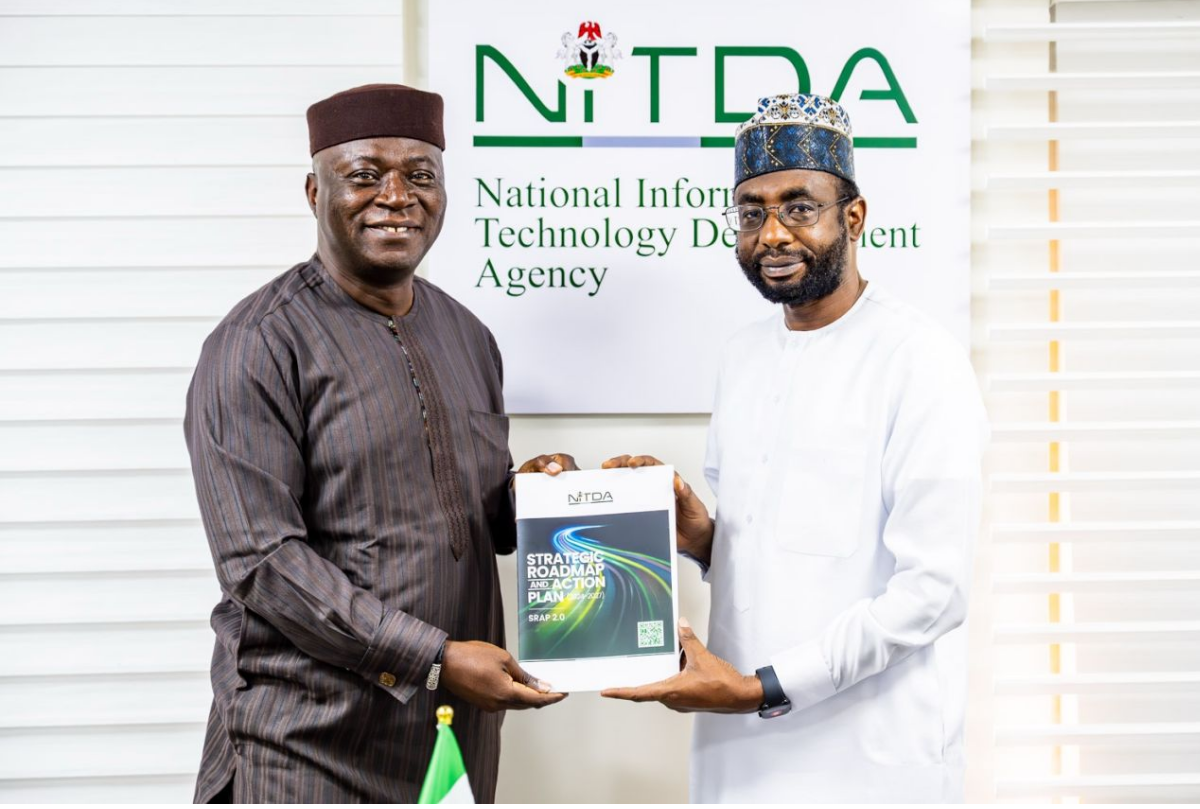
Nigeria’s sovereign cloud plan is starting to look less like a policy document and more like an infrastructure project. NITDA Director-General Kashifu Inuwa has met with Infracorp CEO Dr. Lazarus Angbazo to strengthen collaboration around Nigeria’s sovereign cloud agenda and wider digital infrastructure push.
The current discussion, highlighted by a NITDA public update and a report from TechAfrica News, centres on turning the investment strategy into something operational. That means local funding, private-sector participation and foreign investment for cloud and digital infrastructure projects.
The phrase sovereign cloud can sound abstract, but the idea is straightforward. Nigeria wants more control over where sensitive data lives, who operates critical cloud infrastructure, how providers are certified and how public institutions adopt cloud services without losing accountability.
This is becoming more urgent because cloud is now the base layer for artificial intelligence, digital identity, cybersecurity, e-government, fintech, health records and enterprise software. A country that cannot trust its cloud layer will struggle to build trusted AI systems on top of it.
NITDA has been working on this for some time. A national sovereign cloud workshop document from the agency framed cloud adoption, data sovereignty and AI as connected priorities, while also pointing to the need for collaboration among hyperscalers, local data centre providers, policymakers and industry experts.
That is where Infracorp fits. Nigeria’s cloud ambitions will need patient capital, not only regulation. Data centres, fibre, energy, security operations and compliance systems are expensive. Without investment vehicles that can mobilise long-term funding, sovereign cloud can easily remain a slogan.
The bigger question is whether Nigeria can build a sovereign cloud ecosystem that is trusted and competitive without becoming closed or bureaucratic. If the system becomes too restrictive, startups and enterprises may continue to choose foreign hyperscalers for speed and reliability. If it is too loose, the country loses the security and sovereignty benefit it is trying to build.
Africa is already entering the AI compute debate. Recent moves around sovereign AI cloud infrastructure on the continent show that cloud capacity is no longer just a back-office technology issue. It is industrial policy, cybersecurity policy and economic policy at the same time.
Nigeria has a natural advantage because of its market size, developer base, fintech sector and enterprise demand. But those advantages do not automatically produce infrastructure. They need clear procurement rules, power reliability, predictable regulation and a credible way for private capital to earn returns.
That is why the NITDA-Infracorp discussion matters. It suggests Nigeria is trying to connect policy ambition with financing capacity. If that connection holds, sovereign cloud could become one of the foundations for Nigeria’s AI and digital public infrastructure ambitions. If it fails, the country may keep announcing cloud plans while its most important data and compute needs remain dependent on infrastructure decisions made elsewhere.
Related Reading
More contextual TechBooky stories selected from tags, categories and article context.
Paul Balo is the founder of TechBooky and a highly skilled wireless communications professional with a strong background in cloud computing, offering extensive experience in designing, implementing, and managing wireless communication systems.
We use cookies to ensure that we give you the best experience on our website. If you continue to use this site we will assume that you are happy with it.