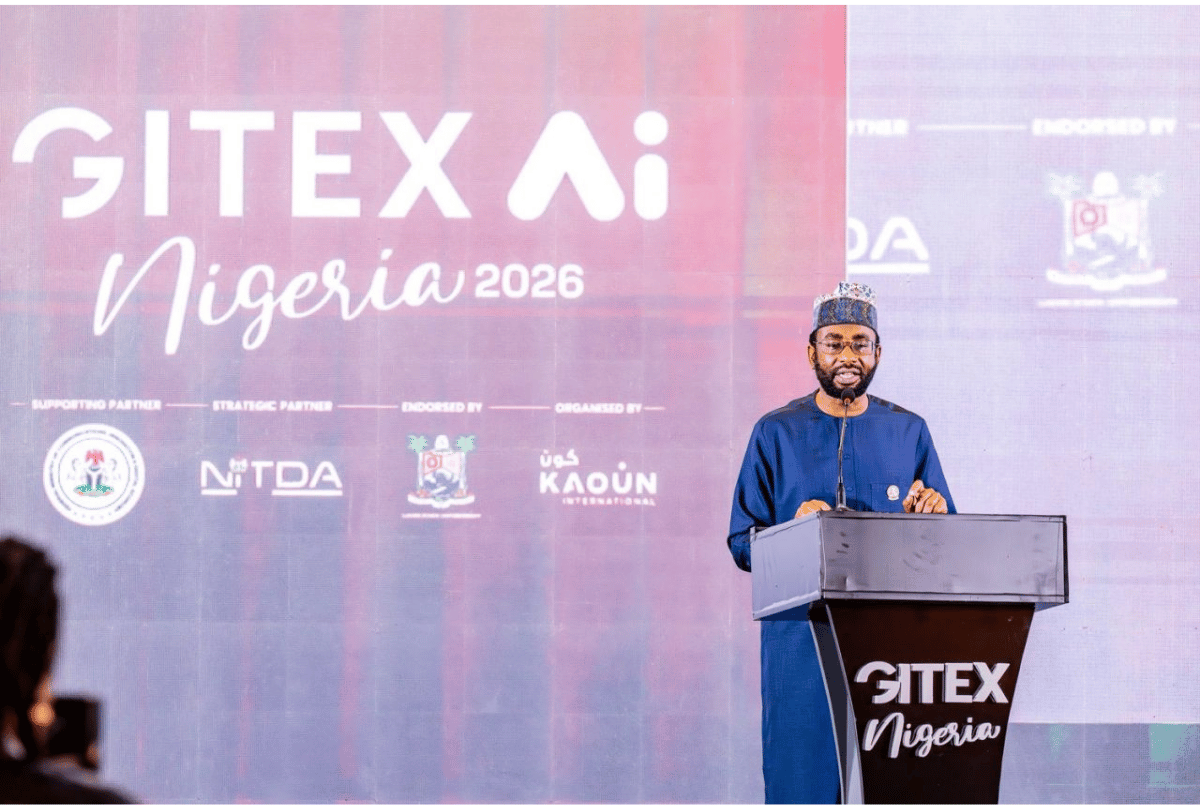
NITDA Director-General Kashifu Inuwa has used GITEX Nigeria 2026 to make a point that should sit at the centre of Nigeria’s AI debate: sovereignty is not only about building AI models. It is also about owning the infrastructure that allows those models to work.
Speaking at the opening of the event, Inuwa said AI sovereignty should go beyond geopolitics and include Nigeria’s ability to exercise digital self-determination across the technology stack, according to a report on the GITEX opening.
That is the right framing. Too many AI discussions stop at apps, chatbots and model launches. But the real stack includes connectivity, data centres, cloud infrastructure, compute access, cybersecurity, data governance, local skills and procurement rules. A country can have AI policies and still lack AI sovereignty if all the important infrastructure sits outside its control.
Voice of Nigeria also reported that stakeholders at GITEX Nigeria pushed for greater investment in artificial intelligence, digital infrastructure, data governance and homegrown innovation. The event itself, according to the official GITEX Nigeria programme, is built around digital public infrastructure, AI adoption and national transformation.
This connects directly to the recent NITDA and Infracorp sovereign cloud plan. If Nigeria wants AI to support public services, security, education, finance and health, it cannot treat cloud infrastructure as a side issue. It has to be part of the national plan.
The challenge is that sovereignty can be misunderstood. It should not mean cutting Nigeria off from global technology. It should mean having enough domestic capacity, legal clarity and technical control to choose partners from a position of strength.
That matters because AI systems are only as trustworthy as the infrastructure and data arrangements behind them. If public data is stored without clear governance, if cloud contracts are opaque, if foreign platforms set the default rules, or if local developers cannot access affordable compute, then Nigeria will mostly consume AI built around other people’s priorities.
The private sector also has to be part of this. Banks, telcos, cloud providers, startups, universities and investors all need to help build the stack. Government can set direction, but infrastructure requires capital, execution and maintenance.
There is a useful link to the broader accessibility conversation too. Nigeria cannot build digital sovereignty for only the wealthy, urban and already-connected. As the recent debate around assistive technology and digital access showed, the country still has to make basic digital systems usable for people with disabilities and underserved communities.
Inuwa’s message is therefore bigger than GITEX. Nigeria can either treat AI as another imported technology layer, or it can build the institutions and infrastructure needed to shape AI for its own economy. The first path is easier. The second is harder, but it is the only one that looks like real sovereignty.
Related Reading
More contextual TechBooky stories selected from tags, categories and article context.
Paul Balo is the founder of TechBooky and a highly skilled wireless communications professional with a strong background in cloud computing, offering extensive experience in designing, implementing, and managing wireless communication systems.
We use cookies to ensure that we give you the best experience on our website. If you continue to use this site we will assume that you are happy with it.