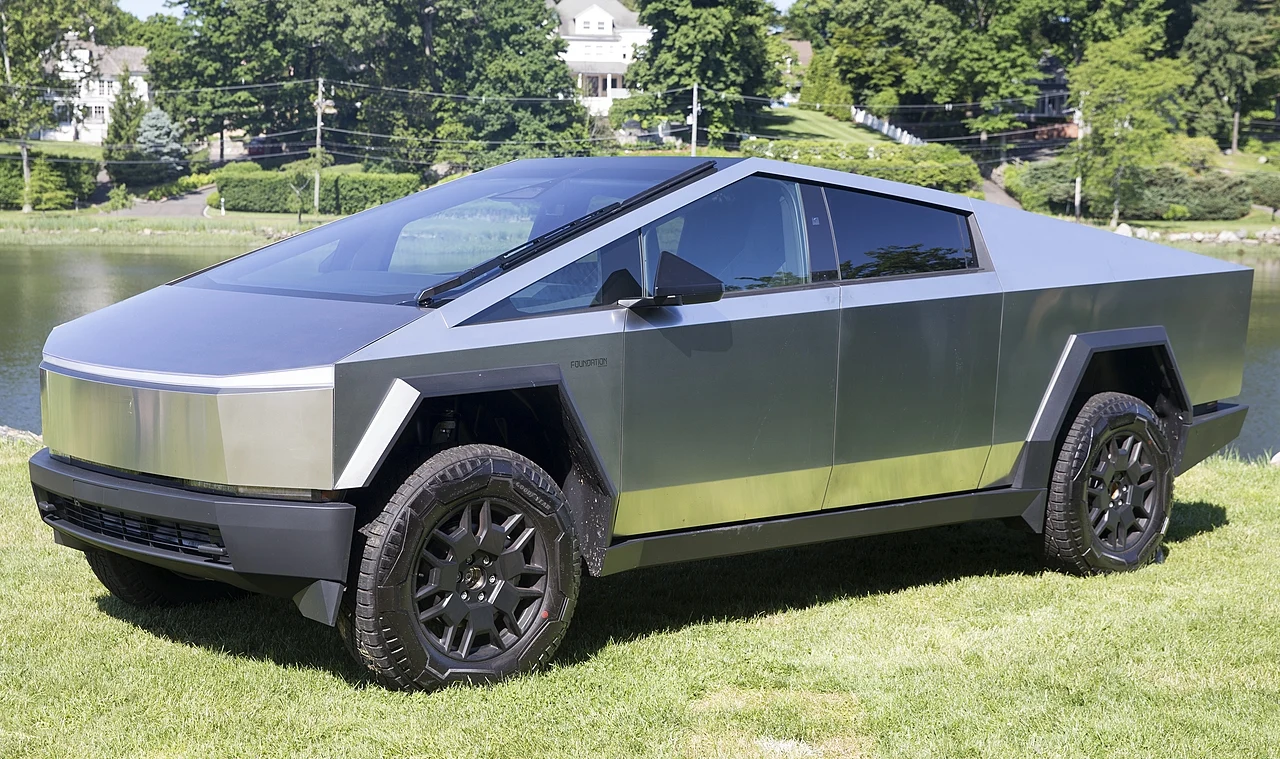
Tesla plans to wind down Cybertruck production at its Gigafactory Texas around the middle of 2027, according to chief executive Elon Musk. The space will be used to increase output of the Cybercab, the purpose-built vehicle at the centre of Tesla’s robotaxi strategy.
The wording matters. Musk’s statement concerns production at the Texas factory. He did not say whether the electric pickup would be built at another Tesla plant or discontinued altogether. For now, a claim that the Cybertruck has been cancelled would go further than the announcement itself.
Musk disclosed the plan in a post on X, as Reuters reported on 6 November. Tesla has not announced an alternative Cybertruck production site or set out what the change will mean for existing orders and future availability.
The decision puts a practical factory constraint behind Tesla’s strategic shift towards autonomous transport. Cybertruck is a consumer pickup with a distinctive stainless-steel body. Cybercab is intended for Tesla’s ride-hailing network, where a larger fleet could support more paid trips. Freeing capacity in Texas would give the company more room to scale the latter if demand and operations justify it.
In its third-quarter 2026 shareholder update, Tesla listed installed annual manufacturing capacity of more than 125,000 units each for Cybertruck and Cybercab at the Texas plant. Those are capacity figures, not the number of vehicles Tesla is currently producing or selling. The company explicitly cautions that actual production rates can differ from installed capacity.
Tesla has already moved Cybercab beyond the concept stage. TechBooky covered the Austin launch and questions about scale in September. Its Robotaxi page describes a fleet that includes Model Y and Cybercab vehicles and lists operating US cities. The proposed manufacturing change suggests Tesla sees greater value in allocating more of its Texas footprint to that service than to the pickup, although it has not published a production target for the expanded line.
The immediate answer is that production is not ending today. Musk pointed to a wind-down around mid-2027. Buyers and owners still need clarity on how long orders will remain open, whether the truck will be assembled elsewhere, and what happens to parts and servicing if Texas production stops. Tesla has not provided those details.
The announcement is nevertheless a striking reversal of emphasis for a vehicle that once symbolised Tesla’s willingness to challenge the conventional car market. Cybercab now appears to have the stronger claim on scarce factory space. The next material update will be Tesla’s own account of the Cybertruck’s long-term future, not speculation that a Texas production decision automatically means the model is dead.
Related Reading
More contextual TechBooky stories selected from tags, categories and article context.
We use cookies to ensure that we give you the best experience on our website. If you continue to use this site we will assume that you are happy with it.