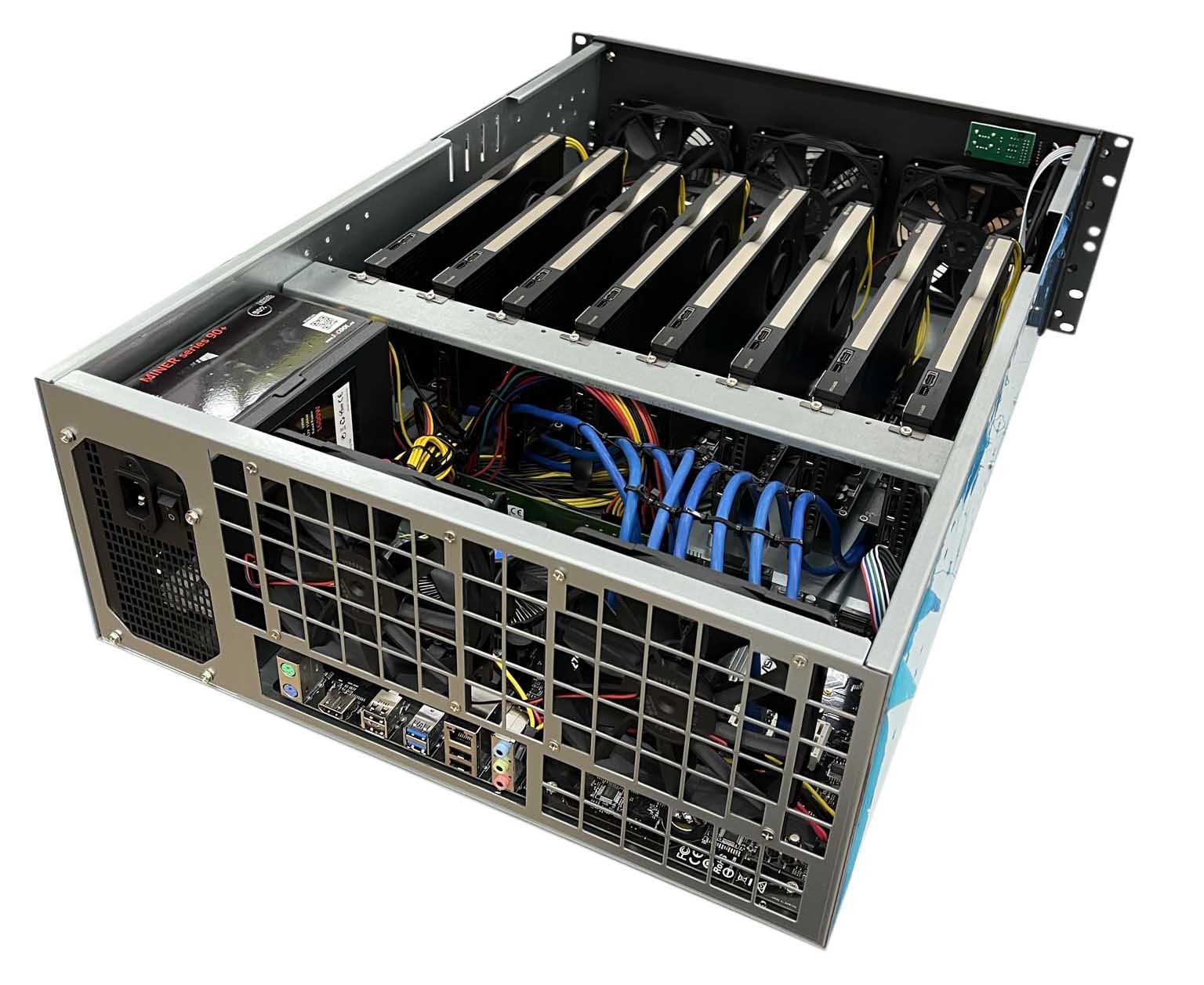
Africa’s AI conversation often starts with models, apps and policy, but the harder question is compute. Who has the GPUs, where are they hosted, how much do they cost and can African builders access them without sending every serious workload through Europe or the United States? That is why Nigeria’s Chassis is worth watching.
Connecting Africa recently profiled Chassis as its hot startup of the month , describing the Nigerian company as a cloud GPU infrastructure startup providing locally hosted GPU computing resources for businesses. The company was founded in 2025 by 18-year-old self-taught programmer Okechukwu Nwaozor and is positioning itself around sovereign, low-latency and cost-conscious compute for African AI teams.
The pitch is straightforward. Chassis says African developers and startups need a GPU-first cloud product that lets them train, fine-tune and deploy AI models without wrestling with complex hyperscaler billing or infrastructure built for another market. Its platform points to GPU instances, clusters, serverless endpoints, wallets, APIs and team workspaces.
That matters because the cloud GPU problem is not theoretical. If an African fintech wants to run fraud detection, a health startup wants to build diagnostic tools, a language company wants to fine-tune local-language models or a logistics platform wants real-time optimisation, compute becomes a practical barrier. Talent is not enough when the infrastructure bill is unpredictable or the latency is poor.
This is why Chassis sits inside the same bigger story as ChipMango’s semiconductor talent push and Nigeria’s sovereign cloud ambition . Africa does not need only more apps. It needs deeper layers of the digital stack: chips, servers, cloud, data centres, connectivity, engineers and rules that allow local companies to build at global quality.
There is also a trust angle. Many African startups have learned to fear surprise cloud bills. A wallet-first model, clear retail pricing and automatic workload suspension when balances run low could be useful if executed properly. Predictable costs are not a small feature in markets where startups already fight currency swings, funding gaps and expensive infrastructure.
The timing is important because global AI compute is getting tighter, not easier. Broadcom’s AI chip revenue and the memory-chip shortage now affecting gadgets both show that AI demand is reshaping the entire hardware market. If Africa waits until compute is cheap and abundant everywhere, it may wait too long.
Still, Chassis has to prove more than ambition. Cloud infrastructure is hard. Customers will judge uptime, pricing, GPU availability, documentation, support and whether the platform can serve teams beyond early adopters. Africa needs local compute, but local compute only works if it is reliable enough for production work.
The bigger point is that Africa’s AI future should not depend entirely on foreign platforms. Partnerships matter, as seen in Korea-Africa infrastructure talks , but local infrastructure companies matter too. Chassis is interesting because it is trying to build where the bottleneck really is: the compute layer underneath the AI dream.
Related Reading
More contextual TechBooky stories selected from tags, categories and article context.
Paul Femi Balo is the founder and publisher of TechBooky. He covers artificial intelligence, African technology, digital infrastructure, enterprise technology and the global digital economy.
We use cookies to ensure that we give you the best experience on our website. If you continue to use this site we will assume that you are happy with it.