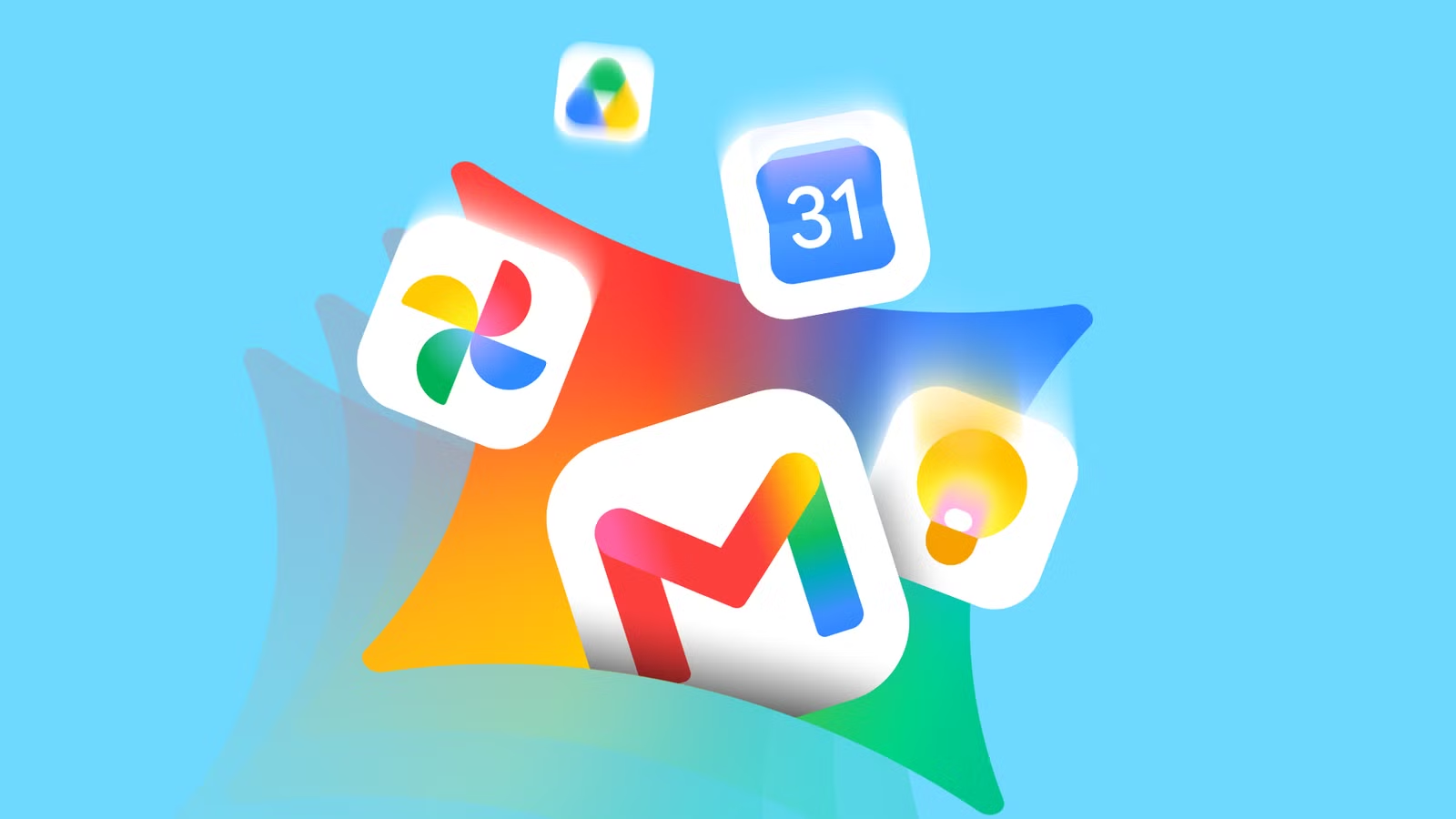
Google is making its productivity apps feel more like conversations. The company is rolling live Gemini voice features into Gmail, Docs and Keep, allowing users to ask questions, create notes and work through documents by speaking instead of typing. The Verge reported the rollout as part of Google’s wider push to bring AI deeper into everyday apps.
The idea is simple but important. Gmail Live lets users ask natural-language questions about their inbox and follow up without starting a new search. Docs Live can help create and format documents from spoken prompts, while Keep Live can turn quick speech into more useful notes and lists. These tools build on Google’s Gemini and Workspace AI strategy.
This is where AI starts to feel less like a separate destination and more like an operating layer. Instead of opening a chatbot, copying information and moving it back into another app, Google wants the assistant to live where the work already happens. That may sound small, but it is exactly how AI becomes habit.
The business angle is clear. Google is trying to defend Workspace against Microsoft, OpenAI and a growing field of AI productivity startups. The company has already been pushing stronger Gemini models and coding tools, and the cost question around Gemini is now tied to how often users call AI inside everyday workflows.
Voice also changes the user experience. People may use AI more often if they can ask it to find a flight detail in Gmail, turn a rough idea into a document or add items to a list while walking or cooking. It lowers friction, and lowering friction is how software companies turn features into behaviour.
But the privacy questions are obvious. For Gemini to answer well inside Gmail, Docs, Drive and Keep, it needs access to sensitive personal and work data. Google will have to keep explaining what is processed, what is stored, what is used for model improvement and how business users can control access. That matters even more as Google faces regulatory scrutiny over the power of its digital platforms.
There is also a productivity trap. AI inside every app can save time, but it can also create more noise if people use it to generate longer emails, longer documents and more automated replies that someone else then has to read. The best version of Workspace AI should reduce busywork, not flood workplaces with polished clutter.
For now, Google’s direction is obvious. The company wants Gemini to become part of the office itself, not just a chatbot beside it. That puts more pressure on OpenAI, Anthropic and Microsoft, and it also shows why AI competition is moving into practical work tools rather than staying inside benchmark charts.
Related Reading
More contextual TechBooky stories selected from tags, categories and article context.
Paul Femi Balo is the founder and publisher of TechBooky. He covers artificial intelligence, African technology, digital infrastructure, enterprise technology and the global digital economy.
We use cookies to ensure that we give you the best experience on our website. If you continue to use this site we will assume that you are happy with it.