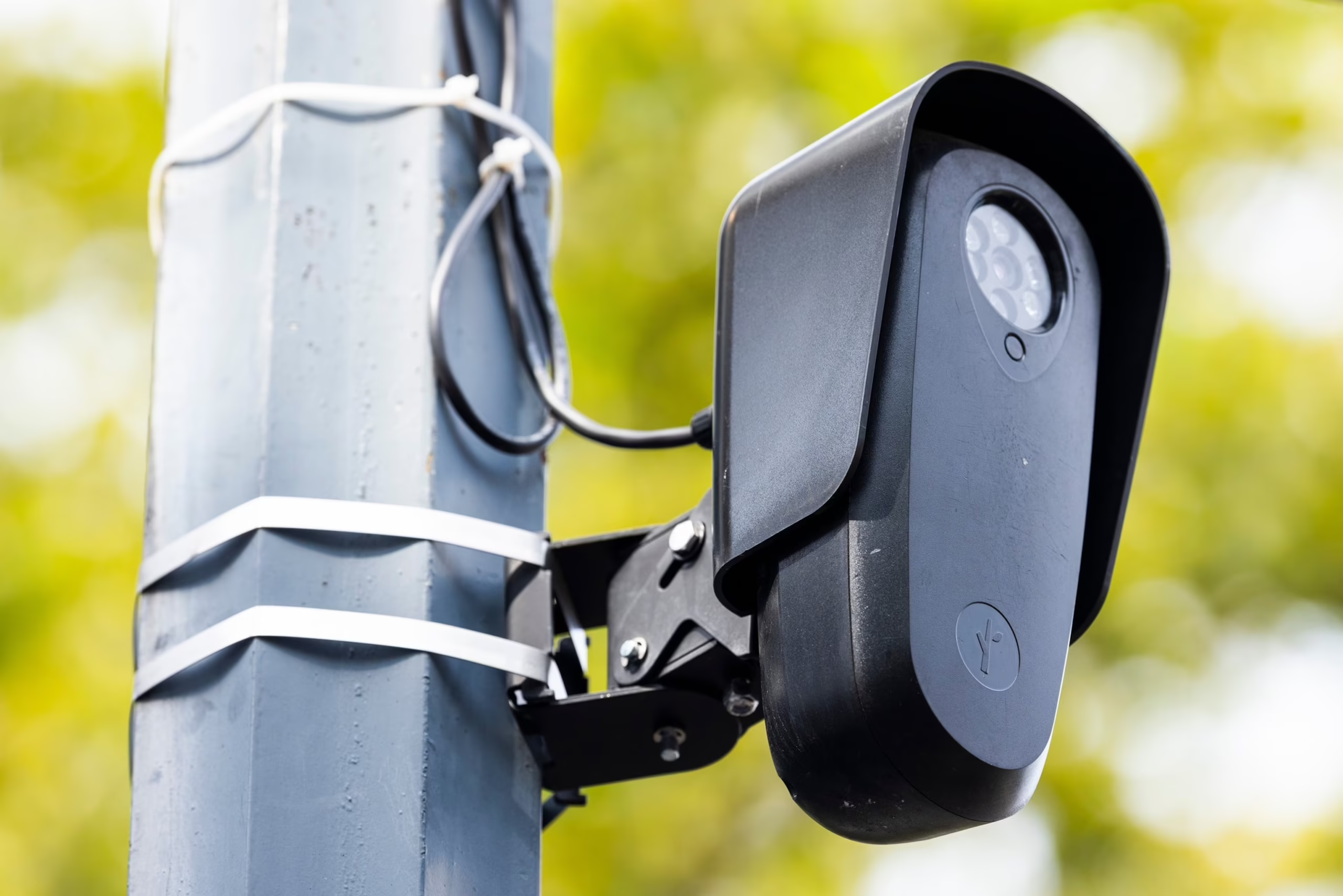
AI surveillance has moved from police departments into campaign politics. Flock Safety’s automated camera network, which records license plates and other vehicle details, is now becoming an issue in US midterm races as candidates from both parties respond to voter concern about privacy, policing and the power of tech companies. AP reported that candidates in several states are calling for bans, limits or tighter scrutiny of the cameras.
Flock markets its technology as a crime-fighting platform for communities, businesses and law enforcement agencies. The company says its public-safety technology helps agencies investigate crimes and recover missing people. Police departments that use the cameras often argue that the system gives them faster leads and helps solve cases that might otherwise go cold.
The privacy argument is different. Critics say the problem is not only what happens during a serious investigation. It is the scale of passive collection. When cameras record passing vehicles day after day, the system can become a map of ordinary movement. That is why civil-liberties groups worry about warrantless mass surveillance, data sharing, misuse and the quiet normalisation of AI-powered tracking.
The politics are interesting because this is not a neat left-versus-right issue. Some conservatives see the cameras as government overreach. Some progressives see them as a threat to civil rights and vulnerable communities. Some police groups see them as an essential public-safety tool. That mix makes Flock a symbol of a bigger AI debate: people want safety, but they do not want to feel watched everywhere they go.
This also connects with the wider infrastructure anxiety around AI. People are already pushing back against AI policy written too closely around corporate interests , data centres, automated decision systems and opaque algorithms. Flock brings the issue down to street level. It is no longer an abstract model in a data centre. It is a camera on a pole near your home, school, workplace or church.
For African readers, the story is not distant. Many African cities are expanding CCTV, facial recognition, smart policing and digital ID systems. The lesson from the US is that surveillance technology can grow quietly until it suddenly becomes a political fight. By then, contracts are signed, databases are full and oversight becomes harder to build after the fact.
That does not mean every camera system is bad. Cities have real crime problems, and technology can help investigators work faster. But deployment should come with clear rules: what data is collected, how long it is kept, who can search it, when a warrant is needed, how misuse is punished and whether communities had a real say before the cameras went up.
Flock’s election moment shows where AI governance is heading. The next big fights will not only be about chatbots and copyright. They will also be about cameras, streets, cars, police databases and the everyday question of whether convenience and safety are being bought with too much surveillance.
Related Reading
More contextual TechBooky stories selected from tags, categories and article context.
Paul Femi Balo is the founder and publisher of TechBooky. He covers artificial intelligence, African technology, digital infrastructure, enterprise technology and the global digital economy.
We use cookies to ensure that we give you the best experience on our website. If you continue to use this site we will assume that you are happy with it.