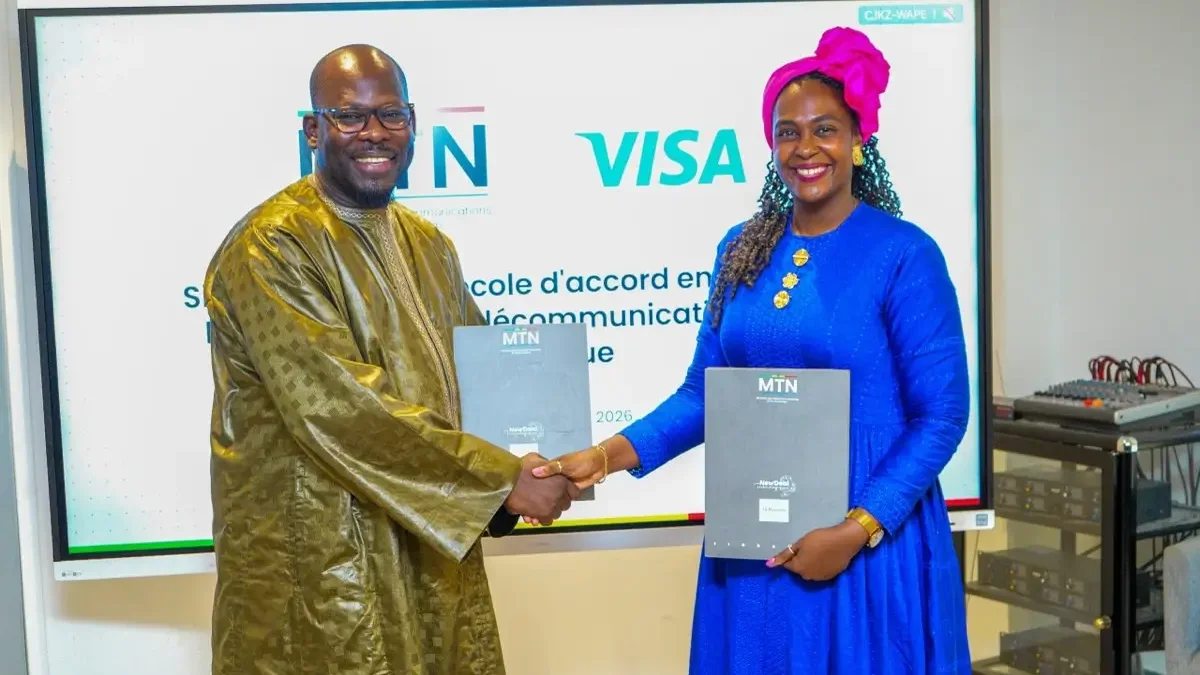
Senegal and Visa have signed a two-year agreement to explore digital payments between citizens and government. The announcement puts a practical question at the centre of the country’s digital transformation plans; can routine public payments become easier without excluding people who still depend on cash or mobile money?
The agreement, announced on 30 October, is a memorandum of understanding between Visa and Senegal’s Ministry of Telecommunications and Digital Affairs. It establishes a framework for cooperation, not an operating payment system. Neither side has announced a launch date, named a government service that will be connected first, or disclosed the cost of the work.
The partners say they will examine two flows. Person-to-government payments could cover fees or other amounts that residents pay public agencies. Government-to-person payments would move in the other direction, potentially giving public bodies another way to disburse funds. Those are possible applications of the framework, not services that the announcement says are already available.
A well-designed public payment system can make the amount owed, the recipient and the transaction record easier to see. For a resident, that could mean fewer trips to a counter and a clearer receipt. For an agency, it could mean easier reconciliation and a better view of whether a payment has arrived. These benefits are conditional on execution. The release does not say how users will enrol, which banks or wallets will participate, or whether any service will work outside major cities.
Access will be a central test. A digital channel that requires a particular card, smartphone or stable internet connection could leave some citizens with fewer choices rather than more. Senegal will need to decide how cash users, people with basic handsets and those already using local payment services fit into any eventual design. Fees, dispute resolution, identity checks and accessibility will matter as much as the technology behind a transaction.
The memorandum also covers cybersecurity, financial innovation and regulatory cooperation. That breadth makes sense for payments involving government, where a failed transfer or fraudulent message can cause more than inconvenience. Yet it also makes the agreement harder to judge today. A framework for sharing expertise is a starting point; measurable progress would be a named pilot, published safeguards and evidence that citizens can use the service reliably.
The agreement follows Visa’s separate plan to open a Dakar office by the end of 2026 and support digital payment acceptance around the Dakar 2026 Summer Youth Olympic Games. That local presence could make coordination with banks, fintechs and regulators easier. It does not, by itself, guarantee that a public-payment system will be delivered.
Across West Africa, payment providers have been trying to connect more users and merchants without forcing every transaction through one channel. TechBooky has covered how cross-border payment networks in the region combine bank transfers, wallets and cash pickup points. Public payments raise a related question of interoperability: whether a citizen can pay or receive money through a method they already trust, rather than having to adopt a new one solely for government transactions.
Senegal’s ministry says the partnership should move from intention to practical, secure and inclusive solutions. The next announcement worth watching is therefore not another broad pledge. It is a specific service, a timeline, an explanation of who can use it and a public account of what it costs. Until then, this is a potentially useful agreement, but still an agreement.
Related Reading
More contextual TechBooky stories selected from tags, categories and article context.
Paul Femi Balo is the founder and publisher of TechBooky. He covers artificial intelligence, African technology, digital infrastructure, enterprise technology and the global digital economy.
We use cookies to ensure that we give you the best experience on our website. If you continue to use this site we will assume that you are happy with it.